250 Years of American Aerospace Excellence!
Transcript
Machine-transcribed by YouTube. Expect errors in names, commands and version numbers.
Hello, it's Scott Manley here. The USA is 250 years old today. Happy birthday. And as a US citizen, I want to do a quick uh rundown of the last 250 years of aerospace history. From a handful of rebellious colonies to spacecraft that have left the solar system, the US has come a long way because, you know, it's not just history. I think it's part of America's DNA. We have literally got rockets in the national anthem and he ensured those rockets uh red glare as British rockets bombarding Fort McHenry during uh for 1814. But America took that image and they have run with it all the way to the stars. America's love of flight goes right back to the very beginning. Even before the revolution, Benjamin Franklin was flying kites in thunderstorms, unlocking the secrets of lightning.
After the war, he was in Paris signing the peace treaty. He watched some of the earliest balloon flights and someone in the crowd apparently said, "What use is a balloon?" And and Franklin seeing not knowing the potential, he said, "Well, what good is a newborn baby?" In January 1793, the first balloon flight from the United States lifted off from the capital, Philadelphia. A French aeronaut, Jeanierre Blanchard, rose before a cheering crowd that included President George Washington and future presidents Adams, Jefferson, Madison, Monroe. The pilot carried a letter from Washington for safe passage. That would be America's first air mail. The US soon
grew its own aeronaut. In 1861, Thaddius Lo dreamed of crossing the Atlantic by balloon. He demonstrated his skill by flying the Enterprise 900 miles from Ohio to South Carolina only to land in the Confederacy at the start of the Civil War. He was arrested as a spy. He talked his way free and returned home and he created the Union Army Balloon Corps, the first Americans flying in combat. In 1866, Frederick Marriott of San Francisco formed the aerial steam navigation company intending to build and operate a steam powered airship between New York and California. He actually constructed a subscale demonstrator named the Avatar, which floated using hydrogen, had a steam engine. But the completion of the continental railway, everyone was suddenly able to cross the country and we had to wait for air travel. Samuel Purppoint, Langley, John Montgomery and Octave Shannonut all worked towards heavier than air winged aircraft. But it would be some bicycle builders, the Wright brothers, who achieved the first powered controlled flight in 1903 for a whole 12 seconds. 12 seconds that changed everything. In 1910, Eugene Eli
would take off from a ship barely. Two months later, he would land on the ship. The US invented the aircraft carrier, which became the core of modern naval military power. But it would be in Europe where the military applications of aircraft really took off during World War I. Nothing like a war to make governments invest in gaining an edge over their adversaries. The US eventually did get involved in the war and at the end of it, Brigadier General Willie Billy Mitchell returned to the US. His message was that air power was the future. In 1918, the US Air Mail Service began. And it didn't just deliver letters. They developed navigation networks spanning the entire continent. And they developed instrument flying techniques that we still use today, thanks to pioneers like Jimmy Doolittle. And then came the rocket age.
In 1926, Robert Goddard launched the world's first liquidfueled rocket. It flew for only a few seconds, but it worked. He iterated relentlessly and his work inspired and informed engineers everywhere, including some guy called Vera von Brown in Germany. Meanwhile, the US had built the world's largest telescope in California. And in Arizona, Clyde Tombbo discovered Pluto. America claimed its own planet to name. World War II supercharged everything in aerospace. And that did mean a huge step forwards in the aircraft, but it also meant a huge step forward in manufacturing. The US built twice as many aircraft as any other country during the war and other technologies were spawned. To help the war effort in 1941, a group of rocket nerds strapped solid rocket motors onto an coupe and achieved the first rocket assisted takeoff. But to get it funded, they thought they should call it a jet. And so jet assisted takeoff was born. And they also created ajet and the jet propulsion laboratory. After the war, von Brown and his team would be brought to the US. And in 1946, a V2 rocket with a camera snapped the first photos of Earth from space, including, of course, America itself. In 1947, Chuck Jagger
broke the sound barrier in the Bell X1. Test pilots at Edwards celebrated at Panchcho Barnes Happy Bottom Riding Club, which was owned by a former air racer and stunt pilot who just happened to be the granddaughter of Thaddius Low, aeronaut. The Xplanes kept shattering limits, going faster and higher into the rarified air of the stratosphere. But people were dreaming of going higher still. Walt Disney even put Vernon Brown on TV, firing up the public's imagination about space. And then the space race kicked into high gear. The Soviets launched Sputnik, beating the US. The US Army, Navy, and Air Force had been arguing over who should get to launch the first satellite rather than launching with what America had.
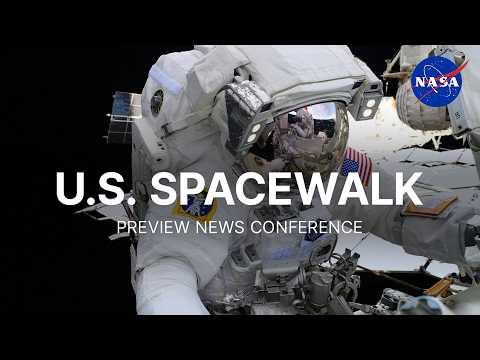
Ultimately, America answered with Explorer 1, the first scientific satellite which would discover the Van Allen belts and later Vanguard 1, which remains in orbit decades after Sputnik and Explorer have fallen back to Earth, proving that America has staying power. NASA was born. We bet big on the high frontier again. The Soviets did beat the US to put man in space. But soon enough, Alan Shepard became the first American in space. In 1961, riding a rocket fueled by high-grade alcohol and peeing in his suit because there was no time to get out and go to the bathroom. Allan was a total badass. John Glenn followed as the first American to orbit the Earth. The X-15 became the first plane to reach space, powered by an ammonia liquid oxygen rocket engine. A few years later, America would make a plane which was only half as fast as the X-15, but it could fly for hours instead of minutes. The SR71 was the most amazing air breathing aviation monster ever dreamed up with speeds well over Mark III. And get this, to build it, they had to acquire the Titanium illicitly from the Soviet block. Gemini gave us the skills for the moon. The first US spacew walk by Ed White. The first time a US flag was photographed in space on his suit. Gemini made the first rendevous and docking in orbit. Then the mighty Saturn 5, the largest rocket ever to reach orbit, carried Apollo 8 around the moon in 1968. The crew saw Earth rise
from the moon, and it helped the world fall in love with our home planet once again. July 20th, 1969, we landed on the
moon. Neil Armstrong and Buzz Aldrin came in peace for all mankind, but they planted the stars and stripes. When Apollo 13 nearly ended in disaster, American ingenuity brought them home safely. Failure was not an option. The US landed men on the moon six times. We even drove cars on another world. The Soviet program couldn't compete. The US moon landings went unchallenged. Skyab proved that we could live and work in space. It wasn't the world's first space station, but it was the biggest for a long time, and it is still the widest. crews did zero gymnastics that still looks like the coolest pre playground ever built. No wires, just pure floating freedom. NASA's robots went even further. Voyagers toured the outer planets and are now in interstellar space carrying Chuck Berry's Johnny be good, a bonafidey American rock and roll classic, headed for the stars. The space shuttle era gave us 30 years of reusable winged space flight. It launched huge crews. It launched and repaired the Hubble Space Telescope multiple times, and it assembled at the Mo International Space Station, the most complex structure ever built in space, with the majority of it being Americanmade.
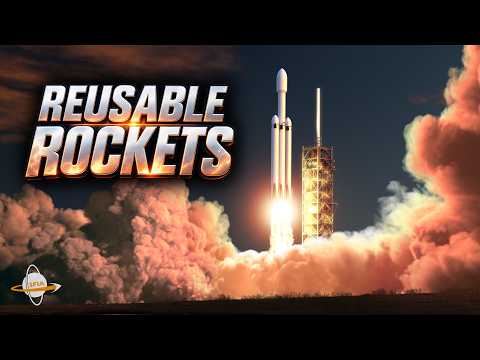
Astronauts free flew untethered from the shuttle with the MMU, flying the smallest spacecraft ever in a move that is straight up Buck Rogers. Then came the commercial revolution. Bert Rutan spaceship one won the X- Prize. Cargo Dragons delivered to the ISS. Then Crew Dragon started flying astronauts. SpaceX figured out how to land orbital rockets on a drone ship in the ocean. And they have now made it look routine. That is mind-blowing. Plans for exploration didn't stop at rovers. JPL built Ingenuity, the first aircraft to fly on another world. And as we speak, the US is preparing to send the nuclearpowered Dragonfly drone to Titan. And [clears throat] the Dart mission smashed into an asteroid and literally moved a mountain. Today, America's space ecosystem is unstoppable. SpaceX, Rocket Lab, ULA, Blue Origin, Northrup, Grman, Boeing, Relativity, Stoke, Voyager, Astra, and many, many more are turning dreams into reality. Starship, the biggest rocket ever, is pushing towards fully reusable flight. The moon bases von Brown dreamed off in the 50s are coming. Another American flag will fly there, and this time we're staying.
Happy 250th USA. From kites and balloons to wood and cloth biplanes to titanium jets, reusable rockets and interstellar probe, the US is always reaching higher, faster, and bolder. I'm Scott Manley. Fly safe.
[music]
[music]