Reports indicate Ukrainian F-16 downs RUSSIAN SU-35
Transcript
Machine-transcribed by YouTube. Expect errors in names, commands and version numbers.
According to reports, a Ukrainian F-16 has successfully shot down a Russian fighter in air-to-air combat for the first time. And based on recent Russian losses, it sure looks like that Russian fighter may have been an SU-35S, among Russia's most advanced and capable jets. So, let's run through what we [music] know, but also what we don't, and importantly, what it all means. I'm Alex Hollings, and this is a Short Fuse edition of Airpower. >> [music]
>> By now, you guys know that I'm a big fan of Ground News, because it helps you stay on top of what's going on in the world, while also making media bias a lot easier to spot in the stories that we see on our timelines every day. Ground News compiles stories from outlets all over the world, and then sticks them all into one easy-to-read feed. So, that it doesn't just keep you up-to-date about what's going on, it also shows you the different ways media outlets cover the same story. Like this
one about Anduril's WFQ-44 Fury fighter drone launching an AMRAAM for the first time. Now, Ground News has gathered coverage of this story from 22 different news outlets already, almost half of which are rated for not showing a clear political bias in one way or the other. And here on the right side of the screen, we can also see the bias distribution and the factuality ratings for the coverage of this story, with the majority of the coverage coming from mostly centrist outlets, and 90% of those sources rated for high factuality. And Ground News also shows you really important stuff about these outlets along with their headlines, like their political bias, their factuality rating, their corporate ownership, or any government affiliations. And I, of course, love the Ground News for you tab. It's my first stop every morning because it helps me stay on top of topics that I chose to stay on top of.
Ground News is a big part of my research and my day-to-day news reading and it can be for you, too. Just go to ground.news/sandbox with two x's or just follow the link in the description down below to get 40% off the same Vantage plan that I use. Again, that's ground.news/sandbox
to get 40% off their Vantage plan that'll help you stay on top of things. Now, official confirmation of the Ukrainian F-16's air-to-air victory came for the first time on Wednesday when General Dan Caine, the chairman of the US Joint Chiefs of Staff, testified before the Senate Appropriations Committee. And I will quote him directly now. Quote, "I'll note that recently we had the first air-to-air kill where a Ukrainian F-16 shot down a Russian fighter. So, I
think their ability to scale their layered air defense has come a long, long way over the past couple of years with the help and assistance of many." Now, General Caine did not confirm the type of Russian fighter that was shot down despite what you might see in headlines from hastier news outlets, but
it has been confirmed in both Russian media and by Ukrainian officials that a Russian Su-35S was indeed shot down in combat on July 8th. And rumors that it was an F-16 to score that kill have swirled online ever since that news first broke. Now, the general statement certainly grants that rumor more credibility, but it does still fall short of overtly confirming the Su-35 was directly downed by that F-16. Other rumors have suggested that the Su-35 was actually shot down by a surface-to-air missile launched by an MIM-104 Patriot air defense battery after that Russian fighter was lured into its targeting envelope by Ukrainian F-16s. But so far no conclusive evidence has surfaced to confirm either accounting of events and the general statements certainly sway things in the F-16's favor. In short, we've got confirmation that an F-16 successfully shot down a Russian fighter in the recent past and we've got confirmation that a Russian SU-35S was shot down in the recent past. So
while it is entirely reasonable to assume that these two reports are directly related, objectively speaking, assuming they're related is all that we can do until more information surfaces. But it is worth noting that the F-16s operated by the Ukrainian Air Force today would be flying at a distinct disadvantage against the much more modern SU-35S.
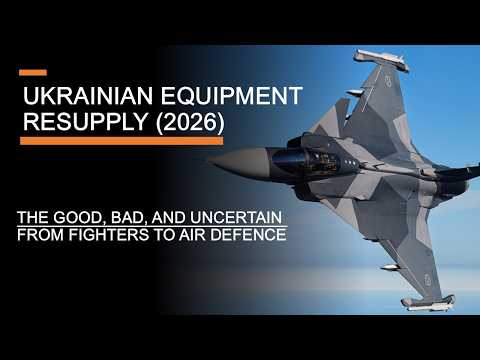
Ukraine's F-16s were primarily sourced from the Netherlands and Denmark, though Belgium and Norway have also pledged aircraft. And all of these jets are F-16
AMs and BMs, one-seater and two-seater versions. And that actually means these jets are original 1970s era F-16 As and
Bs that were later upgraded as a part of the mid-life update or MLU program. So
in short, what that means is that Ukraine's F-16s are more comparable to the aircraft operated by the US Air Force 25 years ago rather than the much
more modern and capable F-16Cs and Ds in service for Uncle Sam today. Conversely, the SU-35S is among the most modern fighters in Russian service. In fact, in a lot of ways, I think it's more dangerous than the Su-57. While still maintaining some of the Su-27's DNA, you could really argue the Su-35S, known internally during development as the Su-35BM, was practically a clean sheet built, incorporating powerful new AL-41F1S
engines that provide better than a one-to-one thrust-to-weight ratio when flying with a combat load, as well as thrust vectoring nozzles that allow for, well, pretty incredible aerobatic capabilities, even after omitting the canards found on its Su-27M predecessor.
But, it isn't the Su-35's dog fighting chops that make it such a threat to the pretty small and nimble F-16, at least in my opinion. The real problem is the avionics. The Su-35's Irbis-E is
an X-band multi-mode phased array radar that may be a bit technologically dated as compared to the much more modern active electronically scanned arrays found in American fighters today, but it still significantly outclasses the '90s-era AN/APG-66V2
X-band mechanically scanned array found in Ukraine's F-16s. Now, this radar disparity is most apparent in terms of maximum detection ranges for fighter-sized targets. Now, Ukraine's F-16s should be able to detect fighters from as far out as around 83 km in the
presence of jamming, and probably a bit better than 150 km without electronic warfare interference. The Su-35's Irbis-E, on the other hand, has a reported detection range for targets with a radar cross-section of 3 square meters, which is smaller than an F-16AM,
of a whopping 400 km. And while Russian
marketing materials have a habit of overstating their capabilities, that is such a significant radar range advantage that even a very conservative assessment would suggest that a beyond visual range fight between the Su-35 and an F-16 AM
would be the Su-35's to lose. Now, the Su-35 also has the advantage in terms of beyond visual range weapons. The most advanced BVR weapons Ukrainian F-16s carry, at least to the public's knowledge, are AIM-120 C-8 AMRAAMs, or
advanced medium-range air-to-air missiles. And they have a reported range of somewhere between 75 and 100 mi, or
between 120 and 160 km, based very much
on launch circumstances. Now, the Su-35 often carries Russia's R-77M, which has a reported range of 190 km, or
around 120 mi. Now, in combat, that means the Russian fighter could detect the F-16 first, and can fire its first shot before the F-16 could respond in kind. In brief, the Su-35S is a thoroughly modernized fourth-generation fighter that entered production 35 years after
those F-16s started flying. And because those dated Vipers donated to Ukraine have only been upgraded to a turn-of-the-century trim, the Su-35S
should be seen as a pretty serious overmatch for that Viper in terms of both onboard technology and just good old-fashioned brute-force performance. But, of course, performance specs and hardware are only two of the variables out of many that determine combat outcomes. And the circumstances of the engagement, supporting aircraft and other systems, pilot skill level and training, and a whole lot more can all tip those scales decidedly in one direction or the other. And that long list of currently unknown variables is also why it's important not to draw sweeping conclusions about aircraft performance based on reports of jets being shot down in combat. Warfare, it's important to remember, is made up of countless, incredibly complex operations playing out in an overlapping and contested environment. And that means the better jet doesn't always win, and the worse jet doesn't always lose. In warfare, as in life, context is key. The
F-16 is an incredible jet, but an F-16
that rolled off the assembly line 50 years ago and was upgraded to carry hardware that's a quarter century old just is at a disadvantage when flying against a multi-role twin-engine fighter that rolled off the assembly line 10 years ago or less. But that doesn't mean the F-16 can't win. In fact, if I learned anything from watching a Desert Storm F-16 outfly six
surface-to-air missiles in direct succession, even without any flares or chaff, I learned that F-16s will often do things that nobody expects them to be capable of. So, until we get more information, [clears throat] we will just have to keep our ears to the ground on this one. And with that, we'll end yet another edition of Airpower for Sandbox News. I'm Alex Hollings. Make
sure to download the Sandbox News app right now. It's available on iOS, and I promise you guys I'm we're working on this Android thing. I I'll let you know as soon as we've got it figured out. And in the meantime, if you got anything out of today's video, make sure to click like and subscribe down below, and leave me a comment so I know what I should cover next. In fact, if you're still watching at this point, let me know how you think a fully modernized Block 50 or 52 F-16C would do for Ukraine instead of
their dated F-16AMs and BMs. And of course, don't forget to tap on that bell icon so you never miss a drop from Sandbox News.