 Hackaday
A Sloshing-Mercury-Powered Neon Light
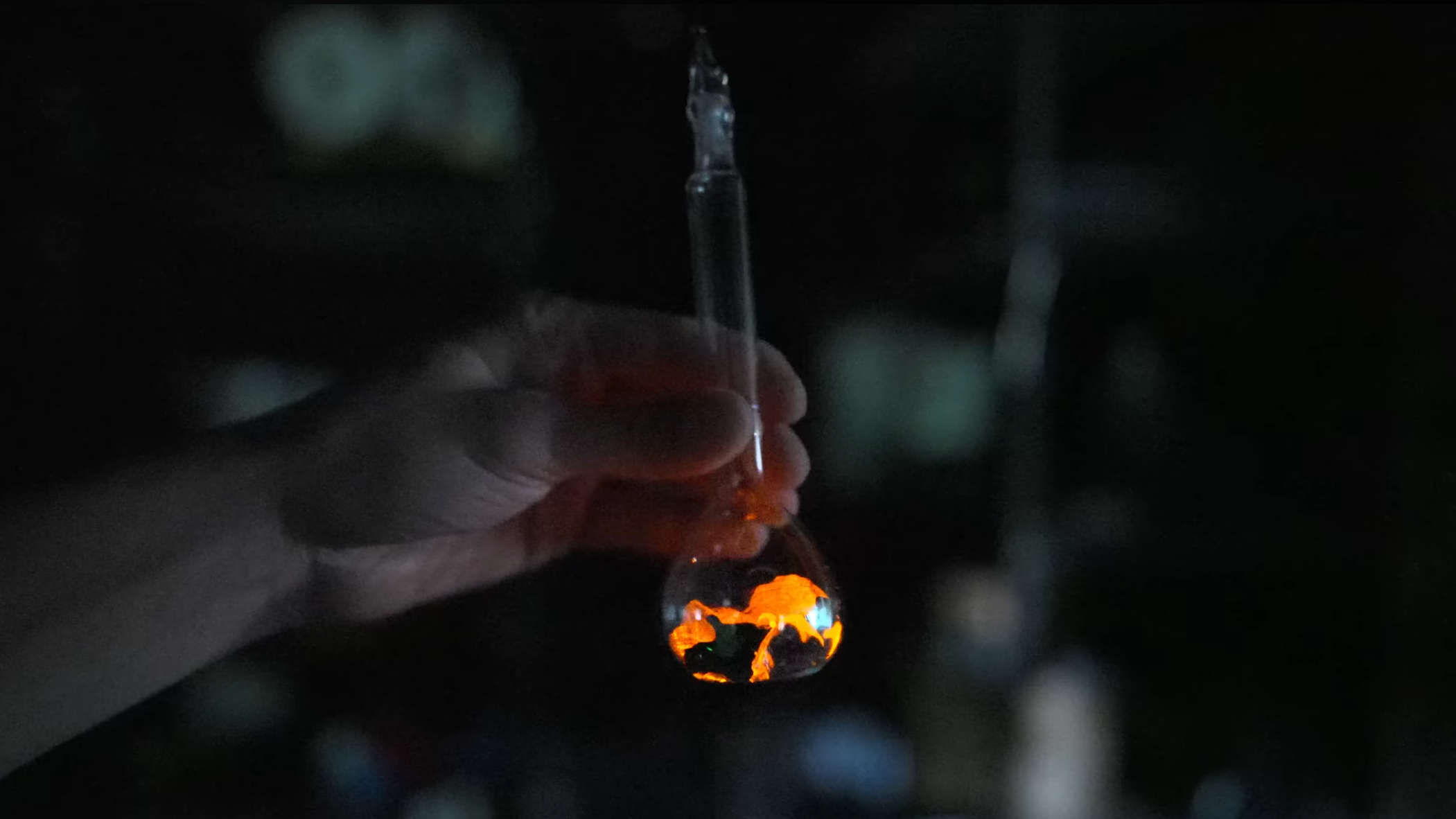
In 1675, while transporting a barometer by night, the astronomer Jean Picard noticed a glow inside its glass tube, just above the mercury. As the mercury sloshed and splashed across the surface of the glass, a static electric charge had built up, which was discharging by ionizing the residual gas molecules inside the evacuated tube. [Styropyro] recreated this effect, and found that the dim glow could be made much stronger by adding some noble gas to the tube. It starts with a simple recreation: he took a volumetric flask, attached a narrow glass stem to the mouth, added some mercury to the flask, evacuated it with a vacuum pump, and sealed off the glass stem. This produced a faint glow when
…