The Army Is Replacing the Stinger Missile
Transcript
Machine-transcribed by YouTube. Expect errors in names, commands and version numbers.
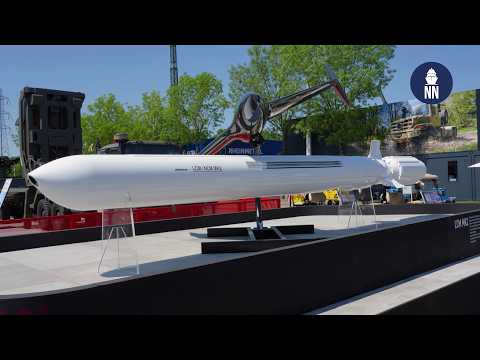
After shooting down hundreds of aircraft over the last 45 years from the mountains of Afghanistan to the fields of Ukraine, the Stinger missile is set to be replaced. The Army wants thousands of new missiles called the next generation short-range interceptor or NGSRI, which promises better performance, especially against smaller one-way attack drones wreaking havoc and chewing up expensive interceptors. So, today let's talk about the Stinger, its potential replacement, and why this is big news for short-range air defense.
The FIM-92 Man Portable Air Defense System or FIM-92 MANPADS was introduced back in 1981 to replace the FIM-43 MANPADS. The
Army needed something better than the 1960s era FIM-43 Redeye, especially
against faster, more maneuverable Soviet aircraft and helicopters. The Stinger came with an upgraded infrared radiation homing seeker and could hit speeds of Mach 2.2 at about 12,500 ft up. All from
the shoulder of a single gunner. The system was extremely portable and could even be vehicle-mounted like on the Avenger Humvee and even on the modern-day MATV. At one point, there was even an air-to-air variant as well. The FIM-92 really gained notoriety when the CIA handed a bunch over to the Mujahideen and they began knocking out Soviet Mi-24 gunships over the Afghan skies starting in 1986. At first, we had handed over the FIM-43, but they proved not very effective against the Soviet gunships that were raising villages. The Stinger proved to be far better at shooting things down than its predecessor. According to the 1993 Air Defense Artillery Yearbook, which is honestly a really cool document that I'll leave a link to in the description, The Mujahideen took down 269 aircraft in
about 340 tries, and that's good enough for about a 79% kill ratio. Now, that number comes with all the caveats that you would expect from wartime reporting and Mujahideen self-reporting, but even if you sand it down, Stinger clearly changed the risk calculation for Soviet pilots. Over the years, upgrades brought different seekers that were better against countermeasures like flares, as well as beefed up warheads and motors. Today, the latest generation is the FIM-92K, which can target off of a vehicle's data link. Following Russia's full-scale invasion of Ukraine in 2022, the US sent more than 3,000 Stingers from our stockpiles, which have been used to bring down at least two SU-25s, an MI-24
just like the good old days over Afghanistan, at least one Kh-101 cruise missile, and a few Geran/Shahed drones,
and other drones like the Orlan-10. That isn't a huge list, but the Stinger and other MANPADS in Ukrainian service were probably most effective at forcing Russian aircraft to back off and rely on standoff strikes, which was actually one of the original purposes for Stinger when they rolled it out in 1981. Now, that is a respectable performance, but the cracks in its armor started to show, especially against smaller drones with less of a heat signature that might fly lower, meaning gunners have less time to engage. Many threats that are dominating the battlefields today, like those Group 2 and 3 drones, didn't really exist when Stinger was originally designed and fielded. So, it makes sense that it might struggle to deal with them. A new solution is necessary, so let's get into the next-generation Short-Range Interceptor, or NGSRI, which just rolls
right off the tongue. Back in 2023, both Lockheed Martin and Raytheon, or RTX were awarded prototype contracts to develop a new munition for the Army's IM-SHORAD or maneuver short-range air defense vehicles, which are just specialized strikers that would come to be known as the Sergeant Stout. The easiest way to think of the NGSRI isn't as a new system, but as an upgraded projectile that is intended to slot right in where the Stinger was. Even the MANPADS version looks a lot like a Stinger, but to be honest, most MANPADS tend to look like anyway. But, this is not by accident. Existing vehicle-mounted launchers, known as Stinger Vehicle Universal Launcher systems, will be able to fire the NGSRI,
which should help with getting these fielded quicker and cut down on things like training and maintenance requirements. Since we are still very early in this process with Lockheed only just demonstrating the full-scale assembly of its version back in April of this year, we don't really know much about it. Specs like top speed, the seeker, the ceiling it can operate up to, and the cost are unknown to all of us normies. That being said, we can assume, and I really do hate assuming, but we probably can assume confidently that it will come with a more advanced seeker to hunt those harder to hit Group 2 drones, which are like the Marine Corps' tactical resupply drone that hit operational capability status in April 2024, and of course, those Group 3 drones, which are like our very own LoCAS and the Shahed 136 drones that the LoCAS is copied from. Now, cost is always a big concern these days, but as we said, we do not know what the NGSRI will cost. We do know that a FIM-92K MANPADS is about 3 and 1/2 million dollars, and the missiles themselves come in at around 120,000 dollars each.
There are some things that contribute to those costs, like the production being limited and only recently coming back online after the US started sending them to Ukraine and realized that we probably needed to beef our stockpiles back up. So, with full-scale production on NGSRI, it could be possible that each projectile comes in under $100,000. Now,
once again, we have no idea what this final cost will be, but we can say confidently that if cost comes in dramatically more expensive than the Stinger, then the Army should probably explain why it's still the right answer compared with cheaper counter-drone tools that are coming online more and more every day. If it lands somewhere close to Stinger missile pricing while bringing more range, better seekers, and better counter-drone performance, then that argument will get a little bit stronger. But, to backtrack on that a little bit, we do have to remember that this is a shoulder-fired system capable of shooting down advanced jets and even cruise missiles. To many, spending 3 million bucks to do that is a bargain.
Even if they get the projectile cost to under $100,000 or so, that isn't quite a PKWS-II territory at about $35,000,
but the NGSRI is supposed to be far more capable. Speaking of those capabilities, we don't really know what these will be able to do, but let's talk about it anyway. Based on the FIM-92K's ability to use vehicle-provided targeting data, it would make sense for NGSRI to take better queuing from vehicle sensors or a wider air defense network before launch. We also wouldn't be surprised at all if it had an IR seeker as well, just one more finely tuned to the lower heat signatures and different flight characteristics that group two and three drones display. Could it also have an AI-enabled terminal guidance seeker? We have no idea, but that would be pretty cool and make a lot of sense. Remember, these group two and three drones that the NGSRI has in mind are a lot smaller than the aircraft that the Stinger was designed to defeat. That means they're harder to see and don't put off as much heat. That is a problem for a system designed to be fired by an operator with a visual on the target so that that missile can then chase down a heat signature. There's a recent example where allegedly a Russian anti-aircraft missile using a passive infrared seeker fired from a Pantsir passed up a drone and went straight for an oil storage tank on land. Now, we aren't sure what exactly happened here, even the projectile that was used, but in environments where there are lots of fires, it is entirely plausible that a passive IR seeker would have a fit and go rogue. Initial appetite for this next-gen solution is substantial at 11,000 missiles and 2,200 launch assemblies. The Army also wants 248 Sergeant Stout retrofits to fully replace the Stingers with the NGSRI, and we imagine that that will come down to fire control hardware and software since the launchers are already supposed to be compatible. Now, let's talk about those Sergeant Stout vehicles or the MSHORAD, but we can't talk about the Stout vehicle without talking about the man it is named for. Mitchell Stout enlisted in the Army in 1967 as the Vietnam War was raging. He completed Airborne School, but then the Army learned that he enlisted somewhat fraudulently at 17 years old without his parents' permission, so they kicked him out, but since he was 18 by the point they kicked him out, he just re-enlisted immediately anyway. On March 12th, 1970, now 20-year-old Sergeant Stout was with Battery C, 1st Battalion, 44th Artillery Regiment as an air defense artillery gunner. He and his squad were in a bunker at Fire Base KGO when they came under heavy enemy mortar attack. So, once the mortar stopped, the North Vietnamese troops that crawled close started chucking grenades. When one made it into the bunker, without hesitation, he picked up the grenade, held it close to his body, and began running for the exit when it exploded. He used his body and gave his life to absorb that fatal blast, but he did save the rest of his squad. For this, he would receive the Medal of Honor, and he is the only Army Air Defense Artillery man to have received it. So, in 2024, the Army named the Stryker-based M-SHORAD for him.
There are several versions of the Sergeant Stout. Increment one of the vehicle came to arm with Stinger missiles and a 30-mm chain gun. Increment two was the now shelled DEM-SHORAD, which was equipped with a 50-kW laser, but issues with power generation and jostling sensitive equipment that comes with the vehicle led the Army to pull the plug. Increment three of the Sergeant Stout will bring us the NGSRI and upgraded 30-mm ammunition designed to take out drones. There is also the notion of an increment four M-SHORAD, which is supposed to come around 2029. They want this one to fit in a C-130, be sling-loaded under a helicopter, or be air-droppable. This system would be vehicle-agnostic with vehicles like the JLTV in mind, which is kind of like the Marine's MADIS, or even the ISV, which the Army wants to turn into a giant rolling battery for energy-hungry weapons as potential hosts. The RFI, which was published in 2024, also includes robotic vehicles as a possible base. They leave the kinetic effectors requirement open to Stinger/NGSRI,
but also to Coyote, APKWS 2, and 30-mm
airburst ammo. The Army also wants this M-SHORAD flavor to have electronic warfare systems. Honestly, it sounds like the Marine just wants the Marine Corps's MADIS and L-MADIS, but and they just want to spend a few years and a few billion dollars to get there. Unless I'm missing something, but honestly, it kind of seems like they just want the Maddis and L Maddis. Anyway, as we've said, this is still early, but the Army plans to award a single vendor contract for NGSRI in fiscal year 2028. They're putting real money behind not just the Stinger replacement, but also the Sergeant Stout vehicles. For the fiscal year 2027 budget, they want 215 million for NGSRI
and nearly 713 million for 14 more Sergeant Stout systems. They're also putting up 108 million for that increment 4M SHORAD, and all of this is good because this is a critical capability gap for the Army right now. You may be looking around and wondering why the Army just doesn't keep using Stinger and develop a smaller, cheaper munition like the APKWS II, or
even RTX's miniature anti-drone munition, or MADAM. As we've discussed in videos before, a system like Vampire exist, and there's also Coyote and Rolls Roadrunner. Even the Hellfire can take out drones now. So, why even bother with NGSRI? I feel like I say this a lot, but SHORAD was all but abandoned during the Global War on Terror. The Taliban didn't really have much in the way of flying threats, and once the Iraqi military was defeated, insurgents didn't try to keep the aircraft in the air. When you're worried about IEDs and winning hearts and minds, spending money to the Stinger, which was pretty damn good already, is a tough sell. And then Ukraine happened. And then the Red Sea.
And then this war with Iran that isn't really a war, but it is a war, but we've won this war and restarted it several times. Regardless, those all slapped us right in the face with the realization that we needed to get serious about short-range air defense because being ripped apart by cheap drones is just not a good time. It's also important to keep in mind that NGSRI and M-SHORAD are not the only efforts from the Army and the Pentagon to address these new threats. The new missile and whatever it is being launched from will exist inside a complex layered defensive network to do a specific job. Not everything can do everything. Layered defenses exist. So, if you look at NGSRI as this one-size-fits-all solution, you're already wrong. This is going to slot in in a certain spot for certain troops in certain situations. And I'm going to stop here because I I'm going to rant about this again and again. Anyways, layered defenses. NGSRI offers not just a solution for those one-way attack drones chewing through expensive interceptors, but also against manned aircraft, which are still very much a problem that we need to have an answer for. We tend to forget that a peer enemy we could one day fight also has jets and helicopters that our infantry units will have to deal with. And they'll need weapons that can keep up with them to do this. One reason that SHORAD was kind of abandoned was because we had widespread air superiority.
Right now, we don't really have air superiority and the concept to the Air Force is not even really a thing. And we're going to have a video that goes really deep into this. It might be super long, but stay tuned for that because what you think you know about air superiority and our notions of it as a military don't really match up. But anyways, there's also a good chance that NGSRI will be used against cruise missiles. You're not going to get the same mix of portability, aircraft killing potential, drone reach, and vehicle integration from things like Coyote, APKWS II,
Roadrunner, or the legacy Stinger alone. Those systems all have a place, but they are not doing the same job. If the Army can keep NGSRI affordable enough to buy in quantity, and it performs against lower signature drones and cluttered targets, it gives mobile units a stronger, lower layer weapon for the kind of air defense problems that keep showing up in Ukraine, the Red Sea, and the Middle East. So, let us know what you think in the comments down below if you think NGSRI is a good idea, if we should just keep Stinger around, or if we just abandon all hope and surrender to our drone overlords. Now it's channel update time, and I'm going to take a quick minute to explain why I have a FIM-92 Stinger on my wall up here. It's not really a Stinger, it's just a tube.
It's been expended. I got it from 2nd LAD Battalion, it's 2nd Low Altitude Air Defense Battalion. That was the last unit I was in in the Marine Corps. I was not a LAD gunner, I was a logistics as many of you may know, working specifically in maintenance management. I was kind of like a mercenary, I was kind of on my way out of the Marine Corps, and this unit, 2nd LAD, needed someone that did my job, so I got sent over there for a year, and they were nice enough to give me a Stinger missile
as I was leaving, and it's great. Captain Davis, I think he's a major now, I still talk to him. If he sees this, [ __ ] you, Captain Davis. I had to. He made the whole plaque and everything that it goes on. But yeah, LAD was a great unit. I really like LAD, and I got out in 2017 when LAD kind of didn't have much of a mission. They didn't get much funding, but now that has all changed, and I'm really pumped for LAD. Some of the best people I worked with were in LAD, and I'm happy for them, and I got to be nice to them because they gave me this, and I love this, so that's what that is.
Other things to talk about, you can buy this shirt at our store, store.taskandpurpose.com. Use code ash actually watch for 10% off. Um you can email me at kyle.gun@taskandpurpose.com
with uh corrections. Just put corrections in the subject line so I actually see it. My inbox is a [ __ ] mess and I will never get to everything in it and I am sorry for that, but good lord I've got thousands of emails I need to get to and I probably won't, but um I do prioritize corrections uh just below emails from people that need somebody to talk to. I've gotten several of those. Uh when I see those come in, I usually respond right away. So, if you need someone to talk to, to run some things by, you can go ahead and reach out to me. Um you know, we all have things we deal with. Some things are tough. Life is hard [snorts] and that's okay. So, I'd rather you reach out to me if that's what you got to do to stick around. We have to look out for each other. Each other's all we have. And so I I want to be a part of that and if you want to be a part of that, too, go ahead and reach out. Um that's all I got. I'm Kyle Gunn, your friendly ginger man. You are all dismissed. Thank you. Thank you. Thank you so much for being here. It means more than I can put into words and words are kind of my job, but I'm not that great at them, so thank you for this, for everything, for this opportunity to be in front of you and to keep you entertained and informed. I don't take that lightly. It really It sends chills up and down my spine, so thank you for giving me everything that comes along with it and I'll see you next time.