How Close Could You Safely Orbit A Black Hole? #space #science
Transcript
Machine-transcribed by YouTube. Expect errors in names, commands and version numbers.
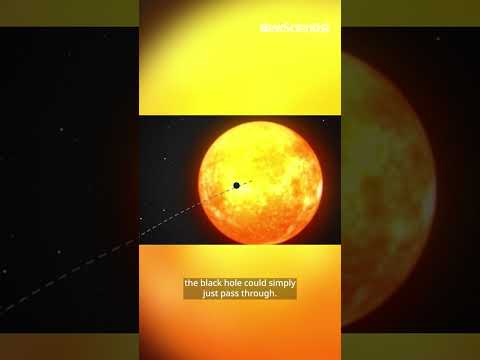
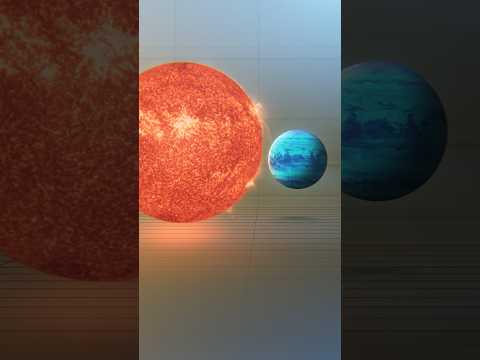
How close could you safely orbit a black hole? That depends mostly on its mass. Take a stellar mass black [music] hole for instance, about 10 times the mass of the sun. Its event horizon is only about 30 km from the center, and the closest stable circular orbit is about 90 km out, which is absurdly close. Before it collapsed, the star may have been about 20 or three times the sun's mass, >> [music] >> millions to hundreds of millions of kilometers wide, and by enough to roast planets out at distances of 100s of AU. So, the black hole is much smaller than the monstrous star that made it.
>> [music] >> And you can get much, much closer. That does not make it friendly. At 90 km out, the tidal force across your ship would be instantly catastrophic. But about 100 times farther out, about 5,000 mi or 8,000 km, >> [music] >> similar to low Earth orbit around our own planet, those tides drop to something a crew and equipment might survive. About 1 G difference between head and feet. You would still be orbiting every few seconds, moving at around 4% of light speed. So, survival is doing a lot of work here, and the bigger your ship, the worse the tidal stress. But, that gives you an absurdly powerful place to swing past, redirect, or fire your engines for an Oberth maneuver, changing speed and direction by several percent of light speed. And you're also hundreds of times closer to this dead star than you could ever have gotten to its original supergiant form. And those tidal forces drop quickly with distance.
If you're okay with a safer if lower speed boost, or are actually planning to orbit for a while. Now, take a supermassive black hole, like the one at the center of our galaxy. Sagittarius A* has an event horizon about 12 million km in radius, 8 million mi. The next stable orbit would be roughly 36 million km from the center. That sounds terrifying, but the tides there could be gentle. The danger is more likely radiation, infalling gas, and debris. Bigger black holes make for much safer places to gain speed from or to set up long-term outposts or even civilizations. For more on living with black holes or around them, watch our episode Black Sun Rising.