Lula Wins: What Comes Next for Brazil?
Transcript
Machine-transcribed by YouTube. Expect errors in names, commands and version numbers.
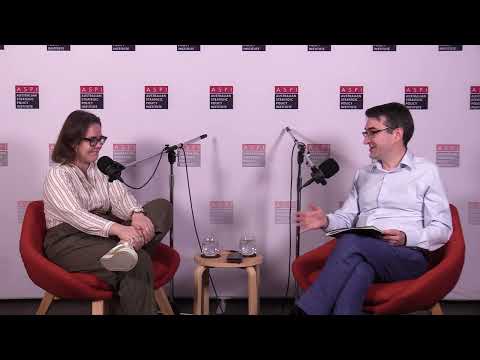
Hi and welcome. I'm Chris Hernandez Roy, acting director and senior fellow of the Americas program at CSIS and the co-host of the 35 West podcast. Today's episode is about the Brazilian presidential election that just took place on October 25th, where I was surprised that incumbent President Luis Ignasio Lula Silva won a historic fourth term by over 4.4 million votes against
right-wing candidate Flavio Bolsinado after losing to Volsanado in the first round held on October 4th. Lula's
victory bucks a trend uh of conservative or right-wing candidates winning presidential elections in Latin America over the last couple of years. Now, to help us explain what the election means, I'm joined today by Chiago Dao, an
expert in political risk analysis who advises the private sector in Brazil and beyond. Welcome to the podcast, Jago.
>> It's a pleasure. Thank you for the invitation. >> It's Jago. I think Lula surprised many observers who thought that a Bscinaro victory was almost a foregone conclusion after he won the first round by two percentage points. What did Lula do differently or how did he adjust his campaign to win in the second round? >> Well, there are several factors which are equally important. The first one I
would say is that the campaign on the first round for Lula was an analogical campaign. It was very similar to previous campaigns since Lula 1, Lula 2 in which they spent more money on bumper stickers and t-shirts than on social media. And this had an impact. The difference is that on the second round they want they went fullon on social media and their success was much bigger than they expected especially because they had no benchmark with themselves to measure how they would perform in social media. So so this ended up having a much better effect than they expected. The second point was that part of the narrative of
the first round that was performed by Flavio Boson revolved around criticisms
towards the Supreme Court. And many of
his voters and many of the indecisive voters despite not liking personally
Flavio Bosson understood that what he was proposing in changes in the Supreme Court was something important and we should not forget that during the first round the Supreme Court uh uh min some
ministers of the Supreme Court issued some statements here and there. So they became participants of the process and this was very strongly against Lula at the end of the day. In the second round, Flavio BSunaru basically never me mentioned the Supreme Court again and this became a non-topic on the second round. So this is another important thing. A third issue is that in the first round, Flavio Bolson appeared less and talked less and exposed himself less. Every moment he grew on the pose
was because of mistakes committed by Lula and Lula's administration. So in the second round the situation changed considerably in which Flavio had to appear more, talk more and and expose
himself more and at the same time that his life and the scrutiny around him became more evident as well and made many voters especially the undecided voters switch their position. And finally I would say that it was the state of Mina that played a major role. The guy that won for governor of Minerise is a Bosonaru ally. But he has
in his hands something very very uh deep to solve now in his first term beginning 2027 which is the renegotiation of the depth with the federal government. He knew that Lula or Flavio could win and he decided to abstain himself from being openly pro- Flavio and that allowed Lula
to focus his campaign on Mineris in such a strength that that was the state that he changed the most of votes. At the end of the day, Lula gained votes in every single state in Brazil and especially he gained votes from where he had performed the worst. That means that he took some votes from Flavio Bossar. >> I understand that as part of this newfound savviness in social media uh that Lula was actually given and used a smartphone for the first time in his life. Is this is this true? I >> it's partially true. Of course, he was aware, but Lula is someone that he holds an entourage around him for many years.
Uh so yes he does not hold his phone he
does not tweet he does not uh engage in social media therefore he never recognize the importance of that but this information is is correct.
Yeah, that's fascinating. Um, uh, so
we now have, uh, Flavio's Liberal Party,
uh, which has acknowledged the results of the election, even though Bossado himself um, I don't think he's overtly conceded defeat. He initially sought to have the election the election anulled. Um, and two days after the election, in an unrelated case, a judge ordered Flavio Osunado to surrender his passport and now he's apparently fled to the United States. Um, is there a risk of political instability in Brazil as a result of all these developments? the risk exists uh but it's relatively low
because first the the request for
anulment of the election was so thin that even his party decided that it made no sense and his party stepped forward and recognized the defeat. what was uh decided by the Supreme Court
by spec specifically one justice at the Supreme Court in the day of the election to extend the voting is something that uh led to a very small difference of votes or basically there were about between 50,000 and 80,000 extra votes
that were made in in that extension that was given which in a difference of 4 million200,000 votes it wouldn't make a difference at all. So that's the first point. The second >> Boss party had also asked for the for the polls to extend their >> and Bonado's party also asked for the B to for the poll to extend. So both of them argued that they needed an extension for different reasons. So this is a non-issue. Uh the issue of the passport, this is
potentially uh worrying because it was a
monoccratic decision of Alicandre de Morice, a decision that was rejected and
repudiated by other ministers of the Supreme Court and by Lula's administration as well. Several ministers of the Lula administration, they had used many words to describe that. But one of them said that Alexandria Morice kidnapped Lula's victory and created a problem for Lula. Um, which can be a a domestic problem
but also a an international problem. So
this was a decision that uh I'm not a jurist. Uh but many of them they believe
that it was a bit exaggerated because uh
it didn't need to be made with such
speed right after the election. It creates more confusion than anything else and in the eyes of many people it was a clear mistake from justice Alicandre Morice to do something like this at this moment. Okay, let's let's turn for a minute to uh Lula and what what's facing him now that he's uh won this historic fourth term. What do you think uh the biggest domestic challenge um is that he will have to face?
>> By far the biggest domestic challenge is the a fiscal reform and a fiscal equilibrium on the budget. Why this is a
major challenge? uh h in in in theory this could be a
much simpler challenge for him to solve because there people know already experts already know where budget could be cut. Experts look at the new congress which is essentially a centerright congress that is willing to approve anything necessary to do a fiscal uh reform and a
fiscal reorgan reorganization. So the players are well positioned to do that. The problem is Lula's own party.
Lula is someone that now only recently
he's recognizing the need of that fiscal reform. And then you have a group within the workers party that are more social
democrats than anything else that they have been talking about the necessity of this fiscal reform urgently. And there is a group that is slightly more radical that believes or or first don't understand about economy enough to care about the fiscal uh challenges and they believe that this is just uh uh something that comes from the financial market and at the end of the day is not that big of a deal. The group that is in favor of a fiscal reform is the one that right now is winning. So given the the the drop in the financial market right after Lula won this raised an alert for Lula and his team and they are moving forward towards this direction. So this was the main challenge. I would also say that dealing with a congress in which is
essentially against him uh some more some less. Uh this will be a challenge for Lula because Lula he will have to negotiate and concede in order to operate with Congress. In Brazil the Congress is more powerful than the executive and is probably uh after Peru the most powerful Congress in Latin America. So this is a challenge for Lula to deal with it. And third, I would also add that he begins another term with an extremely high rejection
rate. That would happen with anyone, either Lulu or Flavio. But the rejection rate is higher and will be even more
higher than the number of votes he got because the number of votes he got is much more a rejection towards Flavio than necessarily an endorsement towards Lula. So, Brazil, like many of our other of her neighbors, uh, highly polarized environment. Um, and can you just explain real quick the, uh, the Liberal Party, Bossaro's party has the largest number of seats of any party, but does not have a majority. So, how is how are they going to are there other opposition parties that that uh they will work with in order to check or try to check Lula's agenda? they will work with the centrist parties and the centrist parties they evaluate
their their alliance with the government on a topic by topic agenda. So they do
not put themselves in favor of the government since the beginning depending on the topic they change completely their position and those centrist parties they are at the end of the day a bundle of individualities. So those individuals, they have full autonomy to position themselves as they wish in each vote. So this makes it harder for Lula to negotiate and more unpredictable of how this group will position themselves uh in in each voting. >> Um I mentioned in the opening this uh
this rightward shift that we've seen across Latin America. What what do you think this election in Brazil means more broadly for the region? >> Latin American politics has a a minimum
to non-existent role in within Brazilian politics. Um, if you stop any Brazilian
in the street, um, maybe a small number will know the
name of the Argentinian president, but
they, what happens in Argentina, Chile,
uh, Colombia, Peru never make the news in Brazil. Brazil is a country in which news from Italy or Spain or Portugal are more common within the Brazilian press than news from Latin American countries.
Nevertheless, the right-wing countries in Latin America, in South America, especially today, they will be forced to deal with Brazil because Brazil's uh size in the economy is something that >> Absolutely. Exactly. So, they cannot turn their back or they can't even rely on each other for something like this. So, what will lead uh a behavior? It
will be something similar to what MLE said a couple days ago. MLE politically
has a rupture towards Lula. He didn't want to recognize or congratulate
Lula. Uh his the message that came from
his spokesperson is sort of a recognition. Uh and when asked about Merosu, he said look the commercial ties are completely different. they will keep on operating on that level. Brazilians are our brothers and our economies they rely and they work well with each other. So this narrative is a clear narrative of dissociating his fondness or lack of fondness fondness for for Lula from the
commercial relationship that is absolutely important for both countries but way more for Argentina. the same will happen with other uh leaders in the region this towards the relationship with Brazil >> who who have actually maybe aside from MLE uh many of the other right-wing leaders cast in Chile Fujimi in Peru uh
Pena in in Paraguay they've all uh they've all congratulated Lula on his win >> they all congratulated because they they understand that it's absolutely necessary to maintain a good relationship with Brazil for their own interests. Um, Brazilian left is slightly different
from the Latin American left of these countries. Um, although the narrative is
many times aggressive and the foreign policy is probably the major exponent of how this leftist uh movement in Brazil thinks. At the end of the day, uh we never had any nationalization. uh we never had anything in this sense happening in Brazil that could uh generate a rupture in this sense. Um
Brazil has remained being one of the top destinations of foreign direct investment. Although now the fiscal burden and the high tax in Brazil is
something that is extremely negative for attracting investment in the country. Chgo. So effect on Latin America and in both directions, but maybe a a bigger question uh given the size of Brazil and the importance of Brazil regionally and and frankly globally. How do you see US
Brazilian relations evolving as Lula starts his fourth term? >> It will be a relationship that um will
come and go. It's important to Trump when he talked about the Brazilian election, he made uh it was very interesting some of the remarks he made. He challenged the the the election and something that he he does uh consistently uh regarding the result. I think that the result is something that eventually he will his administration will recognize especially because Flavio's party recognized. So this is a very important thing and it's not legally challenging it. Uh I believe that Trump will probably go tougher
towards the Supreme Court. Uh most
especially Aleandre Morice. It's up to Lula now to convince uh not only Trump
but also many uh opinion makers over the
world that his relationship with Alishandri doesn't exist that he was actually angry with what happened. Lula
and Trump paradoxically they have a very good personal relationship. They like each other in the personal level and this facilitates a lot of the conversations going forward. uh the tariffs haven't played the role that Trump expected in Brazil because Brazil relies very little on the US in terms of exports. So about 10% of Brazilian exports are to the United States in which more than half of those exports are exempt from tariffs. So around four or five% under tariff which is bad but is not structurally bad for Lula. Uh this is why during the campaign
this actually felt positive for Lula
because it was linked by many voters to the Bosonaro family the tariffs than anything else. What will happen right now is Lula has to be skilled and open to a dialogue with Trump in order to uh
to to avoid ideological barriers being bad for the relationship between the two countries. Trump will remain being very interested in Brazil because of the critical minerals and it's up for Lula to be pragmatic in this, ignore the
advice of some of his uh advisers and
move forward into the pragmatic relationship that is necessary with the United States that will revolve around critical minerals. >> That's that's fantastic, Chiago. Um I've learned a lot today. Let me see if I can try to summarize some of this for uh for our listeners. So, Lula first of all uh was successful in the second round uh for a number of reasons including uh a newfound embrace of sort of social media tools and social media savvy campaign. Uh issues around the Supreme Court played an influence in the second round as did greater scrutiny of uh Flavio Volinado. Um, I learned that uh a number of the other Supreme Court justices were opposed uh to Demora's uh order uh to have Flavio surrender his
passport as was Lula too. Fiscal reform
uh seems to be uh the most important domestic challenge facing uh Lula as he enters his fourth term. I was surprised uh to hear and I think the reverse is not true um that Latin American politics
play almost no role and have no influence inside Brazil. Uh but certainly the other way is the other way around is true. And so maybe with its neighbors who in some cases certainly MLE uh and maybe with some of the other right-wing presidents you might have cold politics but hot economics to borrow um uh to to borrow a term from from another relationship. The relation with the United States um will be
pragmatic. Lula has a good personal relationship uh with the president even though the president will probably go hard against that Supreme Court judge. So uh Jack, I think this has been fascinating. Thank you so much for joining us uh on 35 West and I hope you'll consider joining us again in the future. >> Thank you for the invitation and it's always a pleasure. >> Thanks for joining us on 35 West. Please tune in in two weeks for our next episode.