What Is Shady AI?
Transcript
Machine-transcribed by YouTube. Expect errors in names, commands and version numbers.
Have you heard about shady AI? Well, this is a new AI security term that you're probably going to start hearing about a lot more. And no, this isn't some sketchy or dodgy AI model that you download from the dark web. In fact, the scary part is that shady AI can be completely approved by an organization. You may have already heard about shadow AI. That's when employees start using AI tools, models, or agents that their company doesn't know about or hasn't approved. For example, maybe someone signs up for an unapproved AI service using their work email and starts uploading company documents without telling IT. That's shadow AI. Shady AI,
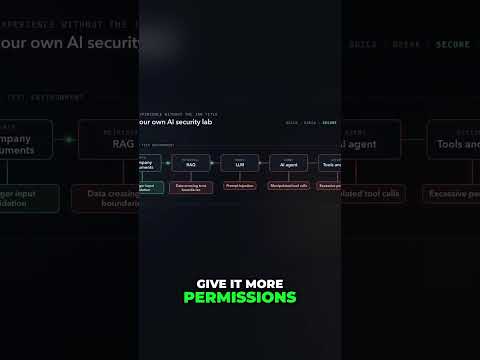
however, is different. This is when an AI tool has been approved, but the way it's being used, what it can access, or what it can actually do, starts moving outside the boundaries of what it was originally intended to be used for. And I think this distinction is going to become incredibly important as companies start deploying more and more AI agents. Imagine your company approves an AI assistant specifically to summarize documents. That's pretty straightforward, but let's say six months later, someone connects that same assistant to your internal knowledge base, then to your email, then to your CRM. Maybe it gets access to your Slack, your cloud environment, or other internal tools. Eventually, instead of simply reading information, you give it permission to actually do things like modify records, send messages, or execute automated workflows.
Technically, it's still the same approved AI tool, but from a security point of view, it's now an entirely different beast. As an example, what happens if the AI reads a confidential document, summarizes the sensitive information inside of it, and then emails that summary to someone who shouldn't have access to it. You've suddenly taken three individually authorized actions and combined them into a completely unauthorized outcome. And that's where traditional security controls can start running into problems. They may be looking at whether an identity has permission to access a resource or perform an action, but with an autonomous AI agent, you also need to understand why those actions are happening, how they relate to one another, and what the final outcome actually is. And there's another problem you need to think about. AI environments change incredibly quickly. New models get introduced, agents gain new capabilities, employees connect additional data sources, etc. An AI application that was once considered relatively low-risk when you approved it could become significantly more powerful. So, simply approving an AI application once and then putting it on a list of approved tools probably isn't enough. I want to thank Radway for sponsoring this video, supporting my channel, and making so much of free information available in the age of a generative AI, approved doesn't necessarily mean controlled.