Is the U.S. Learning Fast Enough? Lessons from the Ukrainian Front Lines
Transcript
Machine-transcribed by YouTube. Expect errors in names, commands and version numbers.
Welcome to the last line of defense. My name is Seth Jones and uh had the great privilege of welcoming uh General Curtis
Buzzard. General Buzzard was the three star most recently the three star army commander of the uh security assistance group Ukraine and also the NATO security assistance and training for Ukraine and SATU. So, General Buzzard, thanks for for joining us today. Really appreciate your time. >> Well, thanks for having me, Seth. Great to be here. >> All right, let me just start off with um your responsibilities. Uh you just finished up um uh overseeing the training mission. What were your responsibilities? And then to take a step back, you how has the US been aiding Ukraine certainly while you were
um running uh Sagu and and and what
impact did it have uh especially support
to the Ukrainians? >> Well, great great uh great first question here. I think that the uh you know, US aid to Ukraine has come in a variety of of uh of things over the course of the last you know, four and a half years. and upfront I mean who would have imagined the position Ukraine would be in right now you know over 4 and a half years into this fight but US is supported with a variety of different information and intelligence with funding with security assistance whether that be training or material you know high-end systems and capabilities like Patriot and highars as well as ammunition uh but I would you know want to make sure to caveat with that that uh we've helped Ukraine in a variety of ways, but that shouldn't take away at all from their courage, their will and their innovation. And you know, we can talk later on some of the things they've done, but there's been a tremendous amount of innovation on their own part in creating their own uh capabilities in
terms of that the headquarters. So, I was dualheaded. I took over initially at Security Systems Group Ukraine or SAGU uh which at that time was kind of cohering everything. It was uh helping the Ukrainians be as effective as they could be on the battlefield as well as coordinating all this uh training and and security assistance. And some of that was through something called the international donor coordination center where all the allies that kind of uh all come together to sort through what they were going to going to provide. And then shortly after I took command of SAGU uh we stood up and satu NATO security assistance and training for Ukraine. And that came out of the July NATO summit where NATO wanted to take a more pronounced role and said we want to take on coordinating uh the training, coordinating all the security assistance and also working force development. So how to help Ukraine over the next 24 months uh you know think about how to be interoperable with NATO in their own uh force design. So these headquarters being dual hated work very closely together and were really mutually supporting in terms of an operational understanding of the battlefield and then what's required with respect to training and security assistance and and uh and the goal was was really to cohhere efforts across the alliance and really the broader Ukraine defense contact group. You had nations from outside of NATO that wanted to help and participate. So how do you cohhere these to make sure we're really meeting the priorities? what does Ukraine really need? How do we make sure they're delivering what they actually need? And you know, right now those are air defense munitions, it's funding for drones, it's extended range artillery, electronic warfare, uh, etc., etc. And then the other big thing was to try to improve predictability because, uh, you know, Ukraine could only plan operationally, uh, if they knew what they were getting. And so how could we help better inform their planning efforts and their ability to to operate together? And uh it's so lasting I would just say being uh in charge of both these headquarters, responsible for both of them was really a a unique opportunity for me and it gave me opportunities to travel into Ukraine you know 30ome times and get to see things and meet people develop close relationships with government officials with the general staff with units and really watch them evolve over this period. visit the unmanned systems force, visit some of these underground command posts. And I think this is the most consequential environment uh to observe the evolution of warfare right now. And it so really gave me firsthand observations about the the future of war unfolding uh and it's really an action reaction counter counteraction at an incredible pace. And uh and I've really come to respect our our Ukrainian partners also. And and I conclude I just whenever I'd go meet him, I was coached early on by a wise mentor uh to make sure when I first met him to um to emphasize that one I recognized they've actually been fighting since 2014, not 2022. And they're fighting a war I haven't fought. I mean large scale combat operations and and so there's as much as I can bring things uh to share with them, there was also a lot a lot for me to learn. So just really a a tremendously unique opportunity I'm grateful for. So part of the goal here I think over the conversation is to take advantage of the amount of time you spent in Ukraine uh and to get your
assessments of a number of things and we'll talk through the changing character war some of the big insights or lessons and I think we'll talk through some very specific issues like unmanned uncrrewed systems and and potentially what our adversaries are learning what are the Chinese and the North Koreans uh the Iranians learning from uh from the the war in Ukraine. Again, the the fact that uh you can correct me here, but I suspect you're probably the general officer with the most time on the ground in uh in in Ukraine, which which means your insights are actually particularly valuable because they're based not on stuff you read or or people you talk to, but actually time on the ground in country.
>> Absolutely. And uh again just a amazing
opportunity for me and the relationships I you know I continue to maintain. I mean these these you know aren't only professional peers but they also became friends and and very much admire what they've been doing. >> Yeah. Uh well let's let's get to kind of your assessment of the war right now uh both from the Ukrainian side and the Russian side. I mean, as you're as you're aware, uh, some of the data collection analysis we've done here at the Center for Strategic International Studies certainly shows some interesting patterns on Ukrainian advances in uh, short, medium, and long-range strike into Russian territory. some of the Russian challenges in uh just extraordinary numbers of fatalities and broader casualties.
Uh almost historically slow average rates of advance and very limited territorial seizure including in some months actually the Ukrainians in 2026 seizing more territory than the Russians. So, but but how do you see how do how do you see the war today based in part on how much time you spent in country? >> Well, first I would say this war continues to prove that the the nature of war remains the same. This is a brutal contest of wills and it and it's manifested in everything you see going on. But the character of war had the means we fight and how we fight are clearly changing and the Ukrainians have been taking, you know, great advantage of that. uh you know in terms of the front I mean who would have imagined they've essentially halted the Russian offenses and Russia's not accomplished a strategic objective in this war yet um and the Ukrainians have been doing this largely with innovations in in unmanned systems particularly drones and so as you mentioned they've largely have stopped Russian advances and these advances or the continued attacks are at great cost to Russia you know over 30,000 casualties a month generally and from reporting you over 60% % are fatalities. So this is incredibly lethal and that costs Russia money to recruit and to pay death cuitities. So there's a an econ economic impact, but Ukraine's essentially have this minimally or unmanned contact layer along the front that is very difficult to uh to to penetrate. And then they've also done some counterattacks and we can talk some you know some of that later maybe in terms of maneuver and they've been right now there's one operation vivaldi a lot of folks are talking about with third army but uh general proceno down at datetsk had done counterattacks and uh general postl the airs assault commander airborne commander down south had done them in zaparisia but they've been taking back terrain too in the midstrike that's that's been very effective about 20 to 30 to 150 kilometers to help relieve pressure on the front so they've been very effective at striking logistics nodes, command and control, etc., EW, electronic warfare. Uh, and
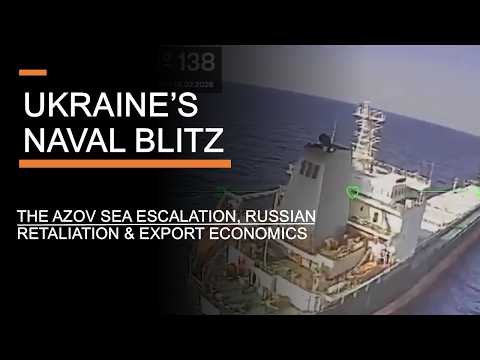
then you look and then in Crimea, there's been some some very successful operations down south to isolate Russian forces. And then using drones also on the shadow fleet and and grain vessels again, uh, military, but they're really an economic impact. And then deep strike, uh, defense industrial bays, petroleum storage, and refinery. >> You're so sorry. You're talking about Russia's uh deep a deep strike into Russian territory. Russian. >> Yeah. Yeah. Yeah. Yeah. Exactly. Ukrainians deep strike into into Russia has has uh and most of that's with with indigenous capabilities and a ton they've learned on just how to execute that. But that's that's clearly had a had an impact also most recently these huge logistics sites, wild berries and and uh and the data centers also. And so collectively I think this all aggregates to be military pressure, economic pressure. Um and and so I think that you
know Ukraine often thinks that I I need to make a you know a deal today is better than a deal tomorrow for Putin. Um you know if I'm inflicting a lot of casualties on the front, he's potentially losing terrain. Uh his economy is getting worse every day. Ideally at some point would he think that a deal today is better than a deal tomorrow? And I don't know whether that'll actually end up happening or not, but uh they're certainly in a position that that uh in terms of in terms of what they're doing and and I think these long range strikes you're seeing from Russia to Ukraine now is really somewhat of desperation because they're not achieving anything on the front or very little gains. And so the only thing they can do, and a lot of it's due to shortage of global supply of uh air defense interceptors, is to strike into uh strike into Kev and and make it seem like they're more effective than what they really are.
>> Yeah, I would say the uh you know there's there's some interesting historical analysis on uh air campaigns.
Um and I think in part the air component of this fits in that category. uh this
uh use of what some called a punishment strategy really to target the civilian population, commercial hubs, energy infrastructure the way the Russians are doing with >> with uh Ukraine has typically not been effective uh without a major successful
ground component and I think that has been the Russians >> big problem. So I I think the historically uh hard to see how what the I mean it's
a terrible cost for the Ukrainians uh
and its population, but hard to see that this Russian approach is likely to have
uh significant success. But you ranged you you raised a bunch of questions or or issues that I think are worth focusing a bit more on uh including what kinds of um unmanned capabilities and then uh medium and long range strike the
uh Ukrainians have been building indigenously. What is your assessment of how they have innovated? I'm I'm thinking of some of the more recent like FP5, FP7, uh, as well as some of the drones, AI enabled drones that they've used. H how how are you seeing innovation happen, including on those unmanned systems from the Ukrainians? >> Well, I would just take it, you know, a step back. The the number one thing I've learned, and a lot of people would ask, is it technology, you know, drones, is it whatever? It's this velocity of learning that the Ukrainians demonstrate where they from uh observing to learning
to adapting to then fighting it again. This this loop action reaction counter action is just is just unbelievable. And I think it equates to to uh combat power. And when you look at at at a lot of the success they've had on the battlefield, it's due to their own innovation. Uh you know, they didn't have enough mid-range strike capabilities, so they invented their own. they didn't have which are those those certain firepoint and a variety of other uh capabilities that are out there. There weren't enough interceptors to engage shahads and now jet powered shahads. So they created their own. They created drone interceptors which actually from a cost standpoint are tremendously uh cheaper than what um you
know what it would normally cost. And they've really kind of you know mastered I would argue the cost of war the the the develop cheapable because they haven't had expensive and exquisite. And I think that's an important lesson for us to learn, you know, what's the right balance of that and how do you layer this capability and with some of the very exquisite stuff that that that we have also. But it's just it's uh it's unbelievable how quick they iterate. As you look at some of the longrange strike with drones, you know, even over the course of several months, uh it's a different drone, a different technique, a different uh which is what's used in the later, you know, an earlier and a later one as you compare these things.
So just just some incredible innovation particularly in the middle deep strike and then they're learning a lot just about how to do this you know how do you weave through the electromagnetic signature the EW the air defense you know what's the right weapon to target pairing uh what's the type of redundant network how do you dynamically control these all kinds of other things that I think would be hugely valuable for us but again it all comes back to that velocity of learning from unit to industry to government funding Um, and I would just share one one example. Uh, you know, most Ukrainian drone companies on a drone is a QR code. So, if you're out on the front, you get a drone from a company and there's something wrong with the drone, you scan the QR code, it'll go right back to a 24-hour op center of a Ukrainian company, then probably down to a team that's there to help you out, or you may even talk to them right away.
And then, and then if it needs to be adjusted, they're probably changing the production line within 48 hours. So like you know how to adjust that rapidly or if the frequencies change how rapidly they got to change what frequencies are on. So uh just an incredible amount of uh of innovation at a pace that is important and gives you combat advantage quite honestly. And so we got to think about how do we learn from this? How do we war and the sense of urgency they have you can't you know you can't replicate but thinking really hard about this and our own acquisition uh approach etc. So, one one additional area I did want to uh ask about is uh data and battle management. And one of the things that's been interesting to to see is the
uh Ukrainian development and use of Delta. And so for those that aren't as familiar with battle management, >> uh, how would you describe how the Ukrainians have knit together their the sort of battlefield picture in ways that are usable from multiple levels of uh of
the Ukrainian military? >> Yeah. Well, when when anybody wants to talk about employing unmanned systems, whether it's drones, UGVs, u, you you know, USVs on the water, etc., etc., etc., I'd say the secret sauce is really Delta. It's this mission command system that enables them to be uh you know what what we like would like to call in the you fast flat and accurate over 200,000 users. So on a handheld device you're able to see a common >> like your cell phone like your cell phone or a tablet or a tablet. I used to carry tablet layers of intel um so you
can see where the enemy is. You can coordinate missions. you can do targeting on there. Um, you can also see every drone feed and they've got an app called Vasia which allows you, it ingests every drone feed so you're not having to, you know, proprietary computers with imagery or whatever. Um, and so it's really the secret sauce that allows them to fight so fast and rapidly upload BDA. I mean, they will >> battle damage assessment for >> Yeah. battle damage assessment. Yeah. to rapidly upload what they've just done and then using that data to better understand what tactical effects they've had on the battlefield. And and the guy that's really remarkable doing this is Robert Brady, the unmanned systems force commander. Uh you know, who was a businessman three years ago, a grain trader, art dealer. I mean, his his underground command posts are kind of a surreal experience because you're watching essentially like a Vegas stream of what effects they're having on the battlefield in terms of destruction of enemy. And then there's this incredible piece of art with a QR code on it where I can I could look up the history of it.
Uh but so so an incredible amount of data and then they're doing some really innovative things with that data also in terms of again valve damage assessment and then trying to do the easy stuff for like like how do I automate intelligent summaries? How do I automate logistics requests? How do I use AI you know to a degree or or algorithms to uh to use this data? And then I would just lastly say that um you know they're sitting on the world's best combat data when you think about all the imagery feeds all the understanding of Russian attacks into Ukraine and what routing speeds you know all this stuff. And so there's opportunities to work with them to use this to inform aided target recognition AI our own stuff and ideally to support Ukraine first and foremost but also to learn ourselves. there's a professional responsibility to do that. This this data in in uh particular makes it you know reinforces this idea of a of a lab a battle lab that this fight is.
>> Yeah. So uh before getting to uh some of
the US lessons and what what we should be taking away and and and probably broader NATO countries. Uh I I do want to get your sense of how the Ukrainian military has been and this may be happening in different ways has been interacting with companies in and around even at the tactical level because I suspect that uh
number of soldiers uh do require real back and forth with companies that are have to adjust. I mean, if part of one of your primary takeaways is the speed of learning that's required with this changing character of war, >> then there there there must be some
interaction uh significant interaction required between the the private sector and companies that are producing stuff in the military that's using using it. What what did it look like uh as you saw it? Well, first off, I'd remind people, I mean, in my mind, Ukraine is kind of like the Silicon Valley, the Soviet Union. I mean, they already had a real knack for technology and innovation. And I think that um who they've recruited too into their unmanned systems force in particular was largely civilians. They took people with a background in drones or technology. And so I think something for us to think about is how do you have uh an environment where the tactician meets the technician at the front where they're you're kind of the same person.
You understand what needs to happen and then obviously industry is all the way to the front. I mean they help in missions they help because they want to make sure their stuff works. I mean I would just provide an example when we had some Ukrainian drone crews out in Germany for an exercise and their industry came with them. I mean, they had Ukrainian drone. They wanted to make sure their stuff performed. Uh, I would also say there's things that we probably can't do, like there's people in units that are also in that company. And so, there's uh, you know, things we wouldn't be able to do.
>> Some conflict of interest potentially. >> Exactly. But, you know, the sense of urgency of war and so they, you know, again, this this this close-knit uh, effort very close to the front is what's really been super beneficial for them. So, General Bowzer, one question that sometimes comes up is is really can we learn anything from the Ukrainians. There are a number of people including uh in the US military which who have raised questions about we fight differently. We would be able to maneuver uh we wouldn't, you know, we we we've got joint capabilities. We could bring in air. We could bring in naval assets uh in addition to just land. and that there's really not much significant that we could learn from the Ukrainians.
How how do you respond to that? >> Well, I think you you really have to come into this with an open mind. I mean, sure, there's things we would do differently. There's ways we would fight differently, but I'm also you can't be so, you know, too proud to learn. You have to recognize that who would have imagined what Ukraine has done again over the last four and a half years. And so, you can't have that bias. I think it's shortsighted. There is a whole lot to learn. There is more to learn than not to learn here. You know, people will talk to me about, well, we were a maneuver military. Well, we are a maneuver military, but I don't know that we have fully learned yet how to maneuver in this type of environment, and this is where there's incredible opportunity to learn. Our adversaries are going to use drones to again cheapable to offset some of our capabilities. And we need to think differently about how to do this and how to maneuver. and Ukraine offers that uh opportunity. So I I think for those that have that bias, you got to overcome it and you got to recognize that this is an incredible professional opportunity to learn and in the back of your mind we should be thinking, you know, am I paying down the future cost and blood and treasure right now or not? So what what what are your thoughts on how the US uh can and should move forward? The
uh you know for example, do we need a separate branch for unmanned systems? That is something that has been discussed. The senior Pentagon officials have been talking about that. What do you think? And and what might that look like based on uh you know what what you've seen? >> Well, that's been the like million-dollar question. I remember going in my last job. I was at Fort Benning and had a role with modernization of our brigades and thought about this a lot and you know was kind of curious uh particularly going into the job with the Ukrainians and so the questions largely been you know should we layer them throughout our formations drones and drone capability or should we have a separate force and the really the answer in my mind is both you have to have some every type of organization is going to need drones because you use them for a variety of things not just attacking but defending yourself, uh, logistic resupply, medevac, I can think of all types of things. Um, and then you need separate units that are really good. And for all those to be good, they should be from some type of military specialty or branch if you think about in the army.
So having a separate branch, if you want the drone crews embedded in units and the separate drone crews to be really good, they all need to come have come from the same training, understand the same doctrine, they know how to fight, they've got the same command systems. And so I think uh and I see it in in in Ukraine right now. There's elements embedded in every core and brigade that that fight, you know, particularly tactically focused on what the ground force commander wants. And then you've got separate units kind of like artillery that are reinforcing fires. So they kind of they kind of come over the top like the unmanned systems force. If an element's having problem in a certain area on the front, they'll get reinforced by this by the unmanned systems force, these 12 separate drone brigades. And then you you want somebody to also f focus in the middle strike area and deep and and and uh be able to
complement our existing capabilities. So as I think about it, you're going to have drones embedded in, you know, you could argue a, you know, battalion in every brigade, uh, you know, drone strike unit in a division or core, etc., etc. So, it's really it's really both and and having coming from the same training background is very important, I think. >> Yeah. One one followup on that and we had uh recently we had Frank Kendall uh secretary of the uh uh recent secretary of the air force on uh to talk among other things about sort of his general view of the evolution of unmanned systems and he talked through uh the
surface uh underwater >> as well as ground in addition to the air and you when you look at the Pacific you're talking about you know larger distances is >> uh including under sea. How do your thoughts on uh a separate branch in the use of unmanned or uncrrewed systems? How does that differ for example in um a
European theater versus in a Pacific where the time distance is certainly different? And then you know maybe you're talking more about air sea battle in a Pacific contingency. >> Yeah. And these are in my mind again separate branches within each of the services. So you'd have an unmanned you know branch within each one just to develop that expertise. Clearly I think that uh the Indopacific is is obviously different. I mean the scale of the distances is different. The type of the way terrain is uh is different but I think you would you will see us and others innovate to be able to apply unmanned systems in those in those environments. And I've often argued that uh you know the best place to learn if you want to deter China uh you you know you show your capability works in Ukraine in the Black Sea and and uh so so the distances aren't the same there's clearly opportunities to to leverage this current war there but I think we're going to see an explosion of this underwater on the surface and really more integrated which is what is primarily a land battle right now in Ukraine. So a lot of this is about you know is about terrain but um but but these systems working together. So think USV with drone interceptors or electronic warfare on it almost a marupial capability that's that's pushed out as a picket line let's say you know beyond Tanu etc. So are I have to ask
are we are we learning fast enough? There are there's some exercises US army forces have been involved in for example in Europe where uh Ukrainian unmanned systems have handed it to uh you know brigade combat teams. Are are we are we learning fast enough and and if not where where do we really need to start pushing? >> Well I think yeah I think that's a million-d dollarar question. I mean we really uh you know are we learning enough and are we learning fast enough and I think you know particularly when I look at our adversaries they're first and foremost watching us to see what we're doing and clearly there has been learning. I mean you think about some of the unmanned capabilities that have been used in the conflict with Iran. You think about uh some of the different tests we've done. You think about the standup of Giata 401. uh huge issues with countering drones particularly in you know concerns um but I'm but but I'm not sure if we're moving fast enough just as I look at what you know Russia will have 160,000 in their unmanned systems force by the end of the year that's estimates there and this really applies to NATO also too when you think about how Ukraine has used unmanned systems to offset the massive momentum of Russia um if I was anywhere along the eastern flank kind of deterrence line or you know initiative there. I' I'd probably want to have some drones. I'd want to be prepared to use unmanned systems offset momentum and I'd also want to be prepared for an onslaught of drones coming, you know, from uh from Russia. So I think I think we got to look at ourselves in the mirror and go, you know, are we learning enough? Are we leveraging this tremendous opportunity that that this war presents ourself? you know, first and foremost is helping Ukraine, but also uh it's a professional responsibility to learn and and that learning will help us pay down a cost in blood and treasure in the future. That's extraordinarily important.
>> Yeah. Uh well, the other side of that question is also this is really the last one to wrap it up is uh what is your
sense about what the Chinese are learning? uh you know number of indications of uh Chinese uh at least on the ground including some contractors on the ground learning from the war in Ukraine. Certainly the Chinese are providing significant components to Russia's industrial base. the North Koreans which have fought on the ground in Ukraine and Iran and the Iranians uh which have also provided significant assistance including >> the Russian Shahed versions the uh so what what what what are they potentially learning and and what should we be aware of there then >> well again I think the first thing is they're watching us what we're doing or not doing to recognize is there a vulnerability and you know maybe where we aren't learning uh you know first and foremost and then I like to look at in terms Obviously, Russia's learning and not just adapting, but organizational learning. So, across doctrine, organizations, training. I mean, they're learning um and they've also, as we talked about, data before they've got the second best combat data in the world. And I don't know to what degree it's being shared with these other adversaries, but that's something we should be we should definitely be uh be concerned about. And as you mentioned, North Korea, they're getting com They haven't had combat experience since the Korean War and they initially fought up in the Kursk area to help drive Ukraine out, but then they stayed. I mean, they took incredibly tough casualties. And when I ask Ukrainians, who are the toughest people you fought against? They generally say Vagner Group and North Koreans because of how like maniacally dedicated they were to their commanders and just continue to attack. But they didn't recognize the battlefield they were on with all these drones and Oman systems and took horrific casualties.
But they've learned and they're still there and they're flying drones. And then you think Iran obviously shahadeds how to do long range strikes with ballistic missiles and drones etc. What what's in the drones? What type of antennas? What type of targeting? And then uh and then obviously China's taking all this in. They're watching everybody and uh and they're learning. I I know there have been some exercises where they've been layering long range drones and with missiles being launched, you look at uh the data, the feedback they're probably getting back on exploitation on our equipment that Russia has and this you know increasingly um you know increasingly close relationship with Russia. So I uh and I guess lastly you think about terrorist organizations too. I mean, I worry about, you know, particularly when this war ends, what what what will involve is private military companies with incredible drone capability and you think about how this will manifest itself around the world. So, so I think we should really be looking hard at what, you know, what uh what are they learning and uh and and to what degree are they, you know, maybe in some cases learning more than we are.
>> Well, General Buzzard, thanks so much for for joining us today. your uh again your experience I think on the ground in
Ukraine and your your support and cooperation not just with the Ukrainians but actually across the broad a broader uh NATO continuum working with NATO
security assistance and training mission for Ukraine. Great example of the cooperation that needs to continue to happen across NATO countries in aid to Ukraine. Thanks for your thanks for your time today. Thank you. Absolute honor of a lifetime those that that job and and you're so right in terms of working so closely with our allies and partners and tremendous respect for them too. But thanks for having me. Thanks for listening to our episode today. Please subscribe wherever you listen to podcasts. For more analysis, please visit csis.org. This is the last line of defense.