India and China’s Uneasy Coexistence
Transcript
Machine-transcribed by YouTube. Expect errors in names, commands and version numbers.
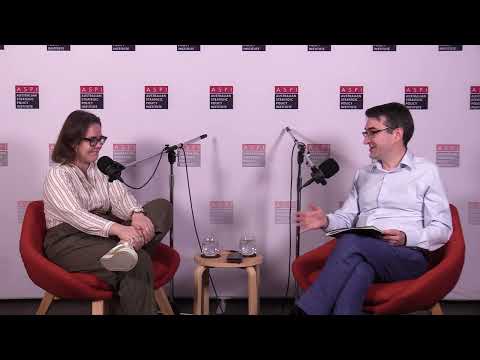
unabashed. >> The most unpredictable >> becomes a headline. >> The most volatile, >> outrageous behavior, >> unsubstantiated narratives, a battle of personalities. >> Welcome to Grand Theash, a co-production of the Carnegie Endowment for International Peace and the Hindustan Times. I'm your host, Milan Bashv. China remains one of the most consequential and most difficult foreign policy challenges facing India today. Even as tensions along the border persist, New Delhi is cautiously rethinking economic ties with Beijing. This rethink in turn is taking place against a broader change in the strategic environment as Washington rethinks its own relationship with China. Few people in India have thought more about the changing China India relationship than Ambassador BJ.
Ambassador Goklay is a non-resident senior fellow at Carnegie India. He retired from the Indian foreign service in January 2020 after a diplomatic career that spanned 39 years. From January 2018 to January 2020, he served as the foreign secretary of India. Previously served as India's high commissioner to Malaysia, ambassador to Germany, an ambassador to the People's Republic of China. Ambassador Gokle has written five books on China, the most recent of which is titled China's Wars: The Politics and Diplomacy Behind Its Military Coercion. His latest book examines how Beijing uses coercion, diplomacy, and military force to advance its interests and what those patterns can tell us about China's behavior today. I'm pleased to welcome Ambassador Glay to the podcast for the very first time. Sir, very good to see you. Thanks for making the time.
>> Thank you, Milan. It's a great pleasure to be on the podcast. I want to start by asking you about your book, China's Wars, in which you characterize China as a quote unquote opportunistic power, but also one that is fairly cautious, fairly judicious. Uh, I'm wondering if you could just talk broadly about the conditions that make Beijing decide that the moment is ripe for coercion or military action. >> Yeah. Well, Billard, thank you very much for u introducing my book. Uh the book
was essentially written because I was initially doing some work into why China launched the war in 1962 with an effort to see whether the narrative that has been crafted after the war of 1962 which was that India provoked the conflict was supported by evidence or facts. uh and that led me then to start looking at other conflicts that China had fought in the past and the current grreyzone warfare that it is engaging in uh with the Philippines, with Vietnam, with India, with Japan and with other countries. And uh I pretty soon came to the conclusion that there were several factors which u uh sort of led China to
use military coercion or force at times
to achieve its objectives. First and foremost, I think the objectives were political and not operational. In other words, I think China was not really concerned how many people or how much material was spent in the process of the
war provided the political goals or objectives set by the leadership were achieved. And an important lesson from this is that therefore China does not engage in conflict simply on the basis of calculating the cost benefits in terms of dollars and cents or in terms of men and material. it actually determines uh whether to use military coercion or not based on whether it can achieve political goals and if those political goals are achievable then the operational costs whatever they may be are acceptable. Uh a second finding was
that China did not appear to rush into a conflict or seek a prolonged or indefinite conflict. And I think this has resonance today particularly in the context of both the Russia Ukraine war and the uh US uh Iran conflict. uh China
prefers and preferred in the past to use
other means uh short of the use actual
use of military force. Uh those means included diplomacy, it included coercion in the gray zone, it included other forms of pressure such as economic pressure uh and so on. and it resorted
to force only when it felt that none of these were able to uh achieve the objective that China was seeking. Uh the third finding was interesting. I found that there was always a domestic element to uh the as one of the reasons for
conflict. Uh now of course we do know that uh it is not just in authoritarian systems but in democratic systems as well that leaders tend to resort to external adventure when they are facing a domestic crisis. But in a democracy there are means by which this becomes public knowledge because we have parliaments, we have the media, we have civil society uh and so on and so forth. in China because it's an opaque political system. It's very difficult to discern this domestic element uh in the decision-making process which leads China to conflict. But what I was able to trace in uh through my research and to put in the book is that in each case when it fought a conflict with the United States uh during the Taiwan crisis uh in 1962 with India in 1969
with the Soviet Union in 1979 with Vietnam. it these were at turning points when there was a deep political crisis at home and uh in a sense that political crisis also drove decision making relating to conflict. Uh now the other
point you asked me about was my description of China as an opportunistic power. uh I don't mean by this that China is an exception because uh most countries would tend to use the opportunity to to to object to achieve their political uh objectives. But what I meant is that China in particular looks at not simply a bilateral context but a global context when it determines conflict or the decision uh to use force or threaten to use force. In other words, it looks not only at the power equation between China and its adversary, but also at what other principal powers in the world are likely to do or how they are likely to react.
And in that sense, when it senses an opportunity that those other major powers are otherwise distracted, it is then that it uses that opportunistically to achieve its political goals. So if you read the book uh my description of China as an opportunistic power is really defined in terms of that. >> So I want to go back to one of the principles that you mentioned that emerged from the research you did for the book which is kind of China's aversion to kind of protracted conflicts
right of the kind that we're seeing in the Middle East of the kind that we've seen for some years now between Russia and Ukraine. And I want to ask you about that aversion in the context of the China India relationship because you describe their relationship as one of armed coexistence. Now of course it's true that it's not exactly a full-blown war. Um there it's a kind of low inensity conflict. We see these these occasional flare-ups. Uh you know Galwan in 2020 of course most notably. Um I
wonder how that squares with this broader aversion uh of you know wanting
not wanting to get bogged down in long-term war but yet you know nevertheless getting stuck into a kind of equilibrium visav India where you have this lack of resolution uh along a critical border. I think there is a line to be drawn between conflict and gray zone coercion.
Uh I think conflict uh first of all involves the deployment of much greater force uh for an indefinite period of time unless you are quite certain that you will prevail over the adversary uh within a short time frame. And again I want to relate this to what is happening between the United States and Iran today or between Russia and Ukraine because once you get into a conflict the decision to end that conflict is with two parties. Grayzone warfare uh to my
mind at least uh involves much less deployment of force. It costs less. At the same time, it achieves the objective of keeping the other party bogged down
and in a sense physically as well as financially exhausting the adversary
uh to the point where it might come to negotiation or it might decide that settling matters presumably to China's advantage uh might be a better option than the extraordinary costs that it might have to bear if it results in conflict. So I think these two are quite distinct and I don't believe that uh China's use of grayzone warfare is in a sense either tying it down or uh in a
sense uh an a huge cost to the ex-checker or to the military. It is a relatively cheaper option to deal with a neighbor which it sees as some form of a challenge either today or in the future without actually engaging in a conflict where uh the unknowns are much greater
than in this relatively controlled environment. Now China of course does this presuming two things. one that the
adversary doesn't really want to escalate because the adversary feels if it responds if it counter responds to the gray zone warfare and escalates then it is a full-blown conflict and the adversary has no idea whether it can prevail over a much stronger opponent. uh that so that's one uh two that eventually therefore because larger or wider conflict is not the option the adversary will therefore eventually at the end come to the negotiating table where China will presumably have an advantage and will achieve its objective. So this I think is really the larger thinking
strategic thinking behind uh China when it engages in grayzone warfare with us. So I think that's a a crucial distinction that you just made. Uh but I guess the the follow on would be can one infer from what you've just said that this kind of persistent tension along the LAC is an acceptable kind of you
know is is the status quo acceptable to China in the sense that it doesn't necessarily feel any kind of pressure to resolve this tension in the short to medium term.
So I would say uh that is precisely uh what the Chinese thinking is to my mind. In other words, I think they see no advantage in resolving the uh the boundary question uh because they feel time is on their side. But more importantly, the gap between Indian capabilities and Chinese capabilities appear to have grown to a point where China feels that over a long term it will ultimately prevail and achieve whatever objectives it has to and at this point of time it is better to keep India under pressure uh among other things by not resolving the boundary rather than relieve them from of that pressure. Now, of course, the the big milliondoll question here is will the other side continue to exercise restraint continuously in a grreyzone warfare like situation? And here a number of recent works uh scholarly works and academic works are questioning the very premise that uh the adversary
will continue to bear the consequences of grrey zone warfare indefinitely. And in fact, a couple of studies have postulated that in China may be over assuming or misreading the situation where a country like India or even Vietnam or Japan might reach a point where it counter responds and therefore China may miscalculate and that may lead to conflict. Uh so I think that's something worth thinking about. What I do know is the Chinese however very carefully weigh uh the consequences before the engage even in grrey zone conflict and uh they weigh it in two scales. Number one, what will be the cost to China if it engages in grayzone conflict not just in military terms but in economic terms and in diplomatic terms and if it feels the cost to be relatively affordable or negligible it is more likely to engage in gray zone warfare. The second is what is going to be the uh uh uh uh the geopolitical
backlash that might come from the other party. uh and there too if it reckons that the other party is unlikely to engage in any sort of backlash because it might escalate the situation or if it
feels that the other party is too weak to engage in geopolitical backlash then it is more likely to apply grayzone uh coercion uh rather than uh if the other party is willing to uh have a counter response. uh and it is precisely uh this calculation which led to the Galwan incident and the other incidents in uh June 2020. uh and I think they did not anticipate the backlash that came this time from the Indian side on the Kyash range in August of 2020 as a response to what had happened in Galwan in May and June of 2020. uh and I think therefore the Chinese may be rethinking the whole idea of whether they can continuously uh use grreyzone warfare as a longerterm strategy. Notwithstanding that I think the situation on the border is still one where China thinks this is a viable strategy which is why I characterize the present situation as a situation where the two countries are living in a state of armed coexistence. So a few things
there to to to kind of ask you about as by way of followup. So you know I think since the rupture of 2020 triggered by the events in Galwan and kind of subsequent uh uh back and forth between
the two sides there has been something of a tentative thaw in China India relations. I think we've seen various signs of that. Uh no one can tell us kind of how sustainable that is. But I'm wondering, do you think that this reflects some kind of genuine shift in Chinese policy or is this just kind of a tactical pause and uh uh something that
allows them kind of greater, you know, freedom of maneuver? Uh Milan, I would draw on the very specific comments that India's external affairs minister made I think in New York a couple of weeks ago when a similar question was posed to him. He did characterize the relationship as better and back on track, but he
qualified it by saying it had gone so off track after 2020 that even a few
measures such as the resumption of flights or the relative relaxation uh in terms of investment uh procedures or the liberalization uh of the visa regimes
was enough to at least bring it back on track. What he did however add was that there was no structural change in the uh
basic issues which were contentious or complex in India China relations. So I would tend not to read too much uh into
what is uh what has happened. Whether this is a tactical development or a long-term strategic uh uh shift is
something which is more difficult to tell. But I think it's worth asking this question Milan because uh there are shifts not only in India's relations with China but in India's relations with a number of other major powers including of course the United States and Russia uh and those have a bearing on the India China relationship as well. So I would very tentatively say this appears to be more tactical than strategic. But uh we cannot rule out the possibility of a more strategic uh movement in India
China relations if the current international climate continues to be uh as complex and as difficult for us. uh and of course also depending on whether the Chinese side thinks similarly and is willing to therefore sort of walk uh in step with us towards perhaps a better or a more improved relationship. You know, a few years ago, the chief economic adviser to the government of India in the Ministry of Finance's annual flagship economic survey kind of raised the possibility uh that India might uh
rethink some of the restrictions it imposed on Chinese trade technology investment. Uh those restrictions had been imposed after the events of the summer of 2020. At the time uh there
wasn't frankly a lot of support I think within the government or or certainly amongst kind of the the public but it does seem like things have moved and people now including government officials are talking more openly uh about those kinds of possibilities. I wonder how do you think India should think about calibrating the economic relationship with Beijing at a time when the security picture still remains quite quite tense and quite bleak.
Hey Grand Them listeners, thanks for listening to the podcast. Putting this show together each week is a labor of love, but it takes a lot of work to put out a great show every week. If you'd like to support the work we do at Granthamasha, please visit cip.org/donate. Don't forget to subscribe to us on Apple Podcast, Google Podcast, Spotify, or on your favorite podcasting platform, so you'll be the first to know when a new episode rolls out.
Milan, this debate did not begin in 2020. Uh as far as I recall, even in the
first decade of this century around uh uh the mid 2000s, uh there were two views in India. One set of people felt that uh giving uh
reducing trade barriers or investment barriers was likely to result in the hollowing out of Indian industry. Another set of people believed that unless you allowed uh a relatively free movement of capital and technology into India uh from a country which had clearly developed because uh of capital and technology, you would not be able to really make industry competitive. And what we have seen if you followed the trajectory uh of policy in this regard was that uh the government of India in
fits and starts would either place some restrictions or lift them. Now of course when the Galwan incident happened and the public mood changed, I think it would have been difficult for any part of the Indian uh economic community or the political class to argue that we must be relatively relaxed on investments and so you saw the the sharp tightening of of investment procedures. Now that the situation appears to be improving at least optically and tactically, I think the debate has resumed. we should be careful not to uh
jump to conclusions. My understanding is that a very relative uh uh that relatively speaking a very small adjustment has been made in policy whereby the earlier decision not to allow any Chinese investments into India has been relaxed and a certain cap has been set in this regard as well as uh certain relaxation has been given to the entry of money from China through third countries or third parties. Uh that having been said, I think the Chinese don't have a great record of investing in India. Uh they have generally participated in projects in India and shown them as investment. But the projects in India are not financed with Chinese money. They're financed with either multilateral money or Indian capital. Uh it is of of course the technology, the equipment, sometimes the workers too used to come from China. But really speaking, there has been fairly little Chinese investment. Some of it is because China didn't think that the Indian market was worth investing in.
Some of it is because the Chinese state either officially or unofficially did not want those technologies to go to India. And here I think there are plenty of recent examples including uh lithium
ion battery technology, tunnel boring machine technology, uh certain technologies in biofarma and so on. So the short point I'm making Milan is that yes there has been some uh there have been some changes in the investment policy. These are at the moment to my mind rather minimal and tentative. Uh we
have to see how the larger relationship pans out. Even if it does pan out well I
still believe that we will not see significant Chinese investments in India in the sectors that we would like them to invest in. And and just very briefly when you say the sectors that we would like them to invest in, what are some examples of some of those domains? >> Oh, I certainly think we would we are not looking for Chinese investment in steel, coal, glass or cement. We are looking for it in solar because uh we are also massively pivoting in India towards renewable energy. Uh we are looking for it in in electric vehicles and storage solutions because again uh uh green energy is of importance and uh to if you have to deal with environmental u um uh you know climate change and pollution more importantly more electric vehicles are required.
You're looking at uh transfer of uh capital and technology in chipm of legacy chips certainly uh in terms of u
uh u uh the applications for artificial intelligence. In other words, the sunrise industries highspeed rail uh you know signaling and and such equipment. uh now those are areas that China is obviously not keen to to invest in India and we know for instance very specifically that a number ofus between Indian companies and Chinese electric vehicle companies have fallen by the wayside because after they have been signed the Chinese companies have been unofficially informed that uh they could assemble the car in India but they cannot manufacture the batteries or any other high-tech components in India. uh so I think it's fairly clear that if any investment comes it is uh outdated
industries or what is popularly known as dirty industries from the environmental aspect certainly the Chinese are not going to invest in the new or sunrise industries >> you know you mentioned a little while ago ambassador that um you know while the China India relationship is perhaps being recalibrated the India's relationship with other great powers is also changing and you'd mentioned in that context the United States. Um I want to turn now to asking you a little bit about the USChina relationship and how you view it in India. I think before President Trump returned to office in 2025. I think it's fair to say there was a relatively hawkish consensus in Washington on all things China. That was a consensus broadly shared by both by both kind of major political parties.
I'm wondering if you see the current shift in USChina relations as something that is very Trumpspecific uh that might change uh after the next election or do you sense that there's a deeper rethink underway in American political society about the limits or the extensive strategic competition with China? So obviously I've looked at both the summits with a great deal of interest past the the the readouts both by the white house and the and the Chinese foreign office. Uh I would certainly say that some of the elements which are very personal in both summits uh such as the president going to the airport to receive his Chinese counterpart or for instance um uh the the the the inviting
him to look at Marine 1 or or going with him to see the national archives. These are all gestures which are I think particular to President Trump and may not happen when uh in future administrations. On the other hand, I do believe that within the strategic community in the United States, both in the government and outside the government, there is a rethink in terms of where China, where the priorities of the United States lie, not only visav China, but visav the rest of the world. In other words, going back to first principles, what are the areas of the world which serve American interests, American prosperity, American security?
And some of these are identified in the national security strategy itself, uh the Americas for one, the Western Pacific for another, the Pacific Ocean. Uh what I didn't find uh in either the national security strategy or a lot of the statements by senior cabinet officers of the Trump administration was a mention of the Indian Ocean. uh and uh
you know anecdotally even changing a name from uh of a major command from Indo-Pacific command to Pacific Command or PACOM uh conveys a certain message a certain signal uh although uh the US feels one shouldn't read too much into it but I think in India uh something is being read into it so my own sense is uh
and uh this is still a tentative view Milan because uh uh I think these are early days is the uh interest the
strategic interest of the United States in the Indian Ocean declining in their
strategic priorities under a reviewed uh
uh uh grand strategy and would that mean
that the United States wittingly or unwittingly allows or affords the People's Republic of China greater space in a region which is of core national interest and of core concern to India. Uh and I think that's a question that is being legitimately posed not just by me but by the larger strategic community in India. Now uh I
don't want to be misunderstood on this because I don't believe that uh believe that a G2 is going is possible. Uh I
think there are structural differences between China and the United States. I think they might accommodate each other where fundamental interests clash in order that it doesn't lead to conflict but there's I don't think there's going to be a condominium which decides the future for the rest of the world including India. My concern is narrower in the area of most of of critical interest to me as an Indian. Uh is the
change in American strategic thinking going to give China greater space? And I
think that is a valid question uh that I am posing to my uh counterparts and colleagues in Washington. Uh to be honest, I haven't got a very specific reply so far. So, I want to follow up on two aspects of what you said. Let me start with the recent summit between Trump and Xi. And you talked a little bit about the personal touches, the kind of kind of stylistic uh idiosyncrasies perhaps of this president, but I want to ask you a little bit about the substance, right? As you reflect on this summit, you know, what do you think, if anything, she actually got out of the meeting beyond the optics of a kind of classic red carpet welcome in Washington?
Uh I've written about this last week in a major Indian newspaper. Uh my basic point was the greatest outcome of this
meeting was that the Chinese were able are now able to define the overarching narrative of that relationship by getting the United States and the Trump administration to agree to the framing of the relationship as a constructive relationship of strategic stability. Uh
essentially uh the Chinese side uh believes it has in a sense contained
those in the United States which are seeking to destabilize the relationship, which are seeking to subvert the Communist Party, which are seeking to contain the United States. Uh and I think this is important because narrative shaping is a critical part of Chinese foreign policy. Interestingly um
I contrast this with uh the more recent developments in India China relations because in the in in the case of India China relations uh we have in a sense taken the narrative shaping back from China which has shaped the narrative of India China relations for the last two decades by saying that it it walks on two legs the bilateral issues leg and the border issue leg. If you see statements by foreign minister Jashankar and prime and the prime minister uh and I'm I'm quoting uh u the ministry of external affairs readout on this both have said the state of the border defines the state of the bilateral relationship and that's a very clear narrative statement narrative shaping by the Indian side which says well we are taking back the power to shape the narrative something of the reverse has happened in Washington uh during the summit the Chinese have taken from the United States the the capacity to shape narrative and we may dismiss this as words but ultimately words do lead to uh
a a broader shaping of policy and thinking across the board in uh governments and institutions and therefore I don't think we should be dismissive of it. I do agree however that beyond that uh there has been minimal outcome uh either in terms of trade or in terms of technology uh in the sense that yes there is a dialogue and artificial intelligence but whether it's going to be meaningful whether it's going to lead to guard rails which are commonly agreed upon is not clear uh you know the white house continues continues to propose uh bilateral and trilateral talks between the two and three major nuclear powers because the Chinese readout did not contain a word of that.
Uh the Chinese readout contained a reference to Taiwan but the US readout did not contain a word of that. So I think that uh on the other substantive issues uh the problems remain uh um and
uh there's not much outcome there. But let's not be dismissive of the fact that this narrative which has now taken root in in Washington uh might I think have
some impact on shaping uh subsequent policy. >> Well >> now of course I can't say whether this is going to last beyond the Trump administration simply because we don't even know what is going to come in January 2029. So I I I would like to sort of um sort of uh limit my comments to what might happen over the next couple of years. >> Well, I think the other point I was just going to add about the narrative dynamic you described is that it may come to define US policy and how US institutions
respond. But it also has the impact potentially on how other governments and other capitals also shape their own policy based on this kind of you know narrative uh reclamation that that the
Chinese have made. So I think that's also a very important point. Um you know >> correct I I mean I I totally agree with you on that Milan. I think that uh a lot of countries wi which are already uh
sort of agitated at the fundamental changes in their own relationship with the United States and these may be uh um just on the surface or deeper uh are now looking at at a very changed nuance between the United States and China and wondering uh how they should now look at their own relations with China. So I'm with you entirely uh in that this narrative shaping is going to also influence policy and perceptions public perception in a lot of America's allies and partners as well. >> You know the another thing that you said was about the perhaps um uh lessening or
weakening of interest in the kind of Indoacific. uh in some of your writing you have referred to the quad as as comeoma comeosse you know it's you get a very interesting narrative when you're in Washington and I'm sure that you've experienced this yourself where you have some in official Washington who say look it is simply untrue that the quad is on life support it is just more narrowly tailored towards a smaller more concrete set of objectives as opposed to trying to be everything to everyone and I wonder you know how Do you respond to those who advance this argument about what we're seeing now is not a a quad that's irrelevant, but one that's more streamlined.
I agree on a personal level with the second part of that argument. I think Quad spread itself too thin. Uh nobody
was clear whether it was going to do maritime domain awareness or deliver vaccines, whether it was going to build critical infrastructure or resilient supply chains. I think they spread themselves too thin and the delivery was practically non-existent except where maritime domain awareness is concerned. So I do agree with those in Washington and even those in New Delhi who say a narrower sharper focus is required. Where I don't agree is that Quad continues to have the same sort of relevance that it did. >> Uh there has been no summit or talk of a summit. uh if you look at the foreign minister level statements they are fairly anodine and uh really there is no achievement uh where we are now well into the end uh towards the end of the second year of the Trump administration >> uh and therefore at least I mean two years is good enough to deliver some result I don't see any results >> thirdly uh I think the United States itself says that the western Pacific is the more important part of the Indo-acific given that uh one has to ask where India
is placed in Quad because we are not a Pacific power. The other three members are all located in the Pacific. Japan, Australia and the United States apart from the fact that they're also treaty allies. Uh so there is a different dynamic that plays out between the three. Our value was firstly that we
were not western but we were a democracy. we are a democracy and secondly that we were located in the Indian Ocean which when connected with the Pacific is going to really be the world center of economic gravity in this century. uh now if neither of these are relevant to the United States and the western Pacific is the only aspect where it needs to focus upon then um I don't know
whether it will continue to invest in the same way in quad or whether it will invest in other mechanisms where you substitute uh let's say India for the Philippines or Indonesia which recently seems to have seen an uptick in its relations with the United States or Vietnam >> you know I I want to bring in a country now that we haven't yet spoken about but uh but I wanted to kind of gauge your view which is uh Pakistan but specifically in the context of China which is given the kind of all-weather relationship between China and Pakistan uh coupled with the seemingly warming ties between Washington and Islamabad.
How concerned should India be that Washington is rethinking not just its relationship to one of India's critical adversaries but actually both of them simultaneously? >> Well, personally I don't attach much uh
uh much value to what is the current state of relations between the United States and Pakistan. Uh clearly this is
part of the president's personal um impromature. Um he uh for a variety of
reasons um some of which beuse me
appears to think that Pakistan uh is uh critical to his foreign policy and to perhaps uh his national security policy.
I don't believe that uh it this is a wider sentiment within the strategic community in the United States. I also don't believe that the core issues have disappeared. The issues where of of fundamentalism of uh support for terrorism of uh um uh the the frequent
use of the nuclear threat >> uh of uh u of being disruptive in the region uh whether it is with India or Afghanistan uh and so on and so forth. So I think that it this is a temporary phase. I don't think the glue uh which really will bind the United States to Pakistan exists either in terms of national security or in terms of uh economy and commerce. I'm not say suggesting for a minute that the relationship between the two is not important. It has always been important to the United States because they see Pakistan as a falcrum state uh from the West Asian perspective as well as the South Asian perspective. But I don't think it's going to fundamentally shape American policy towards India. Now uh
USChina relations is an entirely different matter because if the more accommodative posture or the less combative posture of the current administration sort of bleeds into future administrations then of course that has an impact on India uh US relations. uh and if that then uh is
joined to SinoPop Pakistan collusivity which was very evident during the the May uh 2025 conflict then of course it's another matter but I think you know that's really uh stargazing into the distance uh I mean let's be clear uh I don't think that uh US Pakistan
relations under Trump is going to survive in the next administration. Yeah, that's fascinating and I and I and I tend to agree with you which is when you go around official Washington, whether it's on Capitol Hill or whether it's in various agencies of the executive branch like the State Department, one does not come away with the sense that there has been some kind of massive strategic rethink uh or some
ideological kind of repositioning on Pakistan. it it seems more to be
uh bureaucrats who have to reposition
some of their own views in light of what's coming from the White House, right? To make sure that they're aligned as opposed to, you know, going down to first principles and saying, "Oh, you know what? I think we actually do have a uh robust strategic relationship with Pakistan that that that we need to pursue." >> Right. uh I want to just maybe end this conversation by asking you a little bit about India's neighborhood and you know if you look uh at the past couple of years there have been sources of tension not just Pakistan in terms of how the US
and India relate to one another in the broader South Asian sphere and you know probably the most prominent example of that is what happened in Bangladesh um
where the relationship would J. Cassina
proved to be a sticking point between Washington, New Delhi. Um, now that that is in the rearview mirror, we have a new regime uh in Bangladesh. We have a new government, relatively new government in Nepal, a 2-year-old uh government in Sri Lanka. Uh how do you assess how the US and India are relating to one another? because they do find one might argue common cause uh in trying to guard
against Chinese encroachment and the and the threat that China might pose to both countries interests in the region. >> I'm glad you raised that question Milan because it's an important one. Let me start by saying there's a strategic change in South Asia. China's strategic periphery as defined by itself if you read the science of military strategy or or Chinese uh think tank uh outputs has changed from defense
of the homeland to defending a strategic perimeter that stretches from Japan all the way to Central Asia and South Asia falls within that. In other words, the strategic periphery of China as defined post 2013 is now colliding much more
directly with India's strategic interests in South Asia. Now given this situation, uh it would make sense if the United States and India were to collaborate. What we are in fact seeing is that the United States policy beginning with Afghanistan in 2017 or 18 when it kept India out of uh a sort of plurilateral discussion on the Afghan situation, Myanmar where uh both India and the United States are at odds with each other on how to treat the military government and then going on to Bangladesh and to Nepal uh is a matter
which I think did to some extent put a stress on the Indo-US relationship. Uh, you know, I find it hard to explain that
on the one hand, the United States and particularly this administration says that it needs its allies and partners to do more of heavy lifting on the national security and economic side and on the other hand frustrates the attempts of a partner to do that thing in in a region
where its own vital interests are much greater than that of the United States. And uh this is true of Afghanistan, of Nepal, of Bangladesh, of Myanmar and so on. You mentioned Bangladesh, you see the situation where the United States uh and I can't speak for certain because I'm not in government. I have no available information. But where popular imagination considers that the United States was part of the process that led to the toppling of the Hassina government, >> thereafter the United States appears to have vanished from Bangladesh. But what we are seeing is an enhanced Chinese presence. So I don't know what objectives the United States fulfilled in Bangladesh. But what it did was harm India's strategic interest. Uh the last point I want to make is the government of India's policy however has been very sensible over the last few years. We and if you look at the situation we began with a hostile government in the Maldives when the current uh incumbent came in on an India out policy. Three
years later uh he acknowledges that India is vital to Maldives's economic and national security. You had a government which came into Sri Lanka which was not exactly aligned to India. >> Uh two years later you now uh have people saying that Sri Lanka is more aligned to India than it has been for many many years. >> Uh this is true of uh even the current government in Afghanistan. And I know the United States doesn't like that government but the fact of the matter is that India has handled diplomacy with Afghanistan adroitly and I think it is handling uh diplomacy with Bangladesh equally adroitly. Uh it has it has made
all the right moves with Bangladesh. We have invited the prime minister the new prime minister for a visit. We invited him for bricks. We are asking to come for a bilateral visit. And I think over time the dynamics of real politic will will take over uh because Bangladesh's closest and largest neighbor is India and not China. Notwithstanding all that however I think it would be helpful if the United States were to actually act on what it says which is allow the partner to t