How Türkiye Navigates a World of War
Transcript
Machine-transcribed by YouTube. Expect errors in names, commands and version numbers.
I think this is one of the most dangerous dynamics in the Middle East. >> Yeah. >> And I don't think the administration,
the US administration is
spending enough time and energy on managing this rivalry because increasingly Turks and Israelis see each other as the top regional threat. So Erdogan
and Trump have this kind of uh you know unusually close relationship.
I was trying to avoid using the term but we'll use it. They have bromance. >> Look my view and my observation is that shunning Turkey has not helped democracy and human rights in Turkey. >> I'm Chris Chibis. Welcome to Pivotal States where we examine the strategic challenges and opportunities facing the future of American foreign policy. The war in Ukraine to its north, the war in Gaza to its south, the war with Iran to its east. Turkey sits at the crux of multiple conflicts straining the world system. It's a crucial but often difficult ally of the United States. It aspires to dominate the Middle East, but faces challenges from several other regional powers, above all, Israel, with whom it has been at loggerheads for more than a decade. Turkey has also been a key player in efforts to negotiate an end to the war in Ukraine, but may now be losing its enthusiasm for diplomacy with Moscow. Turkish President Rachip Taip Erdogan has long enjoyed warm words and sometimes close relations with President Trump, who recently claimed that he only went to the July NATO summit in Ankura because Erdogan invited him. But these two have also clashed.
How can Washington make the most of its relationship with Ankura? How much should it invest in this relationship? What can it expect in return? Our guest today is an old friend of Pivotal States, one of our first guests on this podcast, Aslide and Tosh. Asa is a senior fellow at the Brookings Institution and director of its Turkey project. She's written several thoughtful pieces over the past year, frankly, over the past several years, including in the New York Times, uh, at one point in the Washington Post, uh, and elsewhere on Turkeykey's internal and external politics. Asla, welcome back to Pivotal States. Uh, it's great to see you again.
>> Hi, Chris. Great to be here. >> So, Asa, we've been pretty distracted here in Washington with three ongoing conflicts. One in Iran, one in Gaza, uh, and then, of course, in Ukraine. Turkey sits uh, at the crux between all of them. It's a NATO ally, and yet we don't spend a lot of time talking about Turkey. So, why isn't Turkey more central in our foreign policy? Well, I happen to agree with you and not because I'm a Turkey scholar, but I do look at the set of problems that United States is facing, but also the sort of discussions, the debate about changing world order, for lack of a better term.
And I kind of think Turkey is relevant to every single one of those issues. And
>> why aren't we talking about it more? In part, I think because it is a country that's gone through an inc enormous transformation, developed a strategic autonomy and is no longer your loyal transatlantises
cheering uh member of the western club. It's a country that believes in its own strategic destiny and doesn't feel it has to choose a home geopolitically speaking. We call it an embedded outsider, a country that's inside and outside. >> Can you develop that a little bit? What do you mean by that? >> Yeah. So on paper, Turkey is a member of the Western Alliance. It is a NATO country and still depends on NATO for its security as we've seen in the latest war with Iran. Four missiles that came Turkeykey's way were intercepted by uh NATO >> from Iran >> from Iran >> were intercepted by NATO. uh but it certainly pursues its own independent policy in its own neighborhood and has been unwilling to uh actually bow to
European or US interests when it comes to Syria when it comes to the caucuses when it comes to Eastern Mediterranean. And it's interesting to me even though the rules of the game are changing for everybody and everyone likes to share Mark Carney's barn burning Davos speech
and you know which talks about you need to deal with the world as it is not the world you wanted but when it comes to Turkey there's like wait a minute you know there's definitely >> still some hesitancy in accepting perhaps your formulation of Turkey as an embedded >> outsider but also a hesitancy in accepting in underwriting a situation which will be which will allow for Turkeykey's strategic autonomy in its neighborhood for sure. >> Okay. >> So Turkey wants to be a dominant player in Syria, in Iraq, in the caucuses. It wants to expand its leverage in different ways and and you know can we live with that?
>> Great. Well, I want to talk about that. Let's drill down on that. So we've got multiple conflicts in the Middle East to broadly Turkeykey's uh south and also southeast. The Israel Hamas conflict, the war with Iran uh and then of course the conflict that uh was raging for uh a decade in or more in Syria. Um so so
talk to me about how the Middle East looks from Turkeykey's perspective. Um,
let's take these conflicts one by one. But before we get into uh the the first
one, I want you to to explain a little bit what Erdogan's strategic vision for the region is. >> So Erdogan, I've covered him in a previous life as a journalist and I think I have a pretty good assessment of how he's thinking about these issues. He's far more prepared for the kind of world we are in than many European leaders. He was prepared a decade ago sort of in the sense that it's more anarchical
poly more fragmented and transactional. So he's very jaded about the kind of rules-based order for starters. And for the longest time we thought rules-based order is so precious we need to protect and Turks were like well actually it's not really rules-based and it's not really an order. particularly after the start of the Syria war, right? And that's a direct quote from a senior Turkish official that I interviewed. He does see uh see it as his calling to see
Turkeykey's rise and sort of close the parenthesis where Turkey was an inward-looking nation state for the past 100 years. There is a sense among people
who are running Turkey today, mostly conservative uh bureaucrats,
there is a sense that Turkey is destined to be a big player in that region and that it already is. >> And does being a big player mean recreating the Ottoman Empire, which is of course the empire out of which modern Turkey was born? You know, I mean, there's some nostalgia about the Ottoman Empire as a concept, but also an understanding that it's not going to come back. But they definitely, you know, the Turkey that I grew up in >> was westwardleaning and westward looking. That was the only thing that interested Turkey. And the Ottomans were thought of as, >> you know, sort of a failed model, poor decline, backward and so on. Turkey today is enamored with the Ottoman legacy and and people think of it as
>> centuries of order >> and Pakoto Monica >> and yes there is a certain amount of nostalgia for that with the understanding that Turkey is not going to rule Syria Turkeyy's not going to rule Iraq and so on but that a Turkey a strong Turkey which exerts influence political influence and economic influence over its neighborhood whether whether the caucus whether it's the caucuses or other parts is going to bring what Turks think the world is
missing right now which is peace order and economic benefits >> and certainly true in in the Middle East >> but I I think that there has been a slight adjustment in how they thought of the world since the start of the wars that you've talked about since the start of you definitely the war in Ukraine and later on Gaza and
Iran for I think you know the current Turkish
government thought the postamerican world in their neighborhood would ultimately usher in an age of Turkish ascendants. >> Uhhuh. Interesting. >> Uh that Turkey would was it was the manifest destiny >> that Turkey would ultimately Americans would ultimately leave and Turks would ultimately >> perhaps returning back to its former imperial glory. But there is now a bit more caution because the there is no way of hiding the fact that America's
uh exit from the region will be very disorderly >> that postamerican Middle East
may leave Turkey with far fewer guarantees that it's not going to be uh
it's going to be far more chaotic and that uh Turkey doesn't yet have the
capacity to independently protect itself from Russia, Iran or whoever else including Israel at this point. I think Turkish policy makers are also thinking of that and that they still need United States >> and NATO >> as a protector. So they're more interested in making sure a possible US retrenchment from the
Middle East is more orderly and that it
leaves for tur room for Turkish influence but in a more sort of incremental way. So I want to go back to what you said a minute ago, what you said about Turkeykey's view of American retrenchment from the region. Is it that Turkeykey's ambivalent about it? Is it that Turkey would pref still
prefer to see some degree of American retrenchment but is concerned about how Washington goes about that? Or is it that Turkeykey's having second thoughts altogether and would really rather that the United States stay deeply engaged and potentially become more engaged? >> Not the last. Turkey is far more self-confident now and I think that's
going to be a lasting legacy of Erdogan will probably outlive his uh term. uh the sense that Turkey can manage the region but also an awareness that they cannot impose a Turkish order right now. >> So when we see >> so a realism but also aspirationally Turkey uh has never like Turkey would like greater influence. It has Ankara has never liked United States coming to the Middle East starting wars even when they were very closely aligned with the US and worked together cooperated coordinated you know going back to Iraq and certainly the war in Syria but it's never been it's sort of saw uh US
decision making on these issues as triggering greater chaos and problems in >> which is their main objection to the Iran war right >> which is the main objection to Iran war. Iran war is also uni interesting because Turks were told it would last approximately four days. >> It's possible the president of the United States was told that >> it's possible that he thought the same. >> Hence he called it a expedition, right? A short-term expedition. >> Turks were told it would they have a very unique This is it's difficult for people to understand Turkeykey's relationship with Russia and Iran. And again, this goes back to the royalty t test issue. These are historic rivals for Turkey going back centuries. Turks and Russians fought for about 300 years.
So there is no love lost there. But they also understand they have to be very cautious in how they deal with Russia and they they share the Black Sea. They don't want to fight Russia again. So same with Iran. The border between Turkey and Iran was set was drawn in
1638 37 or 38 in an agreement between the Ottoman and Safavid empires and that agreement and I know our listeners don't want to get a lesson in history but I think it's remarkable that agreement said Turkey Turks and Iranians are not to meddle in each other's affair internal affairs. this is the border and that they will not fight directly. And the two countries, the regimes came and went, empires uh went up and collapsed, but the two countries kept the main principles of this agreement. So Turks looking at the current Iran conflict wanted to remain neutral. They did not want to get involved far less. They were not taking the position of UAE or Saudi Arabia.
They wanted hands off. But more importantly, based on my interviews with uh Turkish officials and academics, there was a sense that the regime would not fall easily and that would was far more resilient, cruel, but resilient. And I have to say that analysis turned
out to be correct. >> Yeah. Let's talk about Israel a little bit. Um, you know, at the turn of the century, Israel and Turkey were close to becoming allies or at least partners. Um, but relations have been, you know, deteriorating or at least been tumultuous over the course of the last 15 years. And Prime Minister Netanyahu's foreign policy has now seriously exacerbated uh the tensions. And I'm talking not only about the war with Iran, but of course uh above all um his
Gaza policy. So, so where do you see this uh really important relationship for the region headed? >> I think this is one of the most dangerous dynamics in the Middle East. >> Yeah. And I don't think the administration,
the US administration is
spending enough time and energy on managing this rivalry because increasingly Turks and Israelis see each other as the top regional threat.
There is there has been a a commission
government commissioned report in Israel last year that said Turkeykey's a in the
long run Turkeykey's a bigger threat than Iran. And of course, Turks watch this and see this and they hear the narrative that's coming out of uh the Israeli government and they believe that Israelis are at least the current government is hellbent on a greater Israel policy. Meanwhile, Israelis think that Erdogan is committed to uh neutronism. So, I think that they
have started increasingly seeing each other as a threat in Syria. A couple of weeks ago, there was an attack on an Syrian air base very close to the Turkish border. That was a close call. And it's no longer the competition is no longer solely for influence in Syria. Now in Syria, they have the opposite visions for sure. Turkey wants a consolidated Syria under the current government. They're fine with Ahmed Shara and they want to see a centralized Syria. and Israelis want uh decentralized Syria. They're very skeptical of Shara. But beyond Syria, they're now increasingly butting in in Eastern Mediterranean where I don't want to get into this rabbit hole because Eastern Mediterranean means Cyprus. Cypress is means like we could spend two days talking about >> a frozen conflict, but essentially Israelis are now establishing a military alliance with Greece and Cyprus and Turks basically see that as an effort of
encirclement. >> Sure. I think that is a very dangerous dynamic which I am hoping Europeans at
some point could step in and do more because both Cyprus and Greece are EU member states but so far they've just been avoiding anything to do with Turkey. >> So you said uh a minute ago that you think that the United States should be doing more to manage the Israel Turkey tension. What specifically would be the key? What would be the really important or the game changers? So the first absolute necessity is deconliction in Syria. They're just >> too close to a direct military confrontation, >> which would be terrible. Yeah. >> Which would be disastrous for Turkey, for Israel, but also for US foreign policy and uh sort of establishing
rules and guard rails >> uh even geographic limits and going into
details in terms of the weapons and so on. And secondly, I think some type of an effort, US effort to address maritime disputes in eastern Mediterranean is increasingly unavoidable. I know the Cypress issue is thankless and it's a rabbit hole, but tur Israel establishing
a defense partnership with Cyprus and Greece increasingly turning that into an energy partnership would mean that inevitably
um it would run into Turkeykey's own ideas of the maritime disputes and of course Turkey feels very much um hemmed in on its shoreline that this is a policy of encirclement. And I think thirdly, Turkey and Israel after the Israeli elections would need to start a dialogue of some sort. It could start as a security dialogue. It doesn't have to be a political dialogue, but in a postNet Israel, whoever comes to power, Turkey would have to start uh talking to Israel through the security channels as they have in the past. better diplomacy. >> These two countries know one another. They have muscle memory of the time they were allies. So they can do it. They need to do it.
>> So one of the things that I've been wondering about is how Ankura is viewing
the debate that we're having here in the United States about America's relationship with Israel. Is the way in which Israel is being discussed here in uh the United States changing their own policy towards Israel? I think they're clearly watching the debate as is everybody else and um I would imagine it's giving uh Turkish government some comfort because they were really out there calling what Israelis did in Gaza genocide early on and Erdogan has spoken about it sometimes in un very undiplomatic terms but nonetheless >> he has I think unified the Turkish public around the idea that uh what happened in Gaza should not be accepted by any country and that Turkey is leading the moral charge on this. You know, this is you might think this is exaggerated, but I think the Turkish public is now opposition and the government on the same page on Gaza. But I think at this point when it comes to Gaza and what happened there, there is and there is more of a sense that uh
Turkeykey's position is right. I can't see Erdogan reversing that as long as Netanyahu is there. >> They're watching the US debate. they're not chiming in and uh that's good because um I think the US debate is
happening organically at the grassroots level with many Americans especially
younger Americans Americans questioning the special relationship and wondering if it should actually be a normal relationship if United States should be more willing to use leverage over Israel. If Turkey chimed in, it would just not >> complicate the situation, not further their ends. I get it. Yeah. >> It would also complicate their relationship with the Trump administration because it almost looks like Trump is also watching this debate and not chiming in that. >> I think that's really interesting and Trump is what I want to talk about next. So I remember uh when I was the national intelligence officer for Europe, part of that time was in the first Trump administration and I got to see the unique relationship that developed between Trump then uh and Erdogan. Um
these are two men who kind of understand each other, don't you think? >> Oh yeah, they do. I think they respect one another. At least Trump says that publicly. He said that pretty much every single day in an Oval Office media uh
statement in the run-up to the NATO summit for about two weeks. You know, I respect Erdogan. He's a great leader, so on and so forth. >> To the point that I was wondering if he was actually doing it to get under Prime Minister Netanyahu's skin a little bit given the Turkish Israeli tensions. But to go back to your actual question, I think Trump likes Turkeykey's desire for
strategic autonomy and willingness to put its troops troops where its mouth is. >> It willingness, its ability to deploy in
areas where it thinks its interests are fundamental, such as Syria, Iraq, and at
some point Libya. So um he clearly also
has a disdain for the liberal Europe
>> much the same way Erdogan does. >> Right? >> And I think let's not forget these two men are very transactional. They like
phone diplomacy. They like to do like I give you this, you give me that kind of a thing which has been very difficult for Western leaders to engage. Sometimes I ask European officials or people in leadership positions like what do you not like about transactionalism? Do you think that if that's the way the world we cannot do that they they feel it is anathema to what they stand for? Erdogan has never felt that way. He's always been jaded about international relations. So they see eye to eye on the
way the world is I think on transactionalism. I think they also see eye to eye on geopolitical issues. >> So let's start with let's start with Erdogan. >> Let's start with Erdogan. >> Let's start with Erdogan. So I mean so Erdogan and Trump have this kind of uh you know unusually close relationship.
I was trying to avoid using the term but we'll use it. >> They have a bromance. Um but I mean do
you think that Erdogan is happy with what he's getting out of the Trump administration in this second term? Well, you know, the bromance hasn't exactly translated into very solid gains, but it started addressing some of the very thorny and difficult bilateral issues between the two countries. So, you had a case against a major Turkish bank that was dropped by a US Treasury.
And uh you also had Trump come out and
say he's willing to sell Turkey F-35s,
>> which is huge because it was in his administration that they first began the movement away from pulling Turkey out of the consortium. >> Turkey is still under Katza sanctions, >> right, >> for having bought having purchased S400 missiles, Russian missile defense system. I think there is a sense that Trump is interested in waving that away but cannot. Therefore, US Congress is important. >> Yeah, >> it's um but I think they have the you
know Erdogan and and and people in Ankara have a certain amount of sympathy for Trump's position and they believe that he does want to sell F-35s in return for something. they're also willing to buy Boeing uh you know sort
of planes and do more do more regionally. There is also um I think a
greater conversation on Syria and the
caucuses. Tom Barak uh the US ambassador
in Turkey is one of Trump's close friends. I mean longtime friend uh not just any friend but somebody who's very
much uh been in his inner circle over the past several decades. So the fact that he is the ambassador to Turkey has meant there's been a good deal of what
these uh leaders these governments like to call personal diplomacy. And I think that um there is also greater coordination between their inner circles. So Witkoff talks to Hakam Fidan, Barak talks to Ibrahim Cullen or
Ibrahim Cullen talks to Jared Kushner. You know these people are talking not just about >> more so than you in the B administration. >> Oh far more so. But they're not just talking about Syria, but they are talking about Ukraine. They're talking about the caucuses. They're talking about Saudi Arabia. They're talking about Iran. So that inner circle relationship is better institutionally.
Uh there's still a long way to go in terms of repairing the bilateral relationship. uh this greater conversation but it's
not you know Turkey still has Katza sanctions and and I think um the Israel
element the triangulation of this relationship is still something US official need need to solve address >> I mean it's really interesting sort of you're getting to some of what it tells us about Trump's foreign policy which is another um you know theme of this podcast I mean you know you've got a country here um that's you know gone uh completely against the United States policy on Iran uh wouldn't join sanctions uh on Russia over Ukraine um as you mentioned uh a minute ago has uh
purchased very advanced Russian S400 missile defense system uh over very strong objections from the United States and uh America's allies um and yet then you have the July NATO summit where you know it seems like Erdogan was the the only one there who got praise from Trump while he was in the process of braiding uh the rest of the uh the rest of the alliance. So So what do we make of this? I mean what does this tell you about the nature of Trump's foreign policy? >> I mean I think that um Trump clearly,
you know, you've covered this in your podcast. He doesn't believe in the world of alliances in that he has a strong sense that the world is moving to a different place and that his role as the
person who is trying to manage that
based on his businessman instincts is is
is better than what Joe Joe Biden did uh
running the sort of trying to maintain and extend the longevity of the rules-based order and US set of alliances. Somehow Trump seems to believe that that is gone and that United States is is getting um a poor
bargain in many ways. I think that there's also something else in his approach to Turkey. Trump and this is in
in part maybe related to his disdain for Europeans or his lack of belief in in in
US world of alliances. I think Trump doesn't feel Turkey has to choose. So there's more of an understanding of why he bought as why Erdogan bought S400
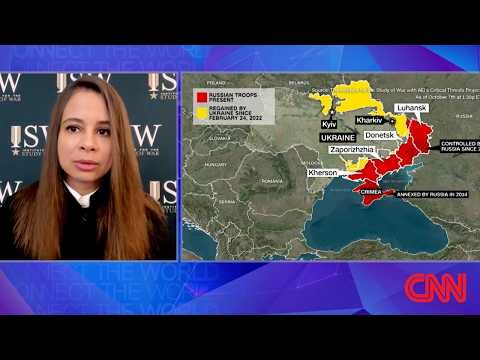
>> doesn't have to choose between >> between different camps >> Russia China Russia China >> America let's talk about Ukraine Turkey was initially far more open to finding a negotiated solution to end the Russia Ukraine war more open than most in the United States and Europe when the war broke out. I mean they hosted negotiations that failed uh in 2022 in
the early months of the war. Uh and then subsequently they served as uh a back channel for communication between Europe and America on the one side and Moscow on the other. And this was at a time when no one in the west wanted to be seen talking to the Kremlin. So what I'm
not clear on is whether or not this has has changed in any substantial way. I mean, it seems as though they may have lost some of their enthusiasm for this uh peacemaker approach. And it's interesting to me because if so, it comes just at the moment when the Trump administration has been pushing forward with its own peace initiatives. >> Turkey has been for a negotiated settlement to end the war in Ukraine from the beginning, right? And as you know, stumble talks in early 2022
in April, the first round of diplomacy between the Trumpet between uh Ukrainians and Russians. Uh I think they saw a flicker of hope in those talks. These much has been written about whether or not the two sides were close to a deal in that conversation. And I don't want to get into it, but I do but maybe suffice it to say that Turks do think that there was hope there. If only um Americans and the and the Europeans
supported Ukrainian position. That's their take on it as the party that was also in the room for much of the conversation. Again, people have different views on this, but Turkeykey's position on this whole conflict is described to me by Turkish officials as being pro- Ukraine without being anti-Russia. And that is unthinkable for Europeans and many of Ukraine's supporters. For Turkey, that is perfectly normal because they have to live with Russia and they don't want to expand the war, nor nor do they want to get involved in a war with Russia, which has been the
reason for the downfall of the Ottoman Empire. Hundreds of years of direct war starting with Peter the Great. So they're very aware of the historic precedent here. >> They're also aware that um you know
strategically speaking whether Dombas is part of Russia or Ukraine doesn't change the strategic equation in Eastern
in Europe. They would rather have Ukraine survive and come out of this thing with a with a Black Sea access
retaining Odessa and whatever else they can retain in the Black Sea. So they've been supporting Ukraine and selling weapons to Ukraine since Crimea. But they are also worried that the symmetry of power and manpower specifically is so that Ukraine won't be able to outlast Russia in this conflict. So, they want a settlement. They've long wanted a settlement and were sort of upset. Uh, I think they were disappointed with the Biden administration's formulation of as long as it takes, supporting Ukraine for as long as it takes. They felt that was an open-ended war and that the thing to do was to find a formula that would allow for the emergence of a strong Ukraine
um that can have a military but maybe with changes in its eastern borders. No, I I think Turks look at it as also we need to build European security which Turkey wants to be part of >> and a level of containment of Russia. Yes, they understand that Russia has security concerns that whether we like it or not, they think they have security concerns that have to do with limit putting limits on Ukraine's power. But they also understand that Europe has security concerns which Turkey is part of. So their position is very different and >> I call it sometimes non-binary in the sense that they are they see that they can have an economic relationship with Russia. So they're not going with Russian sanctions, but they certainly want a strong Ukraine and they have been supporting. They're building, you know, navy ships, frigots for various ships for Ukraine. There's continued to sell weapons. There's some joint production going on. Uh and they certainly want Ukraine to survive in the Black Sea.
That's essential for them. people I think think Turkeykey's ambivalence on this whole issue diplomatically is tantamount to um support for Russia
>> there is no love there Russia is a historic enemy and I think a threat for Turkey everyone understands this >> and I imagine that the last thing that they would want was Russia controlling all of the northern part of the Black Sea I mean that would be for Turkey and of course let's also add that >> throughout the cold for Turkish Navy was strong but uh Russians then started
doing better in the Black Sea but right now because of the attack the hits they've been getting from Ukraine Turkish Navy I think the strong is the strongest force in the Black Sea the Black Sea is essential for Turkish
security so the Montro convention they've been using effectively pretty much to preserve peace and stability >> Montro convention which gives control over vessels that enter and exit the Black Sea, the >> Turkish straits. And therefore, it has wartime stipulations which give them control over military vessels that go into the Black Sea. >> And so Russians cannot resupply. They cannot send warships which has been
godsend for Ukraine because it's kind of pushed Russian. >> Also made it difficult for NATO to operate in the Black Sea, right? >> Turks don't want NATO in the Black Sea. I'll put it frankly. I think Turkish officials have a convoluted way of saying it. They don't want NATO warships in the Black Sea because they don't want a NATO NATO Russian war in the Black Sea. >> And you can argue that that has actually helped to manage escalation uh in this war to some degree. >> I think so. I think some people in in Europe are frustrated. They'd like a more muscular uh posture in the Black Sea, but I I I do think that that for the Turkish rationale has always been managing escalation. So, it sounds like uh Turkey was basically critical of the Biden administration's approach to this war and wanted to see more diplomacy, more emphasis on negotiation. Um but also is probably somewhat frustrated with how it's gone under President Trump. I mean, their hopes were up uh but uh Trump has not managed to follow through on his promises to end the war.
>> They've dabbled in diplomacy going to Putin. And I mean I think Hakam Fidan made several trips to Moscow meeting with Putin and and going to Kiev and meeting with Zilinski the Turkish foreign minister. All this was sort of in an effort to help the Trump team and and coordinated with the Trump team and they worked on um the idea of
incremental ceasefire, small cease ceasefire on energy or airports and you
know uh that could later on be built into something bigger but as a start maybe uh ceasefire on energy structure. Right now, the Trump administration approach seems to be close to that. Uh working on maybe an energy ceasefire in the beginning on energy targets. But >> again, this really requires quite a dedicated >> uh diplomacy and process that uh >> the Trump administration sometimes has on these foreign policy issues some good instincts, but they're never willing to put in the diplomatic spade work uh that it requires to actually follow through on them. It can be very frustrating. And I I agree with that. I think it's good also to think out of the box sometimes as they have >> but they haven't they don't have much to show for precisely because they haven't
engaged in the kind of meticulous and thankless task of building a process
around these ideas. Let me ask you, you've described a relationship between Trump and Erdogan, between Washington
under President Trump uh and Turkey today that is uh in many ways um deeper
uh and more engaged than during the Biden administration. I wonder
what kind of implications that might have when eventually the Democrats return to the White House. Will it be more difficult for them to have this kind of cooperative relationship with Ankura simply because Trump was deeply engaged
with him? Yeah, I think that will that is an issue and I think that was an issue um during the Biden administration because Erdogan and Trump got along so well in Trump's first term. I think there was an idea that maybe um Erdogan at least Turkey
needs to be a little bit feeling the the distance a little bit. Uh so there was also a sense that during the Biden administration early on that there was a sense that Turkey was failing on the democracy front which it was no doubt and that it needs again a cold shoulder to be shown a cold shoulder >> to get the message. Um, and also a sense
that Turkey was somehow the Turkish American relationship is a drama that I don't want to get into, but it usually ends up with US making demands on Turkey that Turkey drags it out like we've seen in the in the uh NATO uh accession talks
for Sweden. Turkey taking its time and asking for US to go ahead and uh and
formally uh accept its desire to purchase F-16s. I think Biden people felt that there was a power reverse
power dynamic as if Turkey is the superpower and US is the demander that keeps going to Turkey for various regional issues in Syria. >> The United States tends to have a lot of demands to make >> lots of demands. So they used the cold
shouldering for on these two fronts on the democracy autocracy framing and in order to sort of in a sense make the uh
maybe in their words uh you know make put Turkey in its place. On the other hand the war in Ukraine started and Turkey became very important again geopolitically and also in so many other ways. So a future democratic administration would have a very big challenge which is what to do with Turkeykey's democratic backsliding. Do they want to go back to Biden era democracy? >> How much emphasis do you put on it? >> How much emphasis do you put on values? I mean or do you actually come out with the conclusion that the world is chaotic enough that we need to world with deal with the world as it is? Well, that does mean that you actually take out a certain component of values in the from the bilateral relationship. I'm not saying this is easy. This is the reason Europeans are essentially not dealing with Turkey at all.
>> But I think that's strategically shortsighted given the way the world is right now. >> You mean to uh not deal with Turkey at all. So your sense is that it would uh even though it will be difficult for a future democratic administration, some degree of uh taking a more long-term view on democratization would be wise. >> Look, my view and my observation is that shunning Turkey has not helped democracy and human rights in Turkey. It is absolutely true that that's a problem area, >> right? and one that there's been a democratic backsliding, but that you know I I wonder what advances have been made under the Biden administration when Turkey was kept sort of at arms length because of its democratic record. So >> wondering if selective engagement uh could actually build the type of leverage that might be even useful for values-based conversations down the road, not immediately, but down the road. Yeah. I mean, so Turkey is surrounded by all of these conflicts. In a way, you might think that this would make it this would weaken it because it's surrounded by crisis, but in some ways, it's actually strengthening it, at least relative to some of the other regional powers. Um, and also because it simply again emphasizes how important Turkey is to resolving issues that people the world over care about.
>> Yeah. One of the golden chapters of
Turkish diplomacy is the period during World War II, which Turks refer to as
active neutrality. The fact that they managed to stay out of that war despite
pressure from Germans, a close ally, and pressure from the Brits, also a you know, also a close ally. And the fact that they continued to work with these is seen as the one of the most important things that made Turkey what it is today. I think people who are running to Turkey today are very focused on staying
out of conflict, making sure that Turkey is not attacked and doesn't get embroiled in the Ukraine Russia war or the Iran conflict. And so as such the
neutrality is is really seen as more
important than having a moral high ground in terms of Turkeykey's position. That is the way to protect Turkish citizens. That's one issue. And they
have also developed um various instruments over the past two years in terms of being a more important
strategic player. This is both their economic weight in the region, infrastructure, companies, energy and so on, but also their uh maybe
their affinity for mediation. They have also developed a mediation network that they've used in the Balkans and in v various parts of the Middle East which and became a little bit more experienced in that not as much maybe obviously as United States but Turks have been investing on tools for mediation. So that's another reason I think they have uh done well in this period, but they're not doing that well economically, I should add, because they're affected by all these conflicts. um they have used Turkeykey's central
location for connectivity now wanting to build new pipelines that crisscross Turkey from Central Asia to Europe and from the um Middle East to
bypass Hormos across Turkey. So they're thinking about the future in a way that is um I think very useful at this moment. >> That makes a lot of sense. I want to turn to China. >> Yeah. >> Um, you know, we talk a lot about America and China's global competition for influence. And in that competition, countries like Turkey, which are large middle powers, loom very large. Now, obviously, as we've been talking about, Turkey has leaned towards Europe and America for 75 years now, but it hasn't stopped uh opening its door to Chinese
tech and uh and investment. So I wonder how elites in Ankura are thinking about the future of this relationship
um you know especially as the competition uh persists and continues to evolve between the United States and China. I mean for example I was reading about uh this uh BYD investment uh in
Turkey. BYD is giants China's giant electric car maker uh apparently promised Turkey a billion dollar plant.
Um but here we are I think almost two years later and uh as I understand it the foundation for this plant hasn't even been poured and it sounds like BYD may actually be looking at a plant uh in Hungary uh instead or at least is now focused on that rather than on building in Turkey. So, so how is this kind of back and forth affecting the view of elites uh in Anra when it comes to China? >> So, China is not a big economic player in Turkey. I believe Turkey has received
something like roughly 1% of all the belt and road investments very small compared to Turkeykey's size and econ capabilities when it comes to economics. Obviously, United States remains central to Turkeykey's security architecture and Europe is its top market. Turkey has a fairly large manufacturing base and and uh it's part of the European regulatory
ecosystem. So, Turkish companies produce and Europe is the top market and similarly much of the investment comes from Europe. In principle, I think Turkey wants to diversify economically
and wants to make all three of these great powers compete for access in Turkey. >> Right. >> Nonetheless, Chinese uh offer capital,
technology, and the the and are a
tempt