The future of European airpower might be unmanned
Transcript
Machine-transcribed by YouTube. Expect errors in names, commands and version numbers.
[music] We've talked a lot about manned aircraft, but I think we actually have to turn our focus to unmanned aircraft because in a lot of ways that does seem like one where a lot of militaries are
putting more energy. I think it's notable that both the FCAST and GCAP programs, we use them to talk about the fighters, but technically the fighter is a part of GCAP, right? There's also a drone program and command control aspects to it as well. But also, if you're the let's call them next tier in terms of European militaries, unmanned systems is a cheaper way potentially to increase your air power capabilities. Um, I guess Tim, maybe we'll start with you. When we talk about CCAs, right,
collaborative combat aircraft, term generally used, talk about uh large unmanned systems that are supposed to fly with man systems effectively. Um it does seem like there's a number of European countries specifically saying we want that and starting to invest in their own developments. >> Right. Yeah. So I I think um it's as we've kind of previously mentioned about the major European art shows at the moment there's definitely a buzz around CCAs >> and I suppose in some senses it's hard to to dig into the strength of the marketplace for example uh and in terms of we don't see and with in terms of programs of record you know how many each country in Europe really wants we do know that Germany for example is expected to be the first CCA a operator because they're looking at feeling something in in 2029.
>> So, sorry, first European um CCA operator. So, that gives us a kind of a sense of of of urgency of what they want to do and immediate priorities. Um I think we've seen in the UK in the defense investment uh program um a huge interest in in uh drones and CCAs, although the funding for that specifically is around 300 million. And if you look at something like Australia's Ghostbat, it's been been mentioned that it's around 2.4 billion. Now, that's a that's a very mature program. I know we're stepping out beyond European borders, but it does give you a sense of, you know, the costs that you're going to have to front front up if you want to go all in on this.
>> Yeah, these are not cheap. They are I mean in the US when they talk about CCAs the Air Force selected Andre and General Atomics for their CCA program and they're calling them unmanned fighters because again if these things are supposed to travel with a fighter jet they have to have an expensive engine. They have to have a lot of sensors. They can't be a tritable in the way that you know the Ukrainians use small UAS. It's a very different proposition. So to your point, it might be cheaper than a manned aircraft uh and the technology might be perhaps closer in some ways than a new manned aircraft, but it's not cheap.
>> And then how many do you get for your buck, right? >> Yeah. >> Yeah. Yeah, >> I think that I mean but that was one of the things that that that was interesting in the you know there's a slightly different approach uh between the you know the Franco German Spanish program uh and the UK Japanese Italian
program in the sense that FrancoGerman Spanish program from the very outset saw the the crude combat aircraft and uh uninhabited
systems of different sizes
>> as part of the project together. So you had kind of something that you know the the kind of at the lower end of the the kind of CCA scale if you like was something that looked pretty much like a kind of cruise missile >> but it would be multi-roll. >> Yeah. >> Uh and at the upper end was something that we'd all recognize as a kind of CCA, you know, you know that that kind of what used to be called an old money a UK. >> Yeah. Um, and in terms of pricing, everybody tends to fall in the same area, which is between a quarter and a fifth of the cost of your your crude aircraft. So, 20 to 25%.
>> Which if you kind of ballpark figure 100 million bucks per combat aircraft with a pilot, >> you say it's still 20 or 25 million each >> for an uninhabited adjunct. Um, and if
you're talking about, and again, you the same numbers keep on kind of coming up. uh for every crude combat platform, people talk about three or four uninhabited adjuncts or CCAs. So that's not, you know, it it has a sticker price. >> Yeah. >> Uh which is not insignificant. I I mean this is I mean first want to add there's a concept, but if we're talking about, you know, what is Germany going to do, right? Uh France is going to pursue its own fighter jet potentially GCAP. I was saying F-35 is pretty common across most of the things, but you also have your Typhoons and Europa Falls.
Could some of these countries, let's say Germany, simply say, "We don't need to build our own new man fighter. We have fifth gen fighters and F-35 and plans to buy more >> and potentially we could buy a mature sixth generation fighter." Somebody else does. We're going to focus on a CCA. We're going to develop a couple of CCA options that work for us that we think meet our needs and just go with that. I mean, is that an option on the table here? >> I think I think that's what startups are thinking. >> Yeah, the startups >> in a big way. Heling in in particular in Germany would be looking at at something like that and kind of >> persuade kind of particularly with with Germany having a live debate about what direction they're they're going to go in. Um I think that's that's realistic to a certain extent. Now on the other hand, if you speak to and I and I have the the officials in the the German air force in terms of senior leadership, they won't deviate from the big picture and ambition which is a crude fighter jet um a sixth generation crude fighter pilots.
>> Well, exactly. Yeah. >> Right. I mean that's that's not there's human ele but it's whether it's how that clash between senior leadership and and industry and and then the political decision how that takes shape. I think that's that's uncertain. >> Yeah. >> Sorry, there was a point you made which I think is [clears throat] really interesting about um and it's and you
you brought it up as well in a way which is that one of the things that's come out of Ukraine is pace of change >> and I think that applies to big CCAs as well not in the hardware because I think you know your your mold line is going to stay the same. >> What I think will be really interesting to watch is these things is going to be extraordinarily iterative. The ones that will be successful are the ones where you can go and tweak the software. You know, you can get in and say, "Okay, I need to upgrade the EW suite. Uh, I need to change a wave a waveform." And you've got to be able to do that quickly. Uh, so that pushes you towards national level national level capabilities. One of the difficulties with the F-35 in the European context is obviously a lot of it's blackboxed.
>> Yeah. for understandable reasons, but it is blackbox >> and that is a problem because you then have got to join the queue >> get get your changes through the you know the the iron colonels and in the DoD or whatever um and it just slows the whole process down and one of the things come as you see you point out on Ukraine is just the kind of pace of change >> mostly software driven >> uh and having you know you know and some
of the FPVs and some of the really, you know, the inverted comm simple systems, um, you've almost got your software engineer sitting next to the operator if they're not the same person. >> So you you you know that you you can have that that kind of loop if you like or that timeline is compressed hugely. >> We're not even having next to you. I was speaking to the Ukrainians at at Farm because they launched this new interceptor, drone interceptor by Skyfall and they were saying that um not only was it specifically designed to address jet power heads which are now a new threat, but it was designed so that
it can connect to Wi-Fi if needed so that the frontline troops can upgrade it by connecting that and not have to go through not only the company but anyone else but themselves. So that's I think how quickly that change needs to be made when you're actually faced with the threat which none of the European countries currently you know. >> Yeah. I mean that's >> I mean that's the challenge of the you know European countries procurement systems have built have been built around bureaucracies which were the you know best will in the world >> are never particularly fast. So you've got that difficulty. Just on the German question which I think is a is fascinating. I mean, I I would expect to see the Germans take some more F-35s.
>> I'd be really surprised if they didn't. It makes sense for the fleet mix. Um,
absolutely. You know that what's going Yag bomber drone is the is the program which is kind of and one of the reasons I think that the Germans can can kind of drive that requirement is it's comp vertic is comparatively straightforward. it seems to be all around uh air to surface >> rather than air to air. Air to air will come later. Uh which again is another interesting fle because when you know if you go back to the early 2000s when people talked about UKs um they it was all about air the surface very very few people talked about air >> that's flipped on its head really certainly now in the US where the driver is all it seems to be predominantly about you know supporting >> you know combat combat air role not not
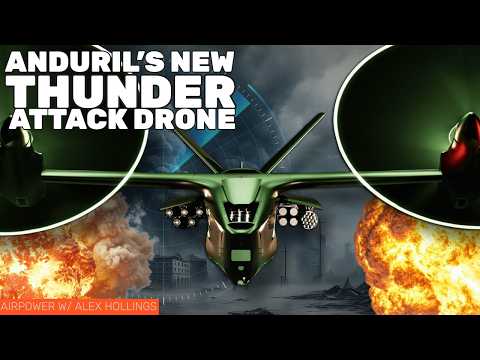
in shift in mud >> I do want to just you know kind of lay out when we talk about CCAs there's a number options that are kind of out there right now. So, General Atomics uh and and have been picked by the US Air Force for their first trunch of CCAs. Uh Heling, I think you mentioned earlier, Tim, is a startup from Germany that's got one out there. Uh BA systems of Farmborough revealed is Brontinax system, which you know, when officials they were talking about it, they specifically said this is a UKmade CCA. We're very proud about that. Other companies are all kind of pursuing this.
other countries are pursuing this. Um,
each one has its own capabilities, right? And each one is in various stages of development. It's interesting to the point you made, Douglas, about airtoair versus air to ground. Some of these what they're talking about, right? What the capabilities are and how versatile these situations might be. I guess ultimately I'm wondering are governments looking at CCAs as a core of air power or are they
looking at it as a supplemental to air power? >> It's that's a really interesting question and suppose it's kind of weasly answer in a way but it's kind of both. >> Yeah, it's a weasly question. >> It's a kind of it it's you know it it supplements what is a core rule. Um and
eventually it you know but it is part of that core. >> Yeah. >> Um so they you know you you know we now
talk about sixth generation and if if you kind of think that you know seventh generation is completely uninhabited. So seventh generation somewhere out in the 2060s 27 or whatever >> is going to be you know that at that point that's your transition to where really the crude fighter aircraft as we kind of still recognize it is no longer there.