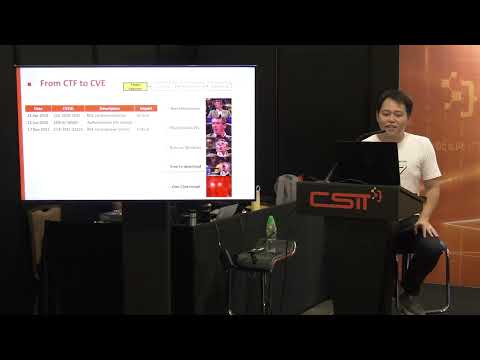
How Hackers Target Satellites Through Ground Control Systems
Transcript
Machine-transcribed by YouTube. Expect errors in names, commands and version numbers.
Yeah, I mean I think that's what people forget. If if we lost the satellites today, what would we lose? Is it GPS? What would happen to our daily lives is if a bunch of satellites were taken down, first thing that would happen is when GPS goes offline is the telecommunication networks will start breaking down. Uh because like your cell phone towers are using GPS, all the navigation is is using GPS. So it's not just positioning, it's also timing, for example. Yeah. So when people think about spacecraft hacking, they always think about hacking the spacecraft. Yeah, >> but actually most of the systems to run a spacecraft are on the ground.
>> This is what I was telling you about. >> Yeah, it's just a comment. >> The code is just not there. It's just it's hidden. >> Yeah, >> but the web browser executed the the payload in the background. And you can see that the spacecraft while I was talking the spacecraft was slowly moving to the higher orbit. That's how you use standard vulnerabilities to do space hacking. >> Hey everyone, David Bumble back with a very special guest. Meeno, welcome to the show. >> Hey, it's great to have you here. >> Thank you. So you and Andy who's behind the camera who's going to be on camera very soon wrote this book, The Spacecraft Hackers Handbook.
>> Exactly. Exactly. >> It's becoming really important in today's world. The story that I remember is when the whole Ukraine Russia invasion took place. So Russia invaded Ukraine on the day I believe when they invaded they started attacking the satellite. So perhaps you can give us some more detail about that and then I want you to get into the book. Yeah, that was like a very important accident because it incident because it it showed to the more general public what is actually what the attack surface is and what can actually happen if these Simpsons are attacked. So what happened was that they the Russians compromised uh a VPN access and got access to the ground network and from there deployed a malicious update to the modems on the ground in Ukraine and it actually had a spillover effect. So also neighboring countries even Germany was effect like wind turbines were going offline. So there was like a very big impact uh even though they just tried to target the Ukrainians but actually they were targeting much broader and it yeah it was it became very public and that's where like a lot of the public attention for the topic uh came from but the issue obviously existed before it was just like they decided to go public with their capabilities.
>> It's really interesting. So I mean tell us about why you guys wrote this book and sort of give us an overview of what's in the book. >> So yeah we started with the book because we we noticed that there is a bit of a gap between spacecraft engineering so space engineering and security engineering and we were looking around and there's good introduction books already but when we wanted to get down to the really technical details okay like how do you do it now? How does the via attack works on the modems? How does the forensics on this could work? That's a Russia one right? Yeah, the Russia one basically uh what is the protocols the the protocol stack look like? So we've been basically what we've we've done at work is basically we are developing these protocols also we are implementing them we are testing them and we noticed that there is not really good information on how all of this is assembled. So how is the ground working?
How is the space stuff working? How are they talking to each other? And yeah, we wanted to give it like a deep dive in how to set this up and how to do the own research because it's nice to have an example which just walks you through but at some point you just need to let go and be like okay like now I start to do my own business and and that's basically what we try to do that we we give uh the reader the ability to really get into it. So you based in Germany >> and you work for a company that actually writes a bunch of the protocols does space stuff is that right? that you like created a department I believe could you give us some details about that sure so I work at vision space I'm currently heading the cyber security department there we started roughly 8 years ago was getting more into cyber security before that we have been mostly developing software systems integration activities uh testing the systems just on the integration perspective not on the security perspective and then the topics got more and more important and nowadays we're running pentesting risk assessment vulnerabilities assessment training now also here at at Defcon. So, um, yeah.
So, it's it's growing and it's it's growing fast. >> Big shout out to Delete Me for sponsoring this video. Now, your business may have implemented a firewall, an antivirus, or even multiffactor authentication, but there's one part of your business that's much harder to secure. That's your people. Your employees are constantly leaving a trail of personal information across the internet. This includes their phone numbers, their personal email addresses, their home addresses, and family member information. Information about where they work, who they work with, and more information can often be found online. Cyber criminals can use these little pieces of information to make their attacks incredibly convincing. They might impersonate your CEO or might pretend to be a supplier. They might contact a client using information that makes the request look completely legitimate. That's where Delete Me comes in. Delete Me scrubs your employees personal information from the very sources attackers use to profile them.
So instead of giving attackers a detailed information of people inside of your organization, you can make that information much harder to find. Because cyber security isn't just about protecting your systems, it's about protecting the people who have access to those systems. Now, to protect your business and gain peace of mind, use the link in the video description to start protecting your business with Delete Me today. And if you use that link, you'll also get a year of social media protection for every seat you purchase. Yeah. I mean, I saw a slide on one of your presentations that you guys did where the satellites that are getting launched is like this and then suddenly in the last few years, it's gone crazy, right?
>> Yeah. It's jumping. So, the jump especially from the mega constellations. So there was a constant growth on smaller satellites also academic stuff but now the commercial activities are really kicking up and now also the military is launching more and more satellites again. So there was a period already in the past when space was dominated by the military and they were doing their own thing and then it calmed down quite a lot and now it's ramping up like crazy. Uh not just on the commercial side. Yeah, of course the commercial is the driver and there's a lot of dual use. So Starink, for example, that's like the most public most famous example is not just used for civilian stuff. So you cannot just put it on your trailer. It's also used by the US military, for example, and other militaries around the world. Like Ukraine, for example, is flying drones deep into Russia with stalling terminals on top. So yeah, it's it's increasingly important. Yeah, I mean, I think that's what people forget. If if we lost the satellites today, what would we lose? Is it GPS? What would happen to our daily lives is if a whole bunch of satellites were taken down, first thing that would happen is when GPS goes offline is the telecommunication networks will start breaking down. Uh because like your cell phone towers are using GPS, all the navigation is is using GPS. So it's not just positioning, it's also timing. For example, uh planes will have problems because they will have to fall back. Uh maritime navigation, there's a lot of emergency services that go over satellites. Um so a lot of stuff will have to shut down for security reasons or for safety reasons basically. Um not just like internet services but also like emergency services. Yeah.
>> So tell me the protocols and the way this is set up is it really insecure? Are there different protocols to like TCP IP and the protocols that a lot of people might be familiar with? So on the on the application layer what we would call this is basically there can be TCP IP protocols running but because of the delays involved there's often either a tailoring or there's separate standards. So there is also two things. There's the um the payloads, so what the satellite is doing, but there's also the satellite itself, and the satellite itself is usually controlled in a different way. And that's what we go also into into the book basically is like how is the satellite actually running? Not just like how is your stalling terminal communicating with the satellite and back to the ground, but also what keeps actually the satellite alive. And that's a completely different world. And that's what we're trying to explain the the protocol stack there. Okay, getting back to the book, I'm assuming there's misconceptions that people might have about satellite communications. Like you mentioned there, a lot of us might think, "Oh, I got a starling.
>> It's just like normal TCBIP and we don't think about everything behind it." Any other misconceptions and like other interesting things that you can point to in the book? Yeah. So, when people think about spacecraft hacking, they always think about hacking the spacecraft, but actually most of the systems to run a spacecraft are on the ground. So there's a lot a huge IT infrastructure that keeps these spacecraft alive basically that enables all the automation for controlling them for the mission planning analyzing the trajectory where is my satellite is a question people ask themselves and there's whole departments working at it and the software that is running this is all customuilt for this application and that's what people are not really aware of they might see now in the sky at night the starling satellites passing over but the infrastructure on the ground is huge And that's also in the Ukraine incidents when Russia attacked.
Basically what they attacked was not the satellites. They were attacking the VPN access on the ground and then they were deploying on the ground an update over the air to the terminals via the satellite but they were not actually attacking the satellites. Right. >> Okay. That's a misconception. Right. So they weren't attacking the satellite. They were attacking something else through the satellite. >> Exactly. So it was a means of transportation basically. They were using the satellite as a relay, but the satellite was never in danger basically because they were just uploading something over the air over the satellite to the to the terminals. How much at risk are we? In other words, like when the internet started, we didn't think about encryption. We didn't think about authentication. Is it the same kind of problems in the satellite sort of world or in this world? I wouldn't say it's the same. uh it's just that I think over the past 20 years 30 years people have not paid enough attention and what I mentioned in the beginning this disconnect between the space engineering which is very much focused on safety because spacecraft are very expensive launching a spacecraft is insane expensive to build it and so people are focusing a lot from the engineering perspective to keep the thing alive and to make it as robust and redundant and everything as possible >> and uh that means that there is often some back doors here and to do like an emergency update to get maybe reset the keys. Maybe not do security here for performance reasons because you want to have a the most robust link budget you can possibly have and so they are security is something they have cut first in the past and now they are realizing that might have been a mistake. So now systems are built more securely uh at least for the most part and yeah that's that's what I would say is a is a big big gap.
>> Andy's going to come on with a demo in a moment. Is that actually hacking the satellite or is that hacking something else? What's that demo showing us? And and I'm assuming that's covered in the book in a specific chapter, right? Exactly. So that's copter chapter chapter five which is mission control systems which is the applications on the ground which actually control the software uh the the satellite. So basically uh we show how the mission control system is set up, how it works and how you can exploit it to actually achieve an effect on the spacecraft. So there is a small simulation with a satellite orbiting Earth and you will see that the actions on the ground actually have an impact on the spacecraft even though you're not attacking the spacecraft directly but you're using an attack against the system that controls it which is for us the the more realistic path to actually do the attack. So that's interesting. So rather than trying to attack the satellite directly, it's like Russia did in that example that you attack something on the ground and that affects the satellite. Exactly. Have you got more recent examples of of attacks that have been done or vulnerabilities that have caused problems? So recently there has been something discovered uh which is a Russian satellite again which is doing on the GNSS systems jamming from space. So they have a satellite they are using to perform jamming on the ground
from space which is something that was speculated about. It was a theory that it could happen and recently researchers have published that they are highly certain that this is actually happening right now and that they are deploying and operationalizing these systems. That makes sense because they want to stop the drones and stuff, right? And for example, like if you want to have like on a very large area just deny access to these systems uh not just for drones um
that's a very good that's a very good use case of satellites. Basically question I'm sure a lot of people are thinking about is who did you write the book for? Is it for network engineers, cyber security folks? Is it people that are professionals doing the stuff like you are? Or is it just people who are interested? Who's the book for? I I would say all of the above a little bit. Um our initial intention was to have for space folks actually something to understand how cyber security works and on the other side for people who are curious in cyber security and want to get into space systems just out of curiosity or for other reasons to have a book that actually guides them and explains how space systems work because there is not there's a lot of information out there but it's not very compact. So like to have a a quick start guide on how to get into space systems or how to get into cyber security. So there's introduction chapters on also how uh vulnerability assessment works.
If you're from cyber security, you might know that already. But if you're from space, you have no idea. So basically there we try to balance this especially in the introduction for folks to to understand both sides of the thing. What kind of prerequisite knowledge do I need to have? I'm assuming some basic networking knowledge, some basic like programming knowledge maybe. what what sort of what what kind of knowledge do I need to to start and um you know make the most of the book? Yeah, I mean I would say that some some basic programming knowledge is definitely an advantage. Uh knowing how to set up a VM using Docker for example, we have a lot of Dockerized examples, some basic Python knowledge, networking is definitely an advantage. Um but we try
to keep it as accessible as possible while being like a highly specific topic. Yes. So that's a good point. There's labs or something Python code GitHub or something that I can extra code I can get from GitHub to actually practice rather than just read. Yes. So we have a public GitHub repository with all the code that is also in the book. So you don't need to manually type it from there. Uh but we also have a VM image prepared with all the software already pre-installed so you can run the labs without having to set it up on your own. And I mean the the simulation that that Andy's going to show in a moment, I have access to that when I get that VM or >> that's the simulation is not part of the book because we are doing a more deep dive in the book and the simulation is more for showing the effect. Um yeah.
Yeah. So I mean the um when I'm finished the book um at what level am I? Am I a
beginner or like intermediate kind of person when it comes to hacking satellites and uh well cyber security with regards to satellites? I mean if you're through that I would say you are intermediate to advanced especially with the protocols because there's not many people who have a really deep understanding of how these protocols work from a securityurities perspective especially like one thing is putting all the stack together but the other part is paying attention to where possible problems could be and and that's I think what also sets this a bit apart from other books in the area is that we we do a deep dive also into protocols. Yes. to give me some examples of protocols that people might not have know might not know about. So there is for um so there is first of all the organization that is defining the the protocols as CCSDS um
and there is the SDLS which is actually a security layer uh for for spacecraft
communication and that's something that we we go into as well. So that protocol is used from the ground to this to the satellite all the time or is it uh when when is that used? So this is used for controlling the space. So it secures the link that actually controls the spacecraft. So data going up and commands and telemetry coming down. So the commands you send up are encrypted and authenticated using that protocol and the telemetry data that is coming down. So confirmations, measurements about the spacecraft itself and the status comes with that protocol >> and I'd be able to learn I'll learn that by going through the book, right?
>> Yes. So you'll learn how the protocol is structured, the different fields, how to how to apply it. Yeah. >> Yeah. Because I saw some wireshock captures in the book as well. So you guys are really going deep. So like we said it's very broad the things that you you can can do in this space. You can go very deep or you can go very broad. Uh we try to do both of course. So we have there's web stuff in here. There's protocol analysis with wireshark. There's um embedded stuff that is here. So uh that's the beauty of space systems is it's a little bit of everything and you can if once you understand the the full picture you can try to specialize on something where you say okay like this is where I really want to dig in. I want to learn more about the software that is running on the spacecraft. I want to learn more about the systems that are on the ground. I want to get really into protocols. You said in the beginning you there's a gap right? So that's why you guys wrote the book. Is there also a gap in like skilled people like I'm assuming more and more satellites are being deployed? There's not necessarily that many people with the right skills as an engineer but also as a cyber security professional. Yes, definitely. Especially in the past like in university when people came out of university and they were studying space systems, they usually didn't had any class on security. Nowadays, these things are slowly being added. the engineers from the past 30 years that are in the industry often have absolutely no background in in cyber security and how that could affect the systems they are building. So there is is a huge gap and there's a lot of opportunities right now because companies are hiring and and trying to grow their teams in respect to security because it's getting more and more important. So if I'm a young person or someone who's interested in this, this is a great career then.
>> I chose it. So I I I have to say yes of [laughter] course. Of course. And how long you been doing it for? uh roughly 10 years now in the space industry uh cyber security for space systems especially like 8 years roughly that's great so I mean I am interested in space I'm interested in learning this stuff I can obviously buy the book any other recommendations of things that I is it can I reach out to you guys is there a place I like a community that I can join how can I learn more so there's uh in the book there is the discord link we'll also put it below in the video description and uh another thing which is just published actually today while we are recording is cooperation with Hack the Box. We've developed nine challenges which are freely accessible on the different uh levels they have. So you can also go on Hack the Box and do the satellite cyber security track there. Okay. So that's a that's huge, right? So you I can do the the labs in the book. Yes.
>> But I can also join Hack the Box, do the challenges for free and basically hack space systems. Yes. So what we do there is much more of an introduction. It's the the the easier ones. It goes to heart. Um, but the book will give you a much more in-depth knowledge also explaining how the things work. Sure, we hack the box, you get the background somewhere else in the book, it's all compiled in one one go basically. >> Okay. So, we've got Discord, so you got a community that people can join and you guys help people in the community. You've got hack the box. Uh, do you guys have CTFs or anything like that as well?
>> Yes. So uh we've now done for the second year in a row here at the Defcon conference we do an open uh CTF at the aerospace village starone which is also a cyber security space system focused and uh we do training so yeah is there any other places I can get training like videos or YouTube or any other places that you can recommend books other books anything that I can do to learn yes so there is also um a book on cyber security for space systems from Jacob Oakley uh that I can recommend also a friend from the aerospace village He's he's also around here. Any YouTube videos? Uh so there's a lot of nice talks from Defcon Blackhat from the past years. Also CIA uh from in Europe is a nice uh location and they also publish a lot of stuff on YouTube where you can get nice also in-depth talks on on different topics. Yeah.
>> Thanks so much. Really appreciate you sharing. Thanks for writing the book. Appreciate it. Andy, great to have you on the show. >> Thank you for having me. >> So you've got a really cool demo. Perhaps you can just give us an overview of what it is and then let's get into it. >> Okay. So it's going to be a demonstration of uh some of the vulnerabilities we have found in uh one of the mission control systems that is used to control uh spacecraft and uh for the disclosure the vulnerabilities have been already patched. Good. >> So we have them we have found them ourselves.
>> Oh wow. >> Uh and we have uh work with the company to patch the vulnerabilities. So uh they are already fixed. Uh nevertheless in the older version of the system they are still there. So I'm going to demonstrate how uh one might want to go about finding similar rungs and what is the impact of uh exploiting of exploiting them uh in the real system. >> Go for it man. Looking forward to it. >> All right. So I already have um uh YMCS mission control system up and running in a simulation mode. It's like an example of a simulation. So you have on one hand you have a mission control system and then you have a simulator that is working uh on the other side which is pretending to be a spacecraft and uh what you're going to see is how we are uh communicating with a satellite which in this case is a simulator.
>> Okay. >> As I said it is it is it is already up and running. >> So this is like the control system. Is that right? >> Yeah. So YMCS is uh like one of the more more established mission control systems uh that are actually open source. >> Yeah. So anyone can download it and have a look uh what's inside. Um and it also comes with very helpful uh set of tools like a spacecraft simulator which you can play with uh using the actual protocols and uh data format. So it's it's very it's very uh realistic. >> So that's great. So it's like so just for reference if I want to do Android work I have an Android simulator rather than having to buy a physical phone here. I don't have to buy a satellite. I can like learn this stuff with a simulation. Right. Absolutely correct.
So uh as I mentioned before I already have it running. Uh the simulator is also running. So the instance is the is the spacecraft simulator. Depending on the mission control system you might have different functionalities but they most of them are pretty much the same. So for instance here you can see that uh okay we are receiving some telemetry already. If you go to the packets uh we see that there are some telemetry packets going down from the simulation.
You can see the you can see them as um as well as parameters. uh they they all follow the same uh space space standard. Um so again it's very uh realistic.
>> Yes. So I mean if I was looking at the real thing it would look like this, right? >> Yes. Absolutely. This is the real thing. >> Yeah. >> Uh it also comes with additional functionalities like displays which you can configure the users can actually look at the displays instead of like you know Excel spreadsheet with the values. You can you can configure it. Uh you can have some graphs and whatnot. And um like this particular one also has uh storage mechanism where you can upload like this like a bucket like AWS S3 uh
buckets you can upload uh you can create buckets you can upload some files uh download some files and and whatnot. So if I was starting if if if this was my target uh for the security research I would first start with the blackbox testing. So I would uh open up uh buruite which actually I already had in the background and I was collecting the um I was collecting the request. So obviously you want to look at the vulnerabilities that have like the most impact. So telecommanding right you want to be able to send telecom to spacecraft. >> Yeah. >> But first you also need to learn about the system.
>> Yeah. >> If I was given the URL because maybe it was exposed on the public website or maybe we are already as adversaries in in the internal network. Yeah. you look around, you do the usual uh enumeration of the application or the web application. So for instance, let's go to uh to the storage. Let's see at um because storage area is like one of the often very uh high target value because maybe there is a way to get directory traversal, right? So uh let's I don't know let's try to download a file. Okay, we are downloading a file. So let's see how it looks like in the burp. So okay, I think this was the request. Okay, so it looks like it's an API. So and we actually got directly the um based on the file name, we got directly the file. So let's send it to repeater and see if there is any if there might be any vulnerability there. So >> uh okay, of course for me it's very easy because I have done that already when I was when I was doing the research. But >> I mean you might want to do this automatically burst with this is is good enough to do it automatically. Maybe you want to use other tools for fuzzing. So, but for the sake of demonstration, let's try to get the Etsy password. [laughter] >> Yeah.
>> Yeah. So, the again for the sake of the sake of demonstration, let's just get the let's just get the Etsy password
>> because that's what that's what everyone does for [laughter] the to demonstrate >> of course. >> Now, like we don't know anything about the system yet. Uh but we know it's v vulnerable to pass reversal. So even if we uh read those files, I'm pretty sure we are not going to find any passwords here, native passwords and I'm pretty sure there is a special account that works uh that the system is working on. So it's going to be difficult to escalate privileges even if you get access to even if you get an RCU. >> Yeah. So let's try to find out more about the system and um so normally what you do you try to learn so you read the documentation of the application and then you see okay so there are interesting information here you you immediately see that you can in SC uh
folder there should also be like security configuration um some roles so
you might like based on the documentation you try to find out as much as you can because now you technically have access to reading any arbitrary file in the system Oh, I already know which one which file I'm after. >> Okay. So, I mean, just for the people watching, you've you did this as you found a a CV or real vulnerability, right? >> Yeah. So, we find so the way it works, we find the vulnerabilities, uh we we talk to the vendors, >> then we submit for the CVS, we receive CVs, the system is patched, and then we make a publication for it. >> So, that's why I mean, we're just speeding it up for the sake of the video, but I mean obviously in the real world, it took you a while.
>> Absolutely. This whole process is much more in depth uh described in the book. >> Yeah. >> So, >> yeah, it's a good uh good point. >> So, read the book. >> Yeah, read the book. So, um I already know which files I'm interested in uh because I I I've seen the documentation and I know that there is uh Yamcis
uh YAML file gives us the whole configuration of the system. There is another one which is uh concatenation of the name is concatenation of the of the system and the the name of the mission itself which is in our case simulator. Sorry, dumb question. You don't have authentication credentials yet, right? You're just attacking it. >> Um so this this demo comes without credentials, >> but in the real world you had to guess the credentials to be able to do this. >> Um yes, but there are there are many other ways to guess the credentials. You can guess the credentials, you can fuzz it. Yeah, >> we've done some we have some tools to actually f uh username and password in this particular system.
>> Yeah, know that's great. >> And also once you have depending on the permissions you might have access to the system which is you might have access to the system and not being able to send telecom spacecraft or read telemetry but you might be able to access the buckets or the storage area. >> Yeah. And that will give you access to the configuration files from which you can extract the username and password to the administrator account and then send to master space trap. Wow. So uh in this configuration file I can uh see already that um if you look closer it's it specifies the the telemetry links and telecommanding links which you which we will use in a second but also it provides you information where the mission database is stored because if you want to send a telecom to a spacecraft you need to know what spacecraft is going to accept.
>> Yeah. >> And you don't know. So it's very helpful to have uh mission configuration at your fingertips. So then you can see exactly what commas you want to send. You don't have to then figure out or do many the middle attack to figure out how the communication works. You just get into the system, grab the telecom you want to send. You send it as if you were the actual user. >> Yeah. >> So um I already know that I want this file. I will just ask for it through our vulnerability we just discovered. And let's try to
let's let's download the file. >> I just wanted to ask you actually is are you using Burp Seed Pro or is it just the free edition? >> No, this is the free version. >> You don't need uh for this particular task because we are only using repeater. So this is only free version. So I downloaded the file. Let's um
let's copy it to landing and I already have it on my Windows box. Depending on the system, the configuration will look in a different way. In this particular system, it's either in XML or in uh in Excel format.
So what you see right here is the in this case example configuration which I just fetch from the example system but in the real system you would have actual configuration of the mission. Here we have a few list of all uh telecommanding
packets you can send. Then they again follow the same the usual standard which is CCSDS. Uh and again all of that is also described in the book and also parameters all sorts of calibration data types containers telemetry. >> Yes. If people don't understand they it's all in the book they can read about it. >> It's it's all in the book but to actually uh to actually make an impact you need to have this information otherwise it's going to be very difficult to uh to figure out how to actually talk to the spacecraft. So um we already see here that we can send some telecoms. We can try to dump some recordings. I don't know what those are, but it doesn't really matter.
One of the the ones which we're going to look at is the orbit jump low to medium. And this is the telecom we prepared for uh for the demo. When we send the command, the spacecraft without knowledge of the operator, the spacecraft will jump or will um execute the the the maneuver to move from the low earth orbit to uh to the medium earth orbit. >> Oh wow. >> And I I have a demo demo prepared um where you can actually see it. >> That'd be great. Yeah. >> Yeah. So you will see like in a visual way. Okay. So we know what telecommand we want to send. So let's go back to let's go back to the mission control system and again we are just exploring right uh we are just exploring we this is the instance we are running locally so when we see this in the wild you are right maybe there is an maybe there is un an authentication required so we might not have access to it uh but so let's fight some other vulnerabilities but first let's see whether the telecom is where this telecom is already here
so that we know we can actually send it.
Oh yeah. So this is our telecom. So right now we can just send it and that would be end of story if we had access to the system. But uh let's say we don't have access to the system. So we might try to look for other vulnerabilities like for instance XSS and then try to fish the user with a URL or maybe configuration file or something >> and that will trigger sending telecom to spacecraft. >> Yeah, >> we already know what telecommand we want to send. We just try to find something some other way uh to send it on the behalf of the user. So we already know what the vulnerability is. But if I was starting out myself, I would just download the version of the software which I'm after.
And okay, we are looking for XSS possibly maybe some CSRF. Uh then it's
going to be somewhere on the user interface site. Then let's go to Yamc
um Yamc web
and let's grab by
you know the usual sus the usual suspects. There are not that many results because hopefully the developers would avoid using this. But there is one in particular which is um which is here. This one telemetry display script URL. It looks like if you just open it,
it looks like there is no sanitization. So there is some sort of text we I already we already have an idea that we already have an idea that um it's something related to the space to the to the um uh to the scripts of the displays because it's already in the telemetry >> uh displays and script viewer. So there must be some sort of script that is being displayed and it's going to be text. >> Yeah. >> So maybe there is it's going to land in the inner HTML. So there might be a possibility to actually put their HTML or JavaScript which is going to get executed and that's going to be our FCSS.
>> Right? >> If you look into the displays we can see that we have some scripts
here like something that calculates as it and it looks like a really nice display a really nice editor that is meant to in this particular case highlight JavaScript. It doesn't execute JavaScript. It only shows you the JavaScript and it highlights the syntax. So we already know that we can sneak in an HTML here and JavaScript. So I already have a script prepared for that. So from the from the from the adversaries perspective, our goal is now let's say target the mission controllers with um external fishing campaign. >> Yeah. Let's pretend we are uh one of their um let's say spacecraft developers and we are going to send them some telemetry displays that will reflect telemetry uh parameters and values uh
based on this based on the data that is coming from space. So if we manage to do that they will probably load uh the m the the the vulnerable script on the mission control system. So I have prepared a script and again this looks just like a so the content of the
script the purpose is to show it on mission control system right however if we because this is JavaScript that is not going to be executed it's going to be displayed >> yeah but another vulnerability in this component is that if you actually include HTML the script the the display
will filter it out. It will uh it will not show it to the user but the web browser will try to execute it. >> Okay. >> So what what you do um you create uh
HTML tag >> the usual XSS payload HTML tag with
>> uh like image. >> Yeah, >> it will try to load an image. It will fail and then in the on error it will execute our payload. >> Okay. >> Another trick you do is you make it as a comment so that the users don't actually see it. Oh yeah. >> Or maybe they ignore it. >> Yeah. >> Uh but in this particular case, they will not see it at all because as I mentioned before, the HTML is not shown. >> Yeah. >> So they will review the code, they will see the comment, but they will not see the rest which is after the comment >> which is very difficult for them to trace.
>> Yeah. >> And so what we are doing here, we already know which command we want to send. We want to send the um we want to send the orbit jump. >> Yeah. low to medium command to spacecraft. >> Yeah. >> And because we review the documentation, we know that there is an API that does it within the system. Yeah. >> We might not have access to the system, but now we have an XSS and potentially a way to trick the user to load our file and then that will send telecomand to spacecraft. So um I have prepared a demo
or like visualization how this would actually work.
So let's go to our mission control system first.
Let's go to the to the displays.
As I mentioned, let's say we are the users. We are the space operators. We received we received a file from pro spacecraft uh developers. So okay, let me also start the simulation.
So the spacecraft is running around the
is is orbiting earth at the low earth orbit. Uh and there is a telecom that should trigger a maneuver and fire up the thrusters to uh to navigate a spacecraft to the to the medium air orbit. Of course this is not real time. It's much faster than real time and also the it's not uh the size is not realistic. Uh but you get the point right? If you observe the right hand side, you see the spacecraft disorbiting um earth and then when you load when you
open the script. So this is our script
display uh config. When we open it,
we see that we can it looks like nothing happened. Uh there is no there is nothing suspicious. If you look at the line 121 is this is what I was telling you about. Yeah, just a comment. >> The code is just not there. It's just hidden. >> Yeah, >> but the web browser executed the the payload in the background. And you can see that the the spacecraft while I was talking the spacecraft was slowly moving to the higher orbit. >> Very cool. >> So, so that's pretty much it. This