Deep Intel on Iran's Nuclear Weapons Program
Transcript
Machine-transcribed by YouTube. Expect errors in names, commands and version numbers.
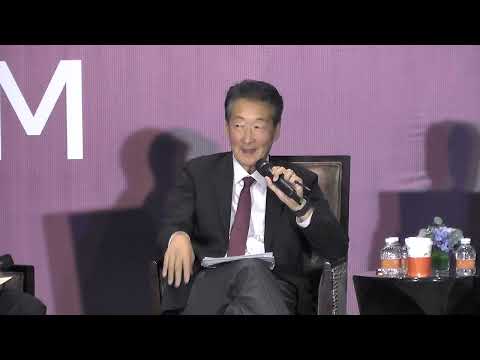
Please welcome back to the channel our good friend Darya Dolsikova, senior research fellow with the Royal United Services Institute's proliferation and nuclear policy program. She joins us today from London. Darya, how are you? >> Yeah, I'm doing well. It's lovely to be back. >> It's about 11 months ago we were talking about whether Operation Midnight Hammer, which is the US military's B-2 strikes on Iran's nuclear facilities had obliterated or just damaged their ability to develop a nuclear weapon. Obviously, a lot has happened as a function of Operation Epic Fury, which is the American name for the war with Iran that started on February 28th of this year. The peace process started a few weeks ago with an unsteady ceasefire happening and just as it looked like a full-scale armed conflict might break out again after the Iranians shot down a US Army Apache helicopter, American officials announced that there was a memorandum of understanding between the US and Iran and that official signing of that document was going to occur in Lucerne, Switzerland on June 19th, which was last Friday. That didn't happen because the Iranians refused to show up in the face of Israeli strikes on Hezbollah targets in Lebanon.
So, Vice President J.D. Vance, who was going to be the the senior diplomat in these talks, remained in Washington. Couple of days later, the Vice President did travel to Switzerland, but the negotiations had kind of a fitful start as reports emerged that the Iranians had walked out because President Trump's post on Truth Social that said, quote, "Iran must immediately stop their high-paid proxies in Lebanon from causing trouble. If they don't, we'll hit Iran very hard again just like we did last week, only harder." Three exclamation points. End quote. Following that, reports emerged that the IRGC had reclosed the Strait of Hormuz after President Trump posted that it was open, which caused Trump to phone into Fox News and threaten, quote, "You close it and you won't have a country.
You won't even make it back to your effing country." End quote. But this morning, Vice President Vance claimed that the negotiations were on track. And although he was headed back to the United States, the delegations were in place to begin the process to create a framework for long-term stability in the region. He also claimed that Iran had pledged not to restart efforts to develop a nuclear weapon. So Darya, the two points in the MOU that are relevant to the nuke discussion are points eight and nine. Eight says, "Quran reaffirms that it shall not procure or develop nuclear weapons." And point nine in the 14-point
MOU states, "The Islamic Republic of Iran will maintain the current status quo of its nuclear program, and the United States of America will not impose any new sanctions, and will not deploy additional forces in the region." Reporting on current events like the war in Iran is challenging because the situation is very fluid and chaotic. So let me tell you about a resource that I depend on to try to provide an unbiased point of view, Ground News. I start my day by going to the Ground News homepage. In this case, let's type MOU, an acronym we're dealing with in this episode, into the search box. Once we do that, a list of relevant articles drops down. So let's click on the one titled "Rubio Meeting with Gulf Allies to Shore Up Support for Iran Deal."
Clicking on that gets us to this landing page that features a bulletized summary of the topic curated using Ground News' proprietary Ground AI insights. Over on the right, we see that there are 120 articles on this topic. And down here, we see an infographic with the bias distribution. Let's compare two headlines. First one is from Japan Today, owned by G Plus Media with high factuality and left-leaning bias. We click on the headline to read the article and once we're done, we click out of it to get back to the Ground News list of relevant articles. And then we have this one here from the Washington Examiner, which you can see is owned by Philip Anschutz with high factuality and right-leaning bias.
And again, it's easy to click on the headline and read the story and then click back to Ground News to find other coverage from various points of view. You can't get this amount of information organized like this anywhere else. Go to ground.news/ward or scan the QR code on the screen. If you use my link, you can get 40% off unlimited access, which is the Vantage plan that I use. Again, that's ground.news/ward or scan the QR code. The link is in the episode description below, so check it out. So Doria, understanding that there are a lot of unknowns and that the MOU is just the beginning of a negotiation that will last a couple of months at least, how do you think this is going to unfold and how will the final deal compare to the provisions of the Obama-era JCPOA that was in place before President Trump basically tore it up while describing it as the worst deal ever during his first term?
>> You know, there's a few sort of things we can pull out from what the remaining
issues are that need to be resolved um on the Iranian nuclear issue and sort of take a look at I guess what the MOU has set up um
and try to as much as I hate to
speculate as an analyst, try to sort of like I said, outline what what the key issues are that will need to be addressed for whatever agreement to even come close to what the JCPOA had had achieved. If we kind of take two different the two different parts that the JCPOA covered, which was sanctions relief and then and then the nuclear issue. So, the JCPOA had, like I said, gone into
some detail on what exactly was expected
of Iran when it came to the nuclear program. So, in particular, it focused on Iran's at the time existing enriched uranium stockpile. So, prior to the JCPOA, Iran was enriching to 20%. U-235. So, you know, we talked about this in some of the previous videos, but just for additional context. So, essentially, uranium when it comes out of the ground, when it's turned into gas in a compound, the amount of uranium 235, which is the material that you need
kind of fair bit of that sustains a chain reaction in a nuclear weapon, it's that that isotope is about 0.7% in natural uranium. To get it to a point where it can sustain a self-sustaining reaction that it can be used inside of a nuclear weapon, you need to get it to weapons-grade enrichment, so about 90%. Iran, prior to the JCPOA, was enriching
its uranium hexafluoride to 20% before the strikes a year ago, it was enriching to 60%, but the JCPOA back in 2015 had So, first of all, capped Iran's enrichment level, so at 3.67%, and
that's kind of within the range of what you would expect for use in nuclear reactor fuel, which is about 3 to 5% depending on the reactor design. The level of enrichment was capped. The stockpile of that enriched uranium was capped as
well at about 300 kg um of um enriched
uranium um enriched to 3.67. It also
capped um the types and numbers of centrifuges that Iran could use to enrich. So, those are the tubes essentially the the metal tubes that um are used for enriching uranium. So, Iran could only have about 5,000 of those uh in the very very basic IR-1 model. Um
so, just to give you a bit of a sense, before uh the attacks in June, as far as the International Atomic Energy Agency could tell, Iran will have had, you know, thousands and thousands of um centrifuges and also much more advanced models than the IR-1. So, they were enriching with all the way up to IR-4, IR-6 doing research and development with IR-9 models, which are much more powerful than than the IR-1. The IR-1 has a separate work unit of about one SWU uh per year, which is basically a measure of how efficient the centrifuges um the IR-6, the IR-4s that Iran was enriching with were, again, depending on the model, kind of four to 10 times more powerful than the IR-1. It was testing some centrifuges that, you know, 40, 50 times more powerful than the IR-1, although not actually enriching uranium with them, but just just developing them. The point being that um the JCPOA had capped essentially the the equipment that Iran would need to enrich uh uranium um and the types of of centrifuges that it would use. Um it had also capped the plutonium pathway. So, there's two different ways of developing uh nuclear weapons. So, you can either use enriched uranium in the core or you could use weapons-grade plutonium in the core. The main kind of route that we're most concerned about with Iran is the uranium pathway, but Iran had also, prior to the JCPOA, been working on a reactor that could potentially produce weapons-grade plutonium if the fuel the spent fuel was reprocessed further. Um so the JCPOA had also put restrictions on um on the development of that reactor and required Iran to reconfigure it. The point being that um the JCPOA had capped
essentially the the equipment that Iran would need to enrich uh uranium
um and the types of of centrifuges that it would use. Um it had also capped the plutonium pathway. So there's two different ways of developing um nuclear weapons. So you can either use enriched uranium in the core or you could use weapons-grade plutonium in the core. The main kind of route that we're most concerned about with Iran is the uranium pathway, but Iran had also prior to the JCPOA been working on a reactor that could potentially produce weapons-grade plutonium if the fuel the spent fuel was reprocessed further. But the JCPOA had also put restrictions on um on the development of that reactor and required Iran to reconfigure it.
They put restrictions on weapons-related activities. They put restrictions on import and export of or in particular import into Iran of weapons-relevant equipment and materials and it established a UN Security Council mechanism, um a channel through which Iran would have to import any of that material and all of that would be reviewed by the UNSC. So those are sort of probably missing some provisions. Like I said, it was a hundred something page document, but it was really really thorough in terms of uh the expectations for Iran on the nuclear side of things. And then in exchange for that Iran would get relief from some sanctions relief. Um so that included primarily the eventual gradual lifting of UN Security Council resolutions that imposed sanctions on Iran and Iranian individuals, Iranian
kind of activities, certain economic activities, and in financial activities, and in other institutions. Um so, those sanctions would over time be lifted, not all at once. Um then EU nuclear-related sanctions on
Iran uh were lifted, and then secondary US nuclear-related sanctions on Iran
uh were lifted under the JCPOA. Um so, again, some economic benefit, but not a full lifting of UN or or EU
sanctions at the time. And the important thing being that um the JCPOA was negotiated, was concluded in it was July 20 um 15. But there was a 6-month period
after that negotiation where Iran basically had to meet the requirements on the nuclear side. So, again, down-blend existing stocks, get rid of some of the centrifuges, etc., before those sanctions would be lifted. So, January uh January 16th, I think it was, 2016 was, quote unquote, implementation day. So, that was the day, 6 months after conclusion of the agreement, that all of these sanctions provisions would come into the lifting would come into force if Iran was found to have met its obligations on its side. So, that kind of gives you a general gist of the structure of the JCPOA. Again, as I said, it's a little bit unfair to compare the JCPOA with a 14-point MOU, but I think there's a couple of things that stand out in the MOU that have raised eyebrows among people who've been following this file for some time. There seems to be a suggestion that um all US sanctions, primary and secondary,
uh let me rephrase. It states clearly that all US primary and secondary sanctions would be lifted, uh and UNSC sanctions would be lifted um off uh the Iranian economy, which is
um unprecedented, and goes much, much farther than what the JCPOA had done.
Um if that is actually what ends up being in the final agreement. Um as I said, the JCPOA did not lift primary US sanctions. It only focused on secondary sanctions, and only nuclear-related sanctions. And that's key because um US sanctions on Iran are this really complex web of all kinds of sanctions, other financial and economic restrictions that have been built since really 1979. Um and yes, some of them deal with concerns over the Iranian nuclear program, but a lot of them deal with unrelated things like Iranian terrorist activity, Iranian um support for
engagement in drug trafficking, Iranian human rights violations, etc., etc. So, one of the things that the Biden administration had run into, one of the issues they ran into when they tried to negotiate a return back to uh the JCPOA after Trump had pulled out
uh was precisely this, right? How do you untangle this very complicated web of uh
US sanctions on Iran. Um so, that hasn't gone away. That's very challenging. There's also questions around congressional review of the lifting of all US sanctions on Iran.
Yes, certain sanctions can be lifted. Uh
my understanding, and I'm not an expert on all the ins and outs of of sanctions, but they can be lifted just by the US president. So, in particular, the um executive actions under which some of these restrictions had been placed on Iran can be lifted by the president, but a number of sanctions, US sanctions on Iran, um are congressionally mandated. So, Congress would have to get involved. Then there's a question of INARA, which is the Iran Nuclear Agreement Review Act uh process. Um so, basically, it means
that any kind of nuclear agreement with Iran would have to be put to um US Congress, which has the right to disapprove of that agreement.
So, whatever the Trump administration comes up with is presumably also going to have to to go through that process. And then Congress will have, like I said, 30 days to review and could potentially disagree or disapprove of the agreement. So, there's that issue. So, on the sanctions side of things, it's very, very complicated. Also, if we look at the lifting of UN Security Council sanctions, that require all of the permanent five members to come on board, which includes the UK and France. And I think sometimes the US forgets that we do also have a veto at the UN Security Council and certain foreign policy priorities that you know, might might be raised if an agreement doesn't meet the expectations of the the French or or the Brits when it comes to capping or addressing concerns over the Iranian nuclear program, but also kind of concerns over other Iranian activities in Europe, for instance. So, so the sanctions picture is a very, very complicated one and and the MOU very much oversimplifies it. And again, I don't know how much flexibility is to move away from the terms of the MOU, but the way it's phrased at the moment seems to lock the US into quite an extreme position and not a particularly beneficial one for the US from from the perspective of sanctions and a very beneficial one for for the Iranians. Then moving on to the nuclear question, kind of how the MOU addresses that, again, very difficult to say much because there's almost no detail.
You know, if we go through the I'm just pulling up the agreement now. If we go through, you know, the relevant paragraph, let's, you know, sentence by sentence. So, the Islamic Republic of Iran reaffirms that it shall not procure or develop nuclear weapons. Fine, but Iran signed and then acceded to the NPT uh ratified the NPT the nuclear non-proliferation treaty back in the 1960s, 1970s, right? Which says that Iran well that parties to the NPT would not develop nuclear weapon. The Iranians have been saying continuously that they do not plan to develop a nuclear weapon. Whether we believe them or not is a separate question, but you know, they say already that they're not going to develop or procure nuclear weapons. So, I I don't see what that actually would this particular line actually adds.
The US and Iran have agreed to resolve the disposition of stockpiled enriched material pursuant to mechanisms mutually agreed uh minimum methodology to be down blending. Again, doesn't specify which stockpiles of enriched uranium. Um so, there's this concern over the 440 kg of enriched of uranium enriched to 60%. So, not quite weapons grade, but close. Um that Iran had prior to last June strikes. Um we don't really know what happened to that material. Um so, it's possible that it's referring to that stockpile and that you know, the US administration's going to uh look to to have Iran down blend that, but besides the 60% you know, before the
June strikes the last IAEA assessment was that Iran had about it was an estimate, but about 9,000 kg of uranium enriched to various levels. >> We've used the term term down blending. Does that mean to kind of dilute from 60% to to something that in accordance
with maybe even the JCPOA standard? >> Yeah, exactly. Yeah, so it's just diluting it down. Um so, yeah, so then the question is which stockpile are you diluting down and to what percentage? So, that's what we'd need to know to be able to compare it to the JCPOA. And then what are you going to do with the down blended material? Because once you down blend it, the material is still in Iran. Um,
so, you know, Iran could potentially end up with, again, still thousands of kilograms of low-enriched uranium, but it's still stockpiled in Iran. So, one option would be to move it out, ideally out of the country, but again, we don't know what's going to be included in the final agreement. Then there's a question of whether the facilities needed for the down-blending are still operational or whether they need to be rebuilt. And then there's a broader question, kind of moving further down in that paragraph, that the two parties agreed to discuss the issue of enrichment and other mutually agreed matters related to Iran's nuclear needs. So, this is going to be a massive sticking point, I expect, because it has been, really, for the last two decades, whether Iran can have any enrichment at all. So, uh, the US, across administrations, has flip-flopped on whether it wants or whether it will allow Iran to have any enrichment capacity at all. So, the Bush administration, for a time, had raised that as a possibility, then it was taken off the table because the Iran It was a non-starter for the Iranians. They insist on being able to have some enrichment capability.
Obama obviously took that off the table. The JCPOA still allowed Iran to retain some enrichment capability. Trump has now come back and said, "No enrichment whatsoever." Although he's also, apparently, raised the possibility of potentially maintaining some enrichment capability. It's not really clear. >> Is the enrichment capability part and parcel of the creation of a nuclear weapon, or do you need enrichment capability to have nuclear energy for commercial use? >> The Iranians say that, first of all, they have the right to have enrichment for whatever it is that they need it for, but also they say that they, um, want to have enrichment capability for the production of stable stable isotopes for medical uses, um, and for, um, the Tehran research reactor, um, and for their nuclear energy needs. So, you don't need the type types of stockpiles that we're seeing in Iran now for stable isotopes or the size of the enrichment program that they currently have uh for the production of stable isotopes or for
the Tehran Research Reactor. And then on the energy side of things, the Russians already provided Iran with uh nuclear fuel which includes uh you know, they take the enriched uranium and they um that is enriched in Russia and then they make nuclear fuel in Russia to deliver for Iran's uh Bushehr Nuclear Power Plant which is a civilian nuclear energy so there's no technical need for Iran really to certainly not enrich to the levels in the stockpiles that then they're enriching to now. But that's sort of yeah, they say it's their inalienable right. >> The criticism of the JCPOA has been
ongoing and and it's sort of a root note for for Trump primarily. It at some level it just seems like he doesn't like it because it was Obama's thing. So is it fair to say that once the JCPOA was taken off the table
that gave a green light to Iran to start an enrichment program that they didn't have in progress when the JCPOA was in effect? >> Trump had pulled out of the agreement in 2018 and reimposed all the sanctions the US sanctions that had been lifted. Um so Iran wasn't getting the economic benefits that it had expected and then the Iranians on their part started gradually over time increasing the level of enrichment. So like I said by the June strikes last year they were enriching to 60% as opposed to the 3.67 that was allowed under the agreement. They were stockpiling like I said they had to an estimated kind of 9,000 kg of of enriched uranium as opposed to the 300 kg that were allowed under the JCPOA. They were enriching with advanced centrifuges that had separated work units you know, well beyond the IR-1 centrifuges that had originally been allowed under the JCPOA. So Iran was in very clear, and very, very serious violation of I don't want to say all, cuz I'm not going through all of them, but I would assume the very, very vast majority of the nuclear-related provisions. But, on the flip side, Trump had pulled out of the agreement as well in 2018. That had kind of set off this this whole cycle.
>> How easy would it be for Iran to do something surreptitiously while they sort of broadcast that they are participating in whatever the terms are that are are agreed to going forward? >> It's difficult to um to tell what's going on underground and and some of these facilities. Fordow in particular and part of Natanz and part of Isfahan are underground, so we can't really see what's happening there. But, you can still see satellite imagery of you know, if there's dirt being moved or, you know, someone's picked up a truck coming up to one of the facilities and loading on what could potentially be, you know, canisters that look like they might fit the description of canisters used to transport uranium hexafluoride, which is the state that that uranium was in in. But, I mean, an an enrichment hall is not a massive I mean, it can be, but you can install a a cascade of centrifuges in a fairly small facility, and Iran is a massive country, um relatively speaking. It's quite a large country. It's a country with lots of mountains. So, it's not out of the realm of the possible that you know, centrifuges could have survived uh centrifuge production facilities could have survived that could still produce some of these centrifuges. So, being completely blind and having no IAEA access is is challenging, although, I mean, arguably some of these activities could be done outside of the view of the IAEA as well, all right? So, Iran could potentially let IAEA inspectors in and and not let them see the sites where some of this, you know, hypothet- I'm sort of I'm talking very much in hypotheticals. We have no proof that Iran is actually engaging in any of this activity.
>> Well, as you said up front, there's a lot we don't know and and again, the caveat that you put out uh is you're not going to attempt to compare a 14-point MOU to a several hundred page document that was you know, constructed over over a long time. Uh but others have have done this. So, let me bring up this Pepsi challenge here. This is not a a roosey document. This is not your your infographic. But a lot of the dialectic domestically is about JCPOA versus the MOU.
Uh again, all the caveats in place. This is and as Vice President Vance said, the MOU is not the the end of anything. It it's the beginning of a process by which certain things will be hammered out. Okay, roger that. But is the blue column accurate? >> So, I won't speak to the unfrozen assets um just because there's like I said, I'm not a sanctions expert and there's various numbers that have been floated around. Don't know if it was a 98% reduction, but it was a massive reduction. Yeah, to like I said, 300 kg um capped at 3.67. Uh Iranian sanctions were uh well, caveat that. They weren't fully kept in place. Um there were like I said, secondary US secondary nuclear-related sanctions that were lifted 6 months after the conclusion of the agreement and after Iran had carried out the steps to on the nuclear side of things. And then certain UN Security Council sanctions came off over time as well. Again, the JCPOA didn't deal with regional issues and deal with or moose. The rest of it's a little bit kind of not directly related to what was actually in the JCPOA. I think if we are going to compare the MOU to anything and again, it's not a direct comparison, but be prior to the JCPOA, there was the joint plan of action, which was before the joint comprehensive plan of action.
So, that was concluded in November November I think November 2013. It was kind of a halfway house where neither party will have been happy to settle with just that, but it was a quite clearly spelled out list of you know, things that okay, we've this is a first step. It's a trust-building exercise. It's you know, we can agree with to these things and it'll be a 6-month negotiation process. It ended up being extended. It took you know, nearly 2 years to finally reach the joint comprehensive plan of action, but the MOU doesn't go into any of those details. So, again, it's a little bit hard to compare. It's a bit like comparing apples and oranges, but if we are going to compare to anything, I would argue that that's probably the easiest thing given the benefit of the giving the benefit of the doubt to um the Trump administration that perhaps they can pull out something a lot more detailed um in you know, the the follow-on technical negotiations.
>> To your point, I think in the face of the overwhelming criticism of the JCPOA, meaning if you criticized Obama for giving unfreezing assets and whatever the number is, you know, the number I've heard it was 500 million. Here this says 1.7 billion. And then the number that's been bandied about by the Trump administration is 300 billion. And it's contingent on Iran complying with the terms of not the MOU, but whatever else is agreed to going forward with respect to funding proxies,
with respect to keeping these Strait of Hormuz open and not charging tolls tolls with respect to not pursuing a nuclear weapon and limiting their stockpile of ballistic weapons and not using them against their Arab neighbors and Israel. Those are all the elements. Those other things were not covered in the JCPOA. JCPOA was strictly about as you pointed out, about nuclear weapons proliferation. So, when it says no agreement, no agreement, what he should have written is no agreement yet cuz Cuz going to be an agreement. It's not no agreement cuz the MOU isn't the end of anything. And then you add the Hormuz Strait, you add direct costs, which basically what this is saying in broad terms is you didn't have to start a war with Iran to get to an agreement. We did to get to this MOU. And that's where you get the American weapon stockpile. This slide uses the term depleted. I did an episode a few weeks ago about the facts associated with US military missile inventories. Uh depleted isn't quite the the right word. They are highly reduced to levels that we have to attend to. But the point that's made here in broad terms is look, we had to fight a war several months long to get to the table to you know, have some follow-on discussions. So, we're not litigating this on an official capacity with you and me, but you know, this this kind of thing is happening. And and here's another meme that I think is kind of funny. It's like selling your 2022 Corolla and then buying a 2019 Corolla, which again, I just think it's funny.
I'm not endorsing that that sentiment, but this is what critics are saying, you know, here. >> I was looking at the JPOA today before we were chatting. Um so the interim if you will agreement before the JCPOA, and there's an asterisk on one of the last points in it. The asterisk goes to the point bottom of the document, which says with respect to the final step and any steps in between, the standard principle that quote, "Nothing is agreed until everything is agreed." applies. And I think I mean, that's such a critical aspect of doing any kind of diplomacy like this. Um the fact that it was clearly articulated in the JPOA, whereas with this MOU,
it seems like, you know, there's been stuff that's been put on the table without having actually thought through kind of what that looks like in practice. Um is yeah, like I said, certainly doesn't inspire confidence, but I will I don't know. I'll give the administration the benefit of the doubt. Maybe they'll pull something very impressive out of their back pockets, but I think it's taken some leverage off the table, which is unfortunate. >> As you say, we'll we'll see because the Secretary of Defense has has said, "We're negotiating from a position of strength, unlike the Obama administration during the JCPOA." Meaning, you know, we negotiate with bombs, all the other tough guy talk that's happened over the last number of months, particularly from from the Pentagon.
Uh so, the question to your point is
will the fact that we have
eroded their military capability considerably, right? They don't have much of a navy, their air force is all but gone. Two layers of their leadership has been removed from power. Uh so, will that affect their attitude towards negotiations? That's the question. >> I think that's right, and that's sort of what It's been one of the key questions that we've been asking ourselves over the last 12 months, right? Is Iran going to take away from this, from the military tax in June, from the recent military action, that it's better off or worse off by pursuing a nuclear weapon?
Um is the US ready to continue carrying out military strikes, not just if these negotiations go sideways, but if Iran decides to rebuild the nuclear program? Um I don't know, cuz I mean, that's something that we have to ask the credibility of as well. Um at the same time, I think, you know, it like you said, um the Iranian military
capabilities have been damaged, but also
the leadership is um you know, we don't know what the state of leadership is at the moment, who's actually in charge and the country expecting leadership is reeling. So, is this now the time to be pulling together, you know, or reconstituting and a nuclear program? I I don't think so. Um but I think, like I said, it's kind of going forward in the next months and years, I think it's really important that we really get this right for, you know, when Iran does kind of get its act back together, what are the conclusions that it will draw from all of this? >> So, we'll be keeping our eyes on that very subject going forward here and getting you back on the channel when the situation mandates. So, Darya
Dolzikova, thank you for leveraging your expertise for us today and appreciate you spending some time with us and we look forward to having you on the channel again soon. >> Look forward to coming back. >> All right, that'll do it for this episode. If you're not already subscribed, become one so you don't miss anything going forward. And in the meantime, I look forward to talking to you again very soon.
>> [music]
[music]
[music]