How Ukraine is Isolating Crimea from Russia
Transcript
Machine-transcribed by YouTube. Expect errors in names, commands and version numbers.
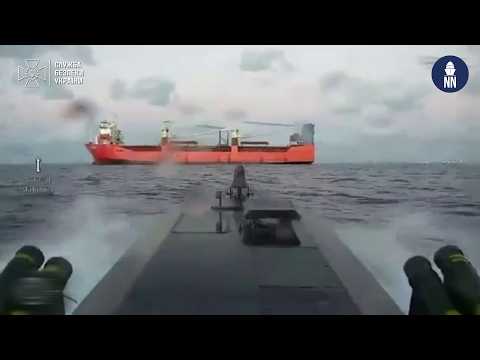
For those of you who have been following the news lately, you've no doubt been made aware of Ukraine's successful strikes against oil refineries in Russia. In fact, we made a video about precisely this topic last week. What's flown under the radar, however, is an equally bold operation called Molochka, which has increasingly isolated the Crimean Peninsula. Just last week, the Kremlin was forced to suspend shipping through the Sea of Azov after a barrage of Ukrainian drone attacks rendered the waterway inoperable. Ukrainian sources claim to have struck a jaw-dropping 116 maritime vessels in an intense 9-day blitz between the 6th and 14th of July. Although, those numbers haven't been independently verified. On top of this, systemic strikes against key bridges, power stations, and highways are starving the peninsula of fuel, power, and ammunition. And this marks a departure from the previous Ukrainian strategy, which was limited to military vessels. So, in this video, we're going to take a look at how a nation without a conventional navy is forcing Moscow to abandon its historic naval routes. How this new Ukrainian strategy is choking the Crimean Peninsula. And, most importantly, to what ends?
This spring, we visited Greenland to discover the country and find out why it's been such a major geopolitical flashpoint. While we were there, we camped on a glacier, trekked through the wild to find abandoned military installations, and explored the melting oceans. All to answer the question, what's the big deal with Greenland? The documentary is now streaming exclusively to TDR party members. You can sign up or watch the full trailer by clicking the link in the description. Russia seized Crimea in 2014 during the turbulent Euromaidan protests. Although President Vladimir Putin's official reason for the occupation was to protect the native Russian-speaking population, the peninsula has since turned into a military fortress. It cannot be understated how vital Crimea has become to Russian advancements in southern Ukraine. The peninsula serves as a logistics hub and heavily fortified launch pad hosting troops, armor, fuel, and long-range air strikes required to sustain its entire military campaign in southern Ukraine. Furthermore, the annexation fulfilled Russia's centuries-old obsession with securing deep warm water ports. By capturing Sevastopol, Putin secured a year-round naval projection into the Mediterranean and famously envisioned this heavily militarized peninsula as an unsinkable aircraft carrier in NATO's southern underbelly. It was clear then that Ukraine needed to work around this problem if they wanted to halt Russian advancements around Zaporizhzhia. That brings us to Operation Malochka, a Ukrainian backronym which stands for Moscow will fall through Crimea, amen, which officially kicked off on the 6th of July. Unlike previous operations that focused on sinking heavy warships, Malochka targets a far more mundane, yet economically vital, class of vessel, Russia's feeder fleet. These vessels ferry oil throughout a complex system of Russian rivers and waterways to reach Sevastopol on the Black Sea and feed the infamous shadow fleet with sanctioned Russian oil. By targeting these vessels, Ukraine is attempting to undercut Russia's oil exports and thus put further strain on Russia's state finances. Furthermore, Crimea's been acutely affected by the petrol crises roiling the mainland, paying on average three to five times more at the pump than in Russia proper, where prices already very high. In conjunction with this, Ukrainian armed forces have also targeted land routes. At the end of June, Ukrainian special operatives executed precision strikes that damaged the strategic railway bridges crossing the northern Crimean Canal. These lines served as the backbone for heavy Russian munitions, armor, and fuel deliveries moving from the Kerch Strait to the southern front lines. When Russia tried to reroute their supply lines to the R-281 highway to Mariupol, they met similar barrages and were forced to reduce truck traffic on one of Crimea's busiest highways by 70%.
The combination of these operations has essentially isolated Crimea from mainland Russia and a sustained campaign could spell serious trouble for the peninsula. But, this raises the question, what does Ukraine stand to gain from an isolated Crimea? Well, as we see it, Ukraine has three primary objectives. First is logistical suffocation. By rendering both sea and land routes hazardous, Ukraine is making the Russian southern grouping of forces in Kherson and Zaporizhzhia much more logistically challenging to supply. While we're far from a frontline collapse, without a reliable high-volume flow of fuel and ammunition, Russian soldiers may find it much more difficult to sustain the current level of attrition. Second is economic leverage.
The Sea of Azov is a vital financing lung for Moscow, carrying roughly 25% of Russia's massive grain exports and representing roughly 1/5 of the global market. After recent attacks on oil refineries around Russia, agricultural revenues have become ever more important. By sending the sea into a war zone, Ukraine has sent maritime insurance rates through the roof and upset global markets with wheat futures spiking. The third objective is to fan the flames of public discontent. The attacks have induced an acute polycrisis inside Crimea itself. Rolling blackouts from power stations, a total ban on civilian fuel sales to prioritize the military, and the complete collapse of the summer tourism industry have brought the harsh realities of the war directly to the doorstep of the Crimean population. In this light, Ukraine's siege of Crimea fits into a wider strategy of forcing ordinary Russians to bear more of the war's brunt in the hope that this might change Putin's strategic calculus. Now, it's important to exercise some caution here. While there is cause for some optimism, it's hard to tell what kind of effects this will have on the battlefield. Earlier in the war, when Ukraine began utilizing the HIMARS to great initial success, the advantage couldn't be sustained for very long.
Eventually, the Russian army will adopt new strategies and supply lines will shift. However, at least for the foreseeable future, they'll be slower, more complex, and more frail. Similarly, while this will put further political pressure on Putin and the Kremlin, it's worth stressing that it's unlikely to change Putin's strategic calculus, and we shouldn't expect a capitulation anytime soon. Although, it probably does make peace negotiations slightly more likely. In short, by relentlessly striking at essential logistical supply lines, Ukraine has turned the peninsula's biggest strength against itself, its isolation. Crimea is only tenuously anchored to Ukraine, and the Kerch Bridge is its only physical connection to Russia. While this impenetrability has been an advantage throughout its history, it can just as easily be weaponized against them in the modern era of drone warfare. Much like how Iran is holding the Strait of Hormuz hostage as leverage against a more powerful opponent, Ukraine has spotted an opportunity for leverage in the Sea of Azov. Whether or not this will be a successful strategy remains to be seen, and it's primarily dependent on Ukraine's ability to sustain the pressure. However, what has become clear from the Strait of Hormuz to the Sea of Azov is the use of drones at strategic choke points is the great equalizer in an otherwise seemingly unbalanced war.
Now, as you're probably aware, it's kind of impossible to avoid talking or thinking about the big players that control our world, much like the ones we've spoken about in today's video. But, it's not just the government leaders that impact our day-to-day life, it's also the big companies and how increasingly difficult it is to avoid their influence. So, I bet you're wondering how you can start taking back that control, and luckily we have a simple solution for you, and it starts with your email. While it might seem insignificant, your email is extremely personal to you, and it's important to keep hold of what's yours. And thankfully ProtonMail will help you get that control back. It's a private, secure alternative to big companies like Google and will give you everything you need to be productive all while keeping those pesky ads away from your inbox.
From preventing dangerous fishing attacks with their fish guard protection feature to protecting your identity by alerting you if your email has been sold on the dark web, ProtonMail has everything you need to stay safe online. They also offer end-to-end zero-access encryption meaning their emails truly stay private, inaccessible to advertisers, trackers, or even Proton themselves. This means your email and your information stays safe and secure. No more ads, no tracking, and no profiling, giving you back the control you deserve. Making the switch doesn't have to be a hassle. ProtonMail's easy switch tool allows you to move your emails and contacts from your current provider in just a few steps. You can even connect your Gmail account and receive and send messages from it directly in ProtonMail while you transfer everything over at your own pace. So, there's no pressure to switch it all at once. So, start using ProtonMail for free today by using our link at proton.me/tldr and you'll be one step closer to a fully protected online experience free from data exploitation.