The Battery Born From Mars Tech
Transcript
Machine-transcribed by YouTube. Expect errors in names, commands and version numbers.
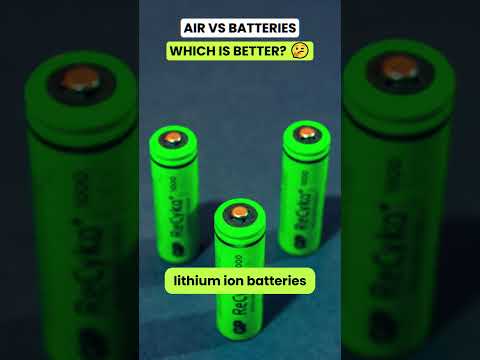
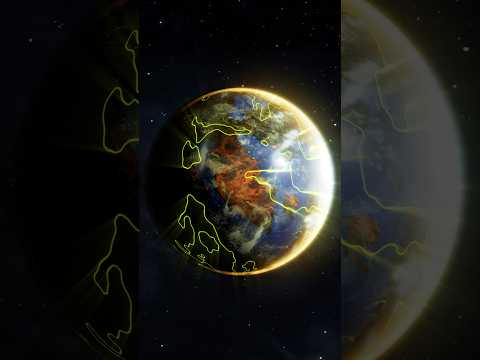
A NASA experiment built to keep astronauts alive on Mars might be the key to fixing our energy grid here on Earth. So, here's the deal. Renewables work great until the sun sets or the wind stops. Most grid-scale lithium-ion battery installations only last 2 to 10 hours. After that, we're firing up natural gas or coal plants like it's 1899. What we actually need is cheap storage that can ride out days, not hours. Enter Mars. NASA built a device called MOXIE. Its job was wild but simple: pull CO2 from the Martian atmosphere and split it into carbon and oxygen. That way future astronauts could breathe and refuel their rocket home. And it worked. In 2021, MOXIE made oxygen on another planet seven times, a first in human history. Here's where it gets interesting. A former NASA engineer named Chris Graves looked at MOXIE and thought, "Wait a second. I could use this to store energy." So, he founded a California company called Noon Energy.
Their battery does basically what a house plant does. It pulls in CO2, splits it, holds onto the carbon as a solid storage, and releases the oxygen. When you need power back, it recombines them and out comes electricity. The big claim? 100 hours of storage from a system the size of a shipping container. Roughly 10 times what lithium-ion delivers, and it uses less than 1% of the critical materials, and they claim it's up to 24 times cheaper per kilowatt-hour. I've been burned by battery claims before. Round-trip efficiency runs around 60 to 80%, which is lower than lithium-ion. And this tech still has to prove itself at full scale.
But for ultra long-duration storage, efficiency isn't as important as overall cost. If Noon's numbers hold up, we're looking at a grid-scale solar and wind with ultra long-duration energy storage that's cheaper than fossil fuels. A battery inspired by Mars that breathes like a plant and might finally let us quit natural gas. I'll be watching this one very closely.