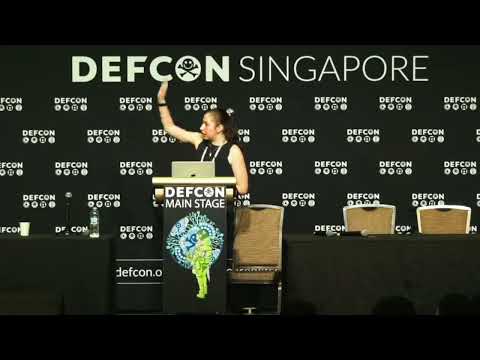
AI and Pen Testing- Is This Industry Dead? with John Strand
Transcript
Machine-transcribed by YouTube. Expect errors in names, commands and version numbers.
First and foremost, I want to say thank you so much for hanging out with us today. I greatly appreciate I haven't done a webcast in a little while. I've been doing a lot of the trainings. I'm going to probably slow down my trainings and maybe do more webcasts, much to the shrin of some people, I'm sure. But I wanted to talk about this topic that keeps coming up in the industry and with family and friends and people that are in the community is AI killing penetration testing. Now, the first thing that you need to understand this that this entire presentation is entirely biased because of course I'm not going to come on to this webcast and say immediately like oh no web like AI is totally killing penetration testing or am I? I don't know. You're going to have to stay. You're going to have to find out. But that is the goal and objective of this webcast. Kind of answer that question at least from my perspective and what we've been seeing at Black Hills Information Security and what we've been doing. But it's it's been kind of weird. I would say for the past couple of years going to conferences up until this year like this year probably around October, November of last year with the models really accelerating in their capabilities seeing vendors all the time talking about how they would use AI and what it would do and it really felt like snake oil. Um remember we called our product AC hunter we called it AI hunter to start because we were using C means clustering and we were using MadMob medium average distribution of the mean.
and we were using a number of different AI algorithms in it and at I think we were probably ahead of our time a little bit because it felt a little snake oily. Um, but then it just accelerated like you know two years ago it started getting really into a hype machine and I I've had vendors that would come to me and they would say things like you know our product is going to kill penetration testing and they they always wanted to show it to me. They're like, "Hey, come here. Come here. Hey, would you like to see the product that's going to kill BHIS?" And they're like, "That's no way to be friendly. That's no way to have a good time with other people, but they were always convinced that whatever product they had is going to be something that was going to kill uh penetration testing, and it was always AI under the hood, and they couldn't answer a lot of different questions."
So, I want to set the stage. I'm going to do this historical context a couple of times throughout the webcast today, but I think the current state of play is incredibly important to understand where we are at this moment. And the thing I want to kind of cover is what happened in 2000, right? If you go back to 2000,
there was the dotcom boom. And this is right when I entered into it, right? And
when I first entered into it, I was joining Accenture, it was Anderson Consulting at the time, who changed their name because of Enron to Accenture, which is Accent on the future. And there was a ton of companies out there in the dot days, early dot days before the bubble burst, right? You had pets.com. You had etoys.com, go.com,
broadcast.com, prodigy, homegrer.com,
webvan. All of these different companies were out there in the dot boom. And the stock market was throwing money at these companies like there was no tomorrow. It was just like dollar dollar bills, y'all. Just like raining funds on all of these companies and it cratered. I remember when um when I was working at Accenture uh was 2001 uh before
September 11th and I distinctly remember when the dot crash happened. I remember
sitting in because I was a new employee that was just coming in and they were firing people in batches of 30 all day every day for like a week in the Denver office uh for Accenture Consulting because there was so much money in it and so much need for developers that Accenture was basically farming out developers to all of these different companies and when the dot crash occurred there was no need for them anymore because a lot of these companies went out of business. I remember one very large one was Quest Communications and um they they fired everybody as soon as their stock created. That's just what happened. And what's interesting about this is two separate things. What's interesting about this is number one, the hype that [snorts] we have for AI right now is following pretty much the exact same trajectory. It's a technology. Everyone's investing in it.
It's going to fundamentally change the world. Um, and we, you know, it's
failing at that right now. Much like Pets.com failed at that, much like etos failed at that, much like Webban failed at that, all of these different companies failed. But if you flash forward to today, like
a quarter century later, we now have like Chewy is a pet food company online.
We have, you know, can buy toys on Amazon, right? You have all of these different things like GrubHub and all these different apps. Almost every one of these companies that failed spectacularly in 2000, eventually the
technology caught up and caught on and it became a thing. And I think that that's where we're at with AI right now. I think a lot of executives, CEO, CFO, CTO's whenever they're looking at their spend in AI, they are very much not
seeing a return on investment. and we're going to have a collapse very similar to what we had with the.com collapse. That doesn't mean the concepts of the technology are invalid. It just means that maybe a lot of this stuff was a little bit ahead of its time, especially for evaluating companies at like a trillion plus dollars for what they're doing. And I'm going to circle back to that as well. So, if you're looking at that that promised return on investment from the financial perspective, this is one crazy person's opinion. It's incredibly overvalued. And further, what happened in that dot crush is I think going to happen again when the AI crush happens. And we're already seeing the impact on jobs and hiring and things in computer security.
And I think that by looking to the past, you get an idea of what's happening in the present and you get a better idea of what's going to be happening in the future. Now, I say all of that because a
lot of companies are having a hard time figuring out where AI fits to where they can make money or improve in a
substantial way. And if you look at the articles, there's tons of them about executives saying they're seeing no return on investment and they're looking at cutting their AI spend significantly. That doesn't apply to security. If you're looking at offensive and defensive security, AI without question
is providing value. Uh you could say unfortunately I think that that value is parody. So offensive AI and then defensive AI goes up and offensive AI goes up and defensive AI goes up and there's always this kind of par. But it's kind of this weird space that we're in where yeah, AI and an offensive side
without question is doing amazing things, but I don't think it's doing amazing things in the way that [snorts] a lot of people expected it to. And I'm going to cover that here in a lot more detail. But I wanted to set this up from a historical perspective that we've seen this type of explosion at the beginning of the internet where everyone's so excited but no one really knows how to capitalize on that financially and it took in some situations 15 20 years before that capitalization of the technology actually occurred. Um I talk about don't believe the hype. You know, if we're looking at AI and infosc marketing, there's a ton of companies that are throwing around all kinds of, you know, like catchphrases like no more expensive penetration tests, fully autonomous web application pentesting, beginning to end. We do absolutely everything and you don't need to hire an expensive pentesting firm. You just need to buy our expensive software products.
[snorts] And on the right hand side, kind of at the top row, I could cut that down a little bit more. This is these are all pictures that I took of companies at I
think it's like infosc Europe. Uh it's the conference in London that's kind of like RSA or Black Hat. And I was walking
around the floor and all of these pictures are different AI pentesting companies. I couldn't go down any rows. I couldn't go anywhere without seeing one or two of these AI penetration testing companies and they were all saying the exact same thing. Right. Um, we can replace expensive pentest, we can automate all of this, we can do the attack surface management, we can do all of these different things. And I think that's a concern for me whenever we're talking about the funding. And I think it's endemic of or it's more articulative of
what's happening in the overall AI industry space. So I have a lot of calls with different customers and vendors and also investment companies. um they'll talk to me about you know what do you see is going on in this particular space and when you're looking at this particular space right now none of these companies have like a deep patent on AI pentesting none of these companies have a secret sauce that is so secret that they are completely going to devastate their competition in the competitive analysis space um getting into game theory they're all basically neutralizing each other very very quickly because they're all the exact same [ __ ]
And that is a concern. I feel sorry. I'm sorry for you if you're working in one of these companies that does this stuff exclusively and you're a disruptor.
Understand there's no special sauce. I mean, right now there's five or six companies that are in this space right now that are getting pretty big. They're definitely eating into the penetration testing space, but there's nothing about those individual products that is so incredibly unique that they should have valuations of hundreds of millions of dollars. Further, if we're looking at like AI coding or vibe coding or whatever you want to call it, you can't really go more than two days without a new GitHub AI framework, pentesting framework out there. And like bug bounty GitHub projects utilizing AI, there's dozens of them. People are constantly throwing these things up. So, if you're in this space and you're a vendor and you're exclusively trying to sell a product that does AI penetration testing, one, your competition space is ridiculous. Like, it's crazy. And you're all doing the same thing. And two, there are products that are coming online that are open- source and free that actually can go toe-to-toe with a lot of the products that you see that have VC funding and private equity funding in them as well. So when we're looking at all of these different tools, right, if we're looking at all the different vendors that are out there and I've looked at a lot of the vendors and I've looked at a lot of their portals and I've had to sit with them basically, you know, like pooping on BHIS and pooping on the pentesting industry and with a tremendous amount of pride, there is a problem with a lot of these different products. There's a huge problem with all of these products. But before we do that, we're going to go to the lobby and we're going to have a quick interlude.
Oh, where did my interlude go? These companies, you're cool. All right, and this isn't exclusive, right? These are just the companies that I did some quick research that are doing AI penetration testing and they make it very clear that the way that they use AI penetration testing as an enablement for a professional, an expert in what they are doing and how they are using these products. So, if you're looking at like Bishop Fox, they have a product. I can't remember what the name of their product is. It's right on their front page. They actually have really good like graphics and everything for their product. I It's like Stellar or something. I can't remember off the top of my head, but they make it clear that it's AI coupled with a human being. Cobalt coupled with a human being, trusted sack coupled with a human being, sinac coupled with a human being. And I think that that's more the correct answer on that as well.
So, that's kind of an interlude. Um going further, if we look at this as a problem, we we see the same problem exist with mythos, right? And and
we can get into the politics of all of this like DoD and anthropic and where are we going to block mythos from being sold and all that crap. And my final bullet point on this particular slide is it cannot be controlled. I think that
Congress, the White House, foreign governments fundamentally do not understand what is happening here at all. Mythos and what happened with anthropic is not an end state. There is not a product out there that is a pentesting product that is so exclusive and is so
dangerous that it can bring the entire internet to its knees. The thing that you need to understand with mythos is it's a harbinger of things to come. It is not an end state. It is not like this thing exists. We need to shackle it. We need to make sure we put export controls on it. And then if we protect mythos, then we've protected the internet. We protected the national interest. This fire is out there. And
this is once again going back to the financial aspects of it that a lot of people do not understand is that AI and what's going on right now
is not the exclusive providence of anthropic, open AI, Google, Grock, Facebook, and all of these big companies. It isn't. Um most of these models are built on math that they basically um uh they basically had a lot of this math all the way back in the 70s. So if you're looking at like neural networks and how neural networks function, that mathematical model has been around for a really really really long time. And it wasn't until graphical
processing units uh kind of hit the scene, you know, the same ones we use for password cracking and I hear that some people use for video games, I don't know, that allowed you to do massive parallel processing on GPUs. It wasn't until that hit that neural networks kind of got their their time to shine, right? And I think it was in 2017, Brunman can correct me on this for sure, but I think the name of the paper was attention is all you needed where they talked Bronman. I don't know if I got that right. I think that's the paper and I think that's the year. Um, but it wasn't until they got to that point that the
computation and parallel computation got to the point to make neural networks feasible. And once they got feasible, they then took off. And by the way, neural networks are not the only type of like artificial intelligence algorithm out there. That's a whole another presentation that I should give on, you know, LLMs or hammers and everyone's using it as a nail, but there's other algorithms that can do other things much much much more efficiently than LLMs and neural networks, but that's a whole another conversation. But the point I'm trying to get across is the math is not exclusive. It is not patented to any of these different companies. um this fire that has been brought down from the mountain is for all of us, right? And I and I strongly believe that this is the saving grace of AI. And I also think it feeds into what I was talking about from the financial perspective of artificial intelligence. Now, we are truly in a bubble. We are truly in a bubble once again because anthropic open AI and Google are not like the sole keepers of this fire. You can go to hugging face and there's tons of models for you to set up and you can run AI on your own system. I'm on a MacBook Pro right now and it can run AI LLM on it on its own.
More memory is better in many situations, but it can run and it can work and it may be really really slow compared to anthropic and open AAI but it can run. There's also a number of different devices out there like uh DGX Sparks from Nvidia that we're buying for a lot of pen testers that once again they're not as fast as running it on a Frontier model. Um but they work and they work pretty well at doing a lot of these different things. So I you know we're talking about you know some classic science fiction before we got started in the show and I was talking about Stars My Destination which is one of my favorite science fiction books. Um it's definitely a problematic protagonist in this story. Um, Gully Foil is very flawed as a human being.
Um, he is very, very flawed. Deeply flawed. But the concept of the comic book at the end, not the comic book, it's a movie. No, it's not a movie yet. A comic book in the book by Alfred Bester is that he develops this way there's this there's this element that just by concentrating on it, it can create explosions, right? It's like a nuclear level explosion. And the solution to this is to spread this to everybody and share this devastating and
wonderful capability with everybody. It could be used for good. It can be used for evil. And I think about AI a lot in those terms that AI is something that is spread to everyone. So, when I have conversations with uh Congress critters, as Bronnin likes to call them, when I'm talking with people that are trying to set up legislation or I'm dealing with CRI uh Stockholm Institute for Peace and
we're talking about how we can protect ourselves against AI, it's too effing late. The models are out there, the computing horsepower is out there. you can run um obliterated models that don't have the guardrails associated with security and ethics and you can start doing some incredibly scary things. That was really in the providence of some of the best most elite hackers that ever existed. And by the way, you should never look at this and think, well, if it's better than the elite hackers, that mean the elite hackers are out of business. Hell no. the really good super elite hackers, they're now utilizing these tools to greatly multiply what their capabilities are. So, you shouldn't look at mythos as an end state. You shouldn't look at these vendors and these companies is the ones that are keeping the fire of AI. They're just harbingers of things to come. And a lot of this stuff can be spread to a number of different companies on there as well. So, back to the problem, right?
For many of the companies that are out there that are selling AI penetration testing solutions, a huge percentage of them are running into this massive, massive, massive issue with a large number of their customers. Not all of them, but a good number of their customers. It's yet another dashboard screaming for your attention. It's another tool using AI for whether you're using it for your sore, for your sock, or using it for penetration testing. It's another tool, but the promise of it making your life easier, saving you money is not coming fruition. I know for MSSPs that are buying these products because they love the idea of purchasing the capability of doing AI level penetration testing, automating it, making it cheap, providing it as a service to their customers and basically just dropped another dashboard with dozens if not hundreds of vulnerabilities on their systems. and
they're now at the point where they're starting to ask the question, where is the return on investment for this? And once again, that is an extremely extremely valid question that almost every organization should be asking. So, I want to bring up something here. I just paused my presentation. It's edge
case. Let's go schism.
So I want to show you um what one of our tools look like. This has been renamed. Um this is uh well the original name was Azure Schism. It's now cloud schism. This is by Bull Bullick. Uh we use this for continuous pen testing. We use this in our sock because part of our security operations center methodology is to u make sure that we have continuous attack surface management incorporated. And we just started rolling this out. So if you're a sock customer and you're like I want that, contact your sock rep and we can get you hooked up. Um, but what this does is this uses a bunch of really cool tools that B has created where it'll go
through and give you a dashboard in this situation of Azure and what are the vulnerabilities that show up in your Azure tenant and it can query it looks at all of this kind of like ping castle for the cloud right and it gives you a really cool AI analysis highle findings but the thing is for someone that does this all the time like B or a continuous pen testing team these things makes sense, right? When we're looking at things like continuous uh sorry, conditional access policies and the caps that exist, it has all of these different things and it ties it into findings and criticality of those particular findings, but it isn't necessarily giving context. And so much of what we do when we're doing analysis and we're doing penetration testing, continuous attack surface management or continuous pen testing or even our sock, the context matters.
And the context isn't necessarily something that AI can pick up quickly and easily. A lot of it requires having conversations about what is important for the organization. What are the products that you're using? and being able to synthesize these results and pull it back into something that matters. Which brings us back to that problem. It's the beginning of a problem that we're going to talk about a lot more here in a bit. But a lot of the tools that are out there that do AI analysis are creating these mountains of
problems for organizations to deal with. And they're not all hallucinations. They still need to be manually verified. You still need to go through these problems. You still need to go through these issues. And you still have to remove any false positives. You have to work on context associated with it. But once again, if you're an organization that doesn't have that technical capability and that that depth of understanding vulnerabilities and exploits and compensating controls, then this just becomes another screaming dashboard that you have to deal with. You really need to understand that AI did not fix the complexity issue in security. Again, I want to make that very clear.
AI did not fix the complexity of security. And when you're dealing with complexity, complexity is the enemy of security. And in many ways, AI has added complexity
onto security teams. The problem and the promise that AI was supposed to solve, it didn't. And that brings me back to like one of my first slides. The return on investment or at least the fundamental change of what's happening in computer security is real. It is finding more vulnerabilities. is it is increasing the capability for defenders to be able to react and do triage. But that complexity has not been reduced. AI did not introduce a situation to security that truly warrants fewer people in computer security. If anything, AI has increased the number of people that we need to have in security as well. So let's take this to the pentest puppy mill problem. And I use this to articulate where a lot of the vendors are in this space right now where they're like we can automate everything. Like we can automate all of the penetration tests and you don't need humans to do the pentest because we have this magic AI that does it. Anybody that says that doesn't understand history.
They probably don't understand technology. And I'm just going to say it. They don't understand penetration testing. And yeah, that's going to make me some some enemies possibly a back black hat, but screw it. I'm your huckleberry. hunt me down. Let's duke it out. Verbally, of course, if it was an actual fist fight, it probably wouldn't go well for me. But going back to that history, vulnerability scanning, I remember when vulnerability scanning first came out and there were a lot of people that said, "Well, this is going to end quote unquote ethical hacking." Because at the time, penetration testing wasn't the definitive term that we had settled on at that particular point. But vulnerability scanning many people thought could completely replace penetration testing. There was lots of presentations for years that said, "Why are you hiring a penetration tester?
Just run a vulnerability scan, fix the vulnerabilities, and then you've just saved yourself a whole bunch of money." I'd literally seen that in presentations. Those people were wrong. And they were wrong because they didn't understand what testing was. They were wrong because they were oversimplifying the problem of exploit. and doing offensive security. Then we had tools that popped up like metas-ploit DB autopone where you could take vulnerability scanning results and you could automatically find the corresponding exploits in metas-ploit and it would immediately and automatically try to exploit those systems. And once again people were saying why do I need a pentester? It was an oversimplification and an true misunderstanding of what penetration testing was. There was a belief it was just exploits, right?
Finding vulnerabilities, exploiting vulnerabilities, write a report that was not there's no understanding for what offensive security actually looks like in that situation. Then got rolled that into a concept into tools like core impact. That was a professionalgrade tool that did metas-ploit DB autoone and did it really well. Now to be fair to Core Impact, Core Impact never said that they were going to replace penetration testers. They specifically said that they were going to augment penetration testers. Then we get into automated reporting tools. A whole bunch of tools basically popped up where you can take all of your offensive tools output. You can run it through this automated tool generation product and out pops a report. It's the end of pentesting. All you have to do is run Nikto, you run Nessus, you run all of these different security tools and it automatically generates a report. Once again, fundamentally not understanding what testing actually was. Bug bounty programs. We're going to have bug bounty programs and exploit purchasing services and brokers that they're going to use the power of all of the hackers on the internet that they can go through and you know, you can have these random people trying to break into your environment. You don't need penetration testing anymore because now we have bug bounty programs. Once again, fundamental misunderstanding of what testing is and an oversimplification of testing. And now we've gotten to AI. And it's the same crap. It's the same people saying again and again and again and again, all you need to do is just run our magical tool and you never have to have a human in the loop.
Misunderstanding and an oversimplification of testing. When a lot of executives see these things, and like I said, I've been on tons of meetings with VC funding and private equity firms where they want to show me their penetration testing tool that uses AI or they want to talk about somebody that they're planning on investing in that uses AI for penetration testing. It's the same crap again and again and again because the oversimplification of testing is that we are just looking for vulnerabilities and then trying to exploit those vulnerabilities.
Okay, that's the product you're selling. That's fine. But a real determined human being that can be creative is still going to beat you. So, we need to be looking at these tools as tools that are augmenting humans. Going back to the vendors that I had back here, all of these vendors are talking about using AI as a way to enable, accelerate, and augment the
smartest people in offensive security to make them more effective. They're not looking at it from the perspective of how can we drive the costs down and maximize our profits as much as we possibly can. and they're going to be more successful. You know, that's what we do at BHIS, right? Anti-SOC, continuous pent testing. We use AI heavily [snorts]
to augment and accelerate what a human being can actually do. And this also
gets back to the crazy rise in complexity, right? Um, I like to tell the story of, you know, way back in 2006, I had an IBM rep that showed up and they were talking about identity and access management solutions that IBM had. And it was this crazy complicated chart of how they used identity and access management and how it all tied together and how it all worked. And the guy just got to that slide and he looked at it. He looked at us and he said, "This pretty much speaks for itself." And moved on. He was just handwaving over the complexities. And it was my job as a security person at Northrup Grumman to be able to secure that piece of crap and the attack surface was just massive for that particular tool. Right? Also think back to the days of just having Active Directory, right? If we look at standard Active Directory security issues, we haven't solved those problems. We haven't actually completely solved hardly any problems in computer security at all. you know, we got prompt injection and the way that there was a prompt ejection attack that hit last week. Um, it was almost like a SQL injection style attack or more accurately almost like a cross-sight request forgery attack where you were inputting data that was being interpreted. This is GitHub um I think it was a GitHub vulnerability where you input an issue ticket and then AI would read that issue ticket and then you could get it to leak sensitive data that wasn't public, private data from the GitHub repository out, right?
We're seeing variations of the exact same things showing up again and again and again and again. It's just got a new label on it. It's got a slightly new sheen on it, which I think is cool. Making old ideas in computer security again. Then we get into the black boxes specifically talking about cloud vendors. You know, how many of you have applications and SAS products that are out there that you know I talk about the SAS apocalypse that you don't know how that's being protected? You don't know how that's being used, but you have a sneaky suspicion that that SAS vendor may not be securing that data as well as you would like them to. Almost every week on the news on BHIS talk about news, almost every single week, we have another cloud vendor that is that is compromised and millions of records are compromised because of this one vendor that was integrated to a bunch of state and local governments. or this one vendor that was integrated into tons of the Fortune 100 corporations that are out there again and again and again and again. But I don't think that that really hits the point and how that relates to computer security and specifically penetration testing in so far as the huge impact that AI has created through vibe coding coding. I uh had a a friend and and customer of ours at at BHIS, and this is something that I've heard again, but I think he said it more succinctly than anybody I have talked to recently, but he was talking about how his quote was, I'm going to mess it up, but I'm going to paraphrase it. He said, "A year ago, I had no developers.
I had no developers at all." He goes, "Today, I have 99 developers." It's
actually 98, but I was, you know, I thought it would be fun to say, "I hear you're having problems. I feel bad for you, son." And what his point was is he didn't hire
developers. But in the firm that he worked at, all of the people at that firm were using AI
and they were using AI to create applications. They were using AI to create applications. They were going to their systems team, their systems administrators, and they were like, "We need to throw this application out so everyone can use it." Like literally every user at your organization can sit down with a few minutes and work with AI and create programs to solve their problems. They all aren't doing it, of course, but it's absolutely a scenario where we have this massive amount of people. the fire has been brought to them and now they can write code poorly
because it's all ripped off in the way human beings wrote code. I'm going to get to that in the next slide. But now as that security professional is looking at what's going on in that organization, the amount of apps that they have to secure has just exploded.
And he was very stressed out. And I don't blame him. And part of the reason why he's stressed out is because the traditional change management guardrails that we had created for standard developers for years going through like user acceptance testing, all those different types of testing, security testing, beginning throughout, and at the end, all that crap got thrown out the window. As soon as you add users that started, especially executives that started creating programs and writing programs and they learned how to use OpenAI or they learned how to use chat GPT or sorry uh Anthropic at that particular point, all of those guard rules that they created were immediately removed because every company has this fear and BHIS has this fear as well of FOMO, fear of missing out, the absolute crippling terror that if you cannot develop apps fast enough if you cannot somehow harness AI well enough that your competitors are going to come up with something and it's going to beat you.
And we do in fact see that happen. So a lot of these security teams that they would have some level of friction in their organization to slow things down are being told you're getting in the way of progress. You need to get this app up and running because it's going to impact productivity. It's going to impact finances cuz so many organizations are scrambling so hard to find anything to
show cost justification for spending on AI. So [snorts] as BHIS we show up and
we're looking at this from a security issue and it fundamentally changes our relationship with our customers and it also changes scope significantly. We also have another issue and this is almost like um a side chain that I don't
want to get too into but Spectre Ops, fantastic company, um you know, I didn't mention them up above, but I'm going to mention them here, did a great article, Adam Chester put this one together that was talking about accelerating ADR evasion with LLM driven analysis. And I
feel like this article is really kind of breaking down what a ton of penetration testing companies are doing to bypass AV and EDR. And I almost see this as like a floodgate uh like effect. So at BHIS, we
have Matthew, we have DB, we have Upen, we have uh Justin Angel, we have a whole bunch of people that are doing all kinds of R&D and developing tooling that drives the testing practice of BHIS. If you're going to run a pentesting firm, you need a dev team doing this stuff. And they're absolutely using AI just incredibly heavily. And they're using it to do things like was articulated in the Spectre Ops article. And by the way, they didn't give the code, but it's a great blueprint that you could use to recreate it on your own to basically go through and even reverse engineer like what are the exceptions in your EDR.
Reverse engineer what the signatures are in your EDR. Having that EDR laid bare so you can see how it actually works makes a huge difference if you're an offensive person. And from the offensive perspective, like this cracks open really, which was a gate. EDRs were getting harder and harder and harder to bypass. They were, it's just true. But now all of a sudden it cracked that wide open. Um, so much so it's kind of funny. Not ripping on CrowdStrike, just for the record. Crowdstrike is a great product and we've had a good relationship with CrowdStrike for a long time. Uh, but some of the CrowdStrike security people are seeing what BHIS is doing with some of our Crowd Strike licenses and they're getting a little nervous, right? And they should, right? I think they should because like this article and what we're doing at BHIS and what I know other firms are doing, literally a lot of these EDRs are getting cracked like a nut and it's creating a lot more work for these EDR companies and it's reducing their profit margins and I totally sympathize. But I also come back to things are only fragile until they break. By the way, if you are an EDR vendor and you are on this webcast with me, I'm going to tell you the absolute wrong way to handle this situation in the brave new world that we're in, is to look at it and say we need to um sue
security companies, which once again, Crowd Strike's not doing that. They're they're pretty cool to work with. Um the right answer is not to let's nuke all of
their accounts and make it so they can't do it. you're putting your head in the sand and you're neglecting to actually address the issue. We need to be more collaborative with security vendors. We need to be working better to help make these solutions stronger. Right? So, this is another problem I think for defenders because as an offensive engineer, once you understand the blind spots for an EDR, it all of a sudden opens up more attack surface, which means more work, which means more documentation. And everything that I'm talking about here is is building up to the point of I'm hoping you understand that AI did not make offensive security easier. It did not make it cheaper. It's brought up more vulnerabilities. It's bringing up more issues. AI is creating more attack surface than we've ever had before. And it's difficult for penetration testing firms to be able to keep up while providing the contextual quality and expertise that companies desperately need moving forward.
So, this is an issue, right? And by the way, I don't want to get too into like EDR and defenses. This is not a defensive webcast today. Just so everyone knows, it's not a defensive webcast. But my next webcast, how about I make it on how you catch AI, offensive AI attacks in your sock. I think people would like that. By the way, it's not just running your own EDR. Uh offensive AI has fundamentally changed the way defenders need to look at defending their network. and um I'll create a webcast around it, but there's three things that we do that I think every sock absolutely should be doing and you need it especially when you're dealing with the age of AI and AI based attack.
So that'll be the next webcast I do probably going to be next month or maybe I can get it in the next couple of weeks but we'll talk about that too. [snorts] Also the current state of play um look at what's happening with largecale vendors like Microsoft. Patch Tuesday was a record 570 security flaws with a record number of critical vulnerabilities and Microsoft came right out and said this was driven
in large part by AI vulnerability research. That's crazy. Linus Tolval says, "Linux security lists are becoming unmanageable due to AI bug reports. There's so much AI bug reports that are coming in, they're actually closing it off. He's not even going to listen to you if you show up with like an AI generated bug report for the Linux kernel." I love his quote. He said, "If you were able to run," and I think this ties to the mythos thing. He said, "If you were able to run an AI agent and that AI agent has found a vulnerability in Linux, he can all but guarantee you that Linux was already made aware of that vulnerability in the Linux kernel."
What that means is they are using AI tools at Microsoft. They're using AI tools and Linux to scour the kernels and these operating systems for vulnerabilities. And if you're just saying, "I'm just running my own little model and I found a vulnerability." Odds are Mythos or in whatever product Microsoft is using has already found that vulnerability in those operating systems. That's amazing to me that that is something that Lionus
told also said, right? And he's even like now bending over backwards saying I don't hate AI, which is weird because people would have expected Lionus to be like that. But um if we're looking at like what's going on with