The Pentagon Already Has A Plan To Invade Cuba
Transcript
Machine-transcribed by YouTube. Expect errors in names, commands and version numbers.
Cuba is next. Those are the words of US President Donald Trump on March 27th, just a few weeks after US special forces captured Venezuelan President Nicholas Maduro. Since then, both the rhetoric and the pressure have intensified. On May 20th, the Justice Department unsealed charges against 94year-old Raul Castro, Fidel's younger brother and Cuba's former leader over his alleged role in the 1996 shootown of two unarmed
brothers to the rescue aircraft that killed four people. Cuban President Miguel Diaz Canal was hit with sanctions shortly after, and officials have said that an operation to capture both men is on the table. Military planners have reportedly examined options involving a large army-led air assault by the 101st Airborne Division along with Marines seizing key coastal objectives. This would also come with plenty of air power and long range strikes. None of this means that an invasion is imminent, though, and these kinds of plans aren't really new either. They take a lot of inspiration from 64y old blueprints drawn up when the Cold War was at its hottest in the early 1960s. So today we
are going to break down what an invasion of Cuba might look like in our current reality by examining those old plans, the current strength of the United States and Cuban militaries, and how modern doctrine and technology would reshape the entire operation. As most of you already know, we already kind of invaded Cuba before on April 17th, 1961 with the Bay of Pigs. This is where we sent about 1,500 CIA trained and equipped Cuban exiles to land at Bay of Pigs to overthrow the Castro regime. The Bay of Pigs was just a complete disaster and it fell apart just a few days after it started, but we obviously haven't taken our eyes off of the Castro family.
Following the Bay of Pigs fiasco, we realized we might need something of a plan if we were ever going to do that again. And so the US drew up OP plan 312 TAC62 which detailed how an air campaign over Cuba would play out and op 316 TAC32 which was the other side of that coin and covered a ground campaign. Operation plans or op plans and contingency plans or con plans are not novel and new in any way. The US maintains dozens of them for any number of situations and we even have one called con plan 8888 called counter zombie dominance that was drawn up in 2011. So most of these go
completely unused, but they are good tools for finding blind spots and flexing that planning muscle. But when a U2 spy plane discovered the Soviets were putting missiles in Cuba, just 90 mi from the US mainland, a standoff between the USSR and the US began on October 16th, 1962, and we nearly had to use them. Over the next 13 days of the Cuban Missile Crisis, the US enforced a naval quarantine of Cuba, and troops and assets on the US mainland were positioned in the event of a war breaking out. Also during that time, OP plan 312 and OP plan 316, which had come
to life just a year before, reached their final form. They called for a massive joint invasion, beginning with an air campaign to bring Cuba's air defenses and command and control networks down. This would allow Army airborne assaults to seize key airfields and other infrastructure, while Marines would seize coastal assets and ports near Havana to bring the heavier army forces in to overthrow the Castro government. Hundreds of aircraft and up to 120,000 troops were estimated to be needed for the opening day. If President Kennedy had given the order, it would have been one of the largest American military operations since World War II. Those op plans all the way from 1962 sound an awful lot like the current playbook being floated. And that isn't really by accident because there are only so many ways to skin a cat or in this case only so many ways to invade a sovereign island nation that you have beef with. If you're anticipating a tough fight or just really want to get it over quickly, you're going to need to get control of those airfields and port infrastructure to start bringing in the heavy vehicles and significant number of troops that you'll need. This is especially true with islands. The invasion of the island of Granada in 1983 in Operation Urgent Fury followed a similar playbook, just with around 7,000 total troops compared to the estimated 120,000 that they thought they would need for Cuba. So there is precedent and a little bit of prior experience that we can draw on and try to build conclusions from. But the biggest difference is that the Cuban and American militaries of 2026 bear little resemblance to the forces preparing to fight each other in 1962. The Cuba that the Pentagon expected to invade 64 years ago was a much tougher target than the one that exists today. In 1962, Fidel Castro could have called on about 250,000 regular troops and militia, many of which had gained significant experience during the revolution and during the Bay of Pigs. And then they also had about 43,000 Soviet military personnel there that we didn't really know about. The Cuban military at the time had lots of modern armored vehicles and tanks to include T34s, 254s, and T-55s. The Air
Force even had MIG 17s and MiG 19s and
the state-of-the-art MiG 21. Cuba also had one of the most heavily defended airspaces outside of the actual Soviet Union with their air defenses bristling with SA2 missiles and loads of anti-air artillery. Now, we also didn't know this at the time, but the Soviets also placed tactical nukes on the island in case the US invaded. Fast forward to today and the Cuban military is nothing like what it was in the 1960s, except in the case that it uses a lot of the same equipment that it had in the 1960s, but it's all much older and it doesn't really work. But that doesn't mean we should just write them off entirely. The Fuez Armades Revolutionarius Deuba, as it is known in Spanish, is only estimated to number about 40 to 50,000 active personnel. And unlike during the missile crisis, there's not a Soviet army waiting in the wings. The army remains Cuba's largest service, and it's still mostly equipped with Soviet hardware, including the T-54 and the T-55, but they also now have T62 tanks. And then there's, of course, BMP infantry fighting vehicles, armored personnel carriers, artillery, and BM21 Grod rocket launchers. On paper, Cuba still owns hundreds of armored vehicles, but exactly how many are operational is another question. Decades of sanctions, fuel shortages, and limited access to spare parts have made readiness one of the country's biggest challenges. The same story plays out in the air. Cuba officially operates MiG 21s and Mig 23s, and a handful of MiG 29s, but most analysts believe only a small number, if any, are actually airworthy. Its air defense system is probably a more credible threat today because Cuba still feels a lot of those Soviet systems like the SA2, SA3, SA6, and SA8. They also
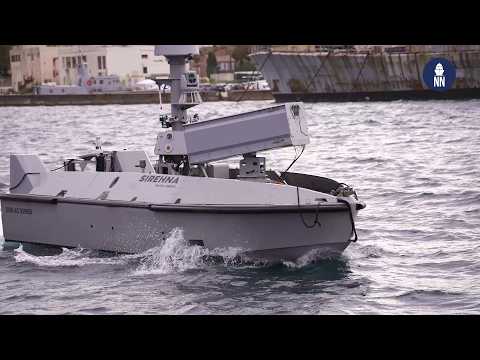
have radar guided anti-aircraft artillery and shoulder fired missiles. Now, none of those are likely to prevent the United States from controlling the skies, but mobile launchers, anti-aircraft guns, and man pads could continue threatening helicopters, transports, drones, and low-flying aircraft long after the opening strikes. We've seen long lingering threats like this in Iran and have lost several aircraft to their anti-air fire, even weeks after their campaign began. At sea, Cuba's Navy has largely become a coastal defense force made up of patrol boats, support vessels, mines, and coastal artillery. It has no realistic ability to challenge the US Navy in open water, but it could still complicate landings around ports and narrow approaches, similar to Iran and its fast boats. Cuba also has an estimated 300 military drones. Yes, I was editing the video and I realized I left out an entire section on Cuba's drones. So, this is me filming this quickly so that you guys don't beat me up with the comments. So, US intelligence estimates are that Cuba has about 300 military drones. They don't say what kinds they are, if they're more ISR or if they're armed or anything like that, but they do say that back in 2023, Cuba approached Iran and Russia to see if they would be able to share their drone technology and they say that they've transferred 300 of them to Cuba. They didn't really say if they can manufacture them there, but or the types or anything like that, but if Cuba has shahid 136 style drones, those
typically have a range of up to like 1500 miles, which means Savannah could hit uh New York City, but they could also hit a lot of really important bases on the southeastern coast of the United States. They can reach up into Virginia where we have uh naval bases. They could hit North Carolina where there's Camp Lleune, there's Fort Bragg, there's Cherry Point, there's um all sorts of things here. Uh then they could hit Kentucky. I mean, Florida, even Florida's just 90 miles from Cuba. So Cuba does have a drone capability. They have 300 of them. That's not an insignificant threat to the United States if it does turn out that they do have them. Now, that's not to say that we should attack them because they have drones, but this is a threat that we should consider going into it because like we've seen with Iran, they can be a big problem and cause a lot of issues from all over the region and we wouldn't want that to happen in our region. So, that's something we should consider.
Now, let's get back to the actual video. Thanks for going easy on me here. Terrain-wise, Cuba offers far less concealment for conventional military than a place like Iran or Afghanistan. The island is long, narrow, and mostly flat, covering about 42,000 square miles, which is roughly the size of Tennessee. The major exception is southeastern Cuba, where the Sierra Maestro rises to 6,476 ft. This is where Fidel Castro's rebels used those mountains to recover after their failed Grandma landing and build the force that ended up overthrowing Batista. The terrain that Cuba has would be more useful for hiding small resistance units than for preserving tanks, aircraft, or a nationwide air defense network like we're kind of seeing in Iran right now. But the significant challenge with any ground campaign in Cuba isn't the military or the terrain. It's the doctrine. For decades, Cuba has trained around what it calls the War of all the people. The idea is simple, and it really should be familiar to us by now because basically it comes down to not trying to beat the United States conventionally. Instead, they would try to survive the opening air campaign, disperse military units before they can be destroyed, mobilized territorial militias, and turn any invasion into a long, expensive, troublesome occupation. American troops would likely destroy Cuba's conventional military relatively quickly. But then the big question comes up, and that is what happens after all those surviving forces disappear into cities, mountains, and local defense networks. This should really sound familiar in a lot of ways because Iran is using the same strategy to frustrate the United States right now. And what we saw in Iraq and Afghanistan was unconventional forces that were difficult to put down. We don't have the best track record when it comes to fighting an insurgency or a large-scale unconventional conflict, but the United States enjoys overwhelming advantages in virtually every category of conventional warfare. Stealth aircraft, satellites, drones, cyber capabilities, electronic warfare, long-range precision weapons, and perhaps the most capable logistics network ever assembled, all fundamentally change how the Pentagon would approach an invasion. Now, compared to 1962, back then, planners expected to send hundreds of aircraft over Cuba, searching for targets before Marines and soldiers fought their way ashore. Today, the operation would begin long before the first bomb fell. And I'm willing to bet certain shaping operations and preparations are being made now or are just permanently in place. But since this is hypothetical, I'm going to talk as if I'm just telling a story. We also want to be clear that we are not advocating for any military action in any way. War really isn't all that great, but we do want to understand it better. So that's what we're doing here today. Now, the first objective would be understanding the battlefield.
We need to know who and what are where and why. Months, if not years before an invasion, American intelligence agencies would already be mapping Cuba's military infrastructure. Satellites would monitor airfields and ports. Signals intelligence would identify command networks. Drones and other surveillance platforms would track military movements. Cyber operators would almost certainly be looking for ways to disrupt communications, radar systems, and critical infrastructure before the shooting even started. Once the order was given, the opening hours would probably rhyme quite a bit without plan 312 and 316. Special operations forces could already be operating around the edges of the campaign, confirming targets, locating senior leaders, surveying landing areas, securing dangerous weapons, and contacting Cuban units willing to stand down. SEALs and other maritime teams could also examine ports, beaches, and coastal obstacles ahead of the larger landing force.
Rather than hundreds of fighters crossing the coastline, the first strikes would probably come from stealth aircraft, submarines, destroyers, and bombers launching precision weapons from hundreds of miles away. Their priority would be blinding Cuba's military by knocking out radar, integrated air defenses, communications, and command and control. Then, when all that's accomplished, the broader air campaign would begin. With air superiority established, Army air assault and airborne forces could begin seizing key airfields, power infrastructure, and other objectives. Helicopters would almost definitely play a much larger role than they would have in 1962, although it is entirely possible that the 82nd Airborne would finally get that combat jump that opan 316 called for.
While the army is off doing their things, Marines would seize key naval targets on the coast like ports and beach heads. Currently, Latoral Combat Force 24 built around the 24th MW is hanging around Guantanamo Bay. We would need those places to really get our logistics flowing, but also to deny them to the Cubans. Ports can move far more cargo than airfields, and that includes armored vehicles, artillery, engineering equipment, fuel, ammunition, food, medical supplies, and politicians who need a photo op before they leave for their vacation at a Mexican resort. We need logistics because logistics wins wars. So in the first few days, Cuban air defenses would be suppressed. Key airfields, ports, and other infrastructure would be seized, and we may even have a sizable conventional force on the island. But what could Cuba expect from other countries as far as help? As we teased earlier, there isn't going to be the USSR to swoop in and save the day.
Venezuela was their closest major ally in the region, but they were mostly removed from the equation when we took Maduro. Iran is another ally, but we are also currently fighting them, and they can't get much in or out of their borders right now. Russia is likely a no-show as well because they're just not having a great time in their 72-hour special military operations fourth year. Now, China is probably the closest thing that Cuba has to an ally that could actually help. The country isn't necessarily invested militarily in Cuba, but they have provided economic support, similar to how they've worked with Venezuela and other countries in the region. There is a big problem around China that we should really discuss, and that is that US officials believe that Beijing has expanded signals intelligence facilities on the island.
These are allegedly capable of monitoring military activity, communications, and other electronic emissions across parts of the southeastern United States. Those sites would likely become high priority intelligence targets during any conflict. Not only because of what they could tell Cuba, but also what they could tell China about American operations. How China would react to an invasion of Cuba by the United States is really anybody's guess. What seems most likely to happen is probably just really strong diplomatic support from Cuba and maybe they even go to the UN to get a strongly worded letter. Though a naval fleet sailing from China isn't really likely, we could see an increase in training exercises around Taiwan. Maybe some threats around Japan and other quote unquote provocations elsewhere.
So, let's say that the US does invade Cuba and they take over basically the whole country, overthrow the regime, and defeat the conventional military. Then we would have to begin a much less predictable operation. Cuba already struggles to provide reliable electricity, fuel, food, transportation, and medical care. Combat would damage some of that infrastructure while disrupting what remained. So, American forces could find themselves responsible for keeping ports open, protecting and rebuilding power plants, distributing aid, controlling weapon stockpiles, and preventing a mass movement of civilian refugees off the island. US forces could also face an insurgency built around the same basic strategy that Cuba has prepared for decades. Disperse, survive,
and make occupation expensive. Then there is the political question. Removing Cuba's leadership is one objective, but then you have to replace it with a government that Cubans view as legitimate, and that's just something else entirely. That is the enduring lesson from a plan 316. The basic military problems really have not changed any. You still need to control the skies and the surrounding seas. You still need to seize ports and airfields to move troops and supplies. And you really need to take the political center of the country. And modern technology could allow the United States to do all of that and faster with far more precision than it could have in 1962.
The United States military can all but guarantee certain military outcomes when it comes to invading Cuba. But what it cannot guarantee is what will happen the morning after Havana falls. Hopefully any updated op plans become what most op plans do. And that's just an interesting document sitting on a shelf that maybe someday some guy on YouTube will talk about. But if I had to personally guess, and I really don't like to, but I feel like I have to, I'd say that we just somehow remove Castro and Cain Diaz and then install a more friendly government to the United States, which is similar to what we did in Venezuela. Now, I got to say again, I personally really don't want any military action against anyone for the matter unless there's just an overwhelmingly good reason and all diplomatic efforts have failed because war is really just a complete failure of really it's just a complete failure if we're being completely honest. But share your comments down below. Let us know what you think and uh we're looking forward to seeing it. So, thank you for that interaction there. All right, now it's channel update time and I wrote this script and I also edited it and as I record on Monday, Janu January
July 20th at 11:13 in the morning. I'm hoping to have this published on uh Tuesday, July yeah, Jesus 21st, so it's
fresh um and relevant. Uh, that's one of
the hardest things about doing anything in this space is for all we know, we could have worked on this for two weeks and then sent it off to edit and it would have come back edited in a week and then we would have invaded Cuba and this would have been worthless. Uh, anyways, I also wanted to do this because I'm shaking up our production schedule and be going out of town for a week and that always throws things off. It's not really a vacation. Uh, but I'm going to be gone from my desk for a week. So, I wanted to do this one, get it out there. On Friday, we have a video on the Stinger replacement, the NGSRI, which I thought was really interesting.
Uh, there's a great discussion that I I kind of stumbled upon like why we're even bothering going forward with the NGSRI, but, you know, we talk about all that in the video. So stay tuned, like, subscribe, comment, share it with your friends, uh, you know, watch the video several times over so that we get that high average view duration. That'd be pretty pretty sick. Uh, and I guess that's really it. You know, I don't know. Always weird and then the videos like this, but since I'm the one editing it, I don't really care. So, uh, that's all you're going to get from me today, though. I'm Kyle, your friendly ginger man. You are all dismissed. Thank you so much for being here and for putting up with the less than great production value of this video if you noticed it. If you haven't, great. Thank you for watching. We'll see you all next time.