How an OSINT Expert Found a Car the Police Couldn't
Transcript
Machine-transcribed by YouTube. Expect errors in names, commands and version numbers.
the system doesn't work as well. That's why it's getting a lot of false positive. That's why the police is arresting a lot of people and pulling them over saying, "Ah, this is a stolen vehicle. Get on the ground and arresting them, putting an entire family in cuffs, and then figuring out, oh, flock got it wrong. What the flock?" If I have a name, I can pinpoint, you know, your address. Maybe there's a company in your name that has your home address listed in there. connect all these dots together and from a plate number I've gone to your home or your businesses and your entire pattern of life can be revealed in a matter of you know few minutes. So let's like break some myths, right? What can police actually do with the data? What can I do to try and [snorts] like have some kind of privacy in this in this uh it seems like a mad world with flop cameras and the like. Is there any like light at the end of the tunnel? Any good news apart from all this like bad news? Hey everyone, David Buml back with Michelle Khan. Great to have you on the show man. Yeah, always lovely being on your show.
>> Michelle, you do some crazy Ozen stuff and you've shown me some cool stuff in the past, but I believe you've got even more interesting and quite worrying stuff to tell us about and it's it's big in the news at the moment in the US. I'm not based in the US, but you are. So, flock cameras, I see vigilantes going and cutting them down and doing all kinds of crazy things, and we're not advocating that anyone do that. Like, stick to the law. But tell us about flock cameras. Tell us the problem with them. tell us how we can protect ourselves illegally from them and then hopefully lady you can give us some like crazy stories about what's happening that things that are happening that people aren't aware about.
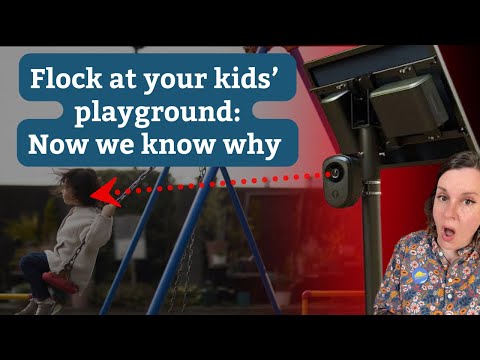
>> Yeah. I mean most people have seen these cameras with the solar panel on top pointed towards the streets. They think these are license plate recognition cameras and just catching plate numbers putting it in a database. But that's not Flock. That's not what Flock advertises on their website. They advertise that we're an AI company where we harvest data. So what other data are they getting from that? Exactly. Right. And they advertise that we can identif identify a vehicle with or without a license plate. Wow. >> So that should be concerning. Exactly. Because they're looking at everything in a vehicle, the stickers, the scratches, the bumper, you know, a little dent on it and they can they claim to identify vehicles based on that. Even if you change your plate, they can correlate.
It's the same vehicle, same color, same whatever it went on the certain street. So that's surveillance. That's not LPR, license plate recognition. And they say they're using the data for catching criminals, but I would argue how many criminals have they caught because of this. What are the numbers? What are the statistics? >> Exactly. And how how much abuse has happened? So for me, that's the problem. Like who's who's watching the watchers? >> Yeah. I mean, you've got some stories about this and I've seen some in the news, right? Where don't police officers like stalk their ex partners, stuff like that? >> Yeah. It's like recently about like 50 police officers got arrested. I mean, don't quote me on that. Maybe 51 or something. But they got arrested because they were stalking, you know, their exes or they were, you know, looking up people that they didn't have a warrant against. So, warrantless searches.
That's against, you know, the fourth amendment right here. And they were abusing their powers and not only once or twice, it's like hundreds of times they did searches. And I would say the only good thing about Flock is that they keep a log of every time you do a search. So, they're good at logs. So we could tell every time they search what criteria they searched, plate numbers, what was their inputs and what outputs they got. So that's concerning because there's a lot of abuse of power. A lot of it goes unnoticed and only a very tiny subset of officers get administrative leaf. So that's to me that's not good enough because imagine this was flipped. Imagine I did that.
>> I would be in jail for a very long time. So it this is what's concerning to me. >> And I mean it's been rolled out from what I've seen. There's that website where you can see the cameras, right? It's been rolled out all over the place. >> Dlock. Yeah. So, another cool thing about that is so on def um the website
you can uh identify where all the flock cameras are. It's crowd source. So, people identify it. I've I I've put a few pins in there as well. I see a flock camera. You see, you you point out where it is, what direction it's pointed towards, and now you see it on a map. So, the goal of that is if you want to avoid that surveillance, you can take a
different route where there is no camera. The problem is there's over 100,000 cameras in the US now. And it's just getting worse and worse and worse. And you just can't avoid uh any of the main streets anymore. No matter what street you take, there will be a Flock camera there. And to make things even worse, like this this guy who created this website is trying to help people out to not be surveiled. So the CEO of
Flock called him a terrorist. Basically he said these are terroristic activities, whatever that means, which is crazy. Yeah. So they're branding people who stand up against surveillance as terrorists. >> So that's concerning to me. So I know you're an OSEN expert. And this is the thing that people might not realize is like, okay, what happens just with data
out there? And I mean, you see the flip side of that. Scammers don't need huge amounts of data about people to scam them. It's happened unfortunately a lot of times where let's say elder people get scammed because a scammer phones them and knows some personal information about them and can use that personal information to scam that person because they sound believable. It's really sad to see how often I read in the news how people have been scammed because the scammers are using some personal information against the person that they're targeting. That's one of the reasons I don't like data broker websites and that's why I use delete me to remove my personal information from hundreds of data broker websites as well as people search websites through a handsfree subscription service. I personally use delete me because I want to reduce how much of my personal information as well as my family's information is exposed online and I don't want to spend my time manually going and removing that data either.
I've already had people try and dox me and scam me because of information that was leaked in a data breach or sold on these websites. Now, delete me don't promise to solve all your privacy issues, but by removing this kind of exposed personal data from the public internet, you are making one of the most direct concrete steps to reduce your attack surface. And that's the core of the value that delete me provides. Don't just think about yourself. You may be able to spot scams easily, but think of your elder family members that perhaps fall for these scams or other people in your family that may fall for these types of scams. You can get 20% off DeleteMe's consumer plans by going to joindeleteme.com/bumble and using the code bumble at checkout or you can scan the QR code on screen. Get your personal data removed from the internet. Get the personal data of your family members removed from the internet to help combat scams. Big shout out to Delete Me for sponsoring this video.
So, let's like break some myths, right? What can police actually do with the data? like what can they actually find? Because you as like you said like a civilian, you don't have the same rights as a police officer or law enforcement, whatever the term is to to search stuff on people. How good is the data? You know, what can they actually do with this? >> Yeah. So, they claim to do a lot. So, I was in a situation recently where there was a vehicle that was missing and it was a friend of mine. So, I'm like, let me handle this with with the police. We called the police. We gave him the plate number and they tried to look up, you know, certain places like has it been towed and towyard. So, I told the guy, I'm like, "Don't you have access to Flock?" He's like, "Yo, yeah, we do."
I'm like, "Look it up there. Here's the plate number." We gave him the plate number. So, the car was like, it was a Mercedes. And the Flock system was, you
know, giving us results of a uh it was it was a Mustang. So, I'm like, "That's not the same vehicle." Like, "No, no, Flock is telling me this." So, the red flag right there. You got it wrong from from the get-go. And we zoomed into the plate number. I'm like, "Why is it getting in wrong?" the plate number was we were searching for an E and it was showing us an F. So, it wasn't getting the plate recognition right, like basics. Um, and then we said, "All right, let's search for a plate with an E in it." And it was getting a whole bunch of different results. I'm like, "The system doesn't work as well. That's why it's getting a lot of false positive. That's why the police is arresting a lot of people and pulling them over saying, "Oh, this is a stolen vehicle. Get on the ground." And arresting them, putting an entire family in cuffs, and then figuring out, oh, flock got it wrong. What the flock? So, so I've se I've tested the system and it doesn't work. So, then I asked the police officer, I'm like, "Well, you have this AI feature. You know, we know the car had a little, you know, scratch on the dent. Can you search for all Mercedes-Benzes with a scratch on the dent?" He tried. He's like, "Yeah, well, that feature isn't accurate." It was even worse. It got every single vehicle with any sign of like a reflection of a light on the corner. I'm like, "Man, this is pathetic." Long story short, the cop was like, "Yeah, your car is gone.
We're not going to find it." Wow. So, they're selling it as this solution to solve crimes, but it doesn't sound like it's actually doing what it's supposed to do. That's kind of what I'm hearing in the news. >> Yeah. And that's my firstand experience with this. I don't have access to Flock, but, you know, I've had access through a police officer to it. But this is where, you know, private intelligence kind of shines more. Like all this AI and all that crap doesn't really work if you don't have real intelligence behind it. So when that happened, I'm like, "All right, I'll give the cops first dibs on this. You tried your best. Now, let me try to find it." We basically called four or five towards in the area. We went to them. We didn't find the car.
We're like, "We know it's probably been towed." We checked Ring cameras of all the neighbors there trying to figure out if someone spotted a vehicle there. Nothing. eventually. Now, this may not, you know, this is borderline ethical or whatever, but I flew a drone in one of the lots, like the towy yards, and we visually spotted the vehicle. The plate was missing from that vehicle. This is why they kind of couldn't spot it. And it was like on the back only, not the front or something. And we went to the Toyota, said that's the vehicle we're after. >> Basically, we found it in a day and a half or something when the cops said, "Yeah, forget about it. It's probably, you know, scrapped for parts and stuff."
So I'm like, "No, the private sector will hunt." And ba basic um hunting. I didn't use any tools. So I just called a bunch of people, flew a drone above a park, a parking lot, and we found it. So that still works, validation. >> But that might be another reason why I believe in the US they're using more and more drones now with AI to fly over and
surveil people even more. >> Yeah, that's the next level. Cuz cameras are static. They don't move. drones can move around to areas where cars can't get into like, you know, towy yards and abandoned lots and stuff. So, yeah. And that's also concerning and that's why they're starting to ban drones more and more because they want to use it and not someone else. Not only do they want to use it, but abuse it as well. Okay. So, you're an OSEN expert and I think people forget this that because you know the OSENT world, you know how important privacy is and how it can be abused. So big question. I'm not going to go and cut down flock cameras. I mean, apart from the fact that I'm not in [clears throat] the US, but we don't recommend that. What can I do apart from trying to reroute my way to home or work? What can I do to try and like have some kind of privacy in this in this uh it seems like a mad world with cameras and the like.
>> Yeah. While these cameras are on public streets and it's considered like a public pathway and stuff, but the data is still being abused, there is still something you can do like vandalism is not the answer obviously, but what you can do is just make it harder for the other side to surveil you. So what I personally do is I change my plate every year. So when you go for renewal of your license plate, you just pay, you know, 20, 30, 40 bucks extra depending on the state and you can get a brand new plate, different number. What that does is it kind of resets their log. So they keep a log of the plates on where it's been for the last whatever couple of years. They claim they don't keep the data for more than 90 days, but that's nonsense because they don't keep it, but the agency can keep it forever. So if you're changing your plate every so often, you're basically cutting that history in half or, you know, once a year or whatever. So at least that's something.
>> Um, the other thing you could do is put layers of privacy on top of that plate. So that plate should not be registered in your name. It should be registered under an LLC or a trust. This way, whoever is looking that up to abuse it. They have to go through an LLC. Is it going to stop them? No. It's going to slow them down a lot. So, I don't want a cop pulling me up behind me, looking at my plate, and knowing everything about me even before they approach me. I want you to do your job properly. I want you to come to me with a neutral mindset and not know everything about me because now then they abuse that uh information. So th those are the two things I recommend.
You know, putting a layer of privacy with a trust or LLC on your plate, you know, recycling your plate every now and then, like getting rid of the the old plate, and that'll at least put some
friction for a person abusing that data.
In the UK, sainsburries, which is like Walmart kind of idea, like a big supermarket, are now putting facial recognition in all their stores. So you go shopping now you got facial recognition in the police forces in the UK are rolling out facial recognition across the city. So you can't go through the center of London without facial recognition. Does Flock do the same kind of thing? So they and is that kind of stuff being rolled out in the US as well? So they say they don't but do we believe them? Yeah. >> No. So it's a camera at the end of the day. It's just getting all the data later that same data can and will be used against you at some point. So they said the same thing with Ring. Ring was a doorbell. Who thought it was doing facial recognition? But recently they revealed, "No, since we have all the data and all your faces, let's do facial recognition and sell it to law enforcement without your consent." So Flock has the infrastructure now.
100,000 plus cameras. For sure, they will use that data for other nefarious reasons or other surveillance-based reasons, and facial recognition is absolutely one of them. >> You were saying the AI is not good. The problem with that is the AI could get better tomorrow. >> Yes. Yeah, right now it's not accurate, but again the data is still the same. The raw data is the same. They could just feed a better algorithm to it and then just get better and better and better and map a pattern of life and that's what matters the most. Like people ask me so what? Well, the so what is that pattern of life? Now the person behind the screen of flock and all these system knows when I left my house, where I went, what I did, what my pattern is, which states I visited and that's that can be dangerous. An example of that is the abortion laws in the US. In some states, it's not allowed. In some states, it is. So, if your vehicle is seen in in front of an abortion clinic, they've already, you know, started picking on those people, arresting them and saying, "Oh, you're from that state where abortion isn't allowed, and you went to another state where it was or whatever, vice versa. Now you're under arrest." Like, that's surveillance.
That's misuse of your power. I think anyone who says that they have nothing to hide forgets that laws change and everyone has something to change and what's legal today might not be legal tomorrow. I mean that example it was legal in now I don't know all the laws and stuff in the US but now it's not it's it's now illegal in some states but I mean it it could be your religion you could be it could be banned it who knows I mean we have different religions it could your religion could be banned mine could be banned who knows what's going to happen tomorrow >> I'll give you something more powerful is the data remains the same throughout for years but the governments will change policies will change ideologies will change and they'll use that same data in the past to now use against you >> Michelle you the kind of guy that I don't want to get on the wrong side of.
So, we're friends. >> We're very good friends >> and hopefully we'll stay that way because you've got some scary skills. I believe that if I posted a photo of my motor vehicle in the US on Instagram, so just a picture of my car with and I let the number plate and I showed the number plate in that picture, you could find where I am basically. Is that right? Absolutely. That's crazy. In fact, in the UK, there's an API uh for the
government of UK. It like ends in.gov. So, it's a government API for vehicles and it's free. And I've used it in demos in the past where you can just query that API with your plate number. In return, it gives me the ownership of the vehicle, make, model, VIN number, and from that you can pivot off of other stuff. If I have your VIN number now from a plate number, that VIN number on Carfax will show me where you changed your oil, where you rotated your tires. It'll have that history and that shows me the pattern of your life. >> That's US and UK, right? >> Yeah, that's US and UK. Crazy.
>> So, every country will have their own little databases, data sets, and stuff. So, I will be using/abusing these public services for OSENT purposes. So, yeah, I can absolutely figure out where you live. If I have a name, I can pinpoint, you know, your address. Maybe there's a company in your name that has your home address listed in there. Connect all these dots together and from a plate number, I've gone to your home or your businesses and your entire pattern of life can be revealed in a matter of, you know, few minutes. >> That's crazy, dude. In fact, I'll go one step further. There was a case I was uh trying to solve of a hidden run. Uh, a friend of mine, someone backed up into his driveway and hit his car and, you know, just took a little U-turn and and went away. His Ring camera caught that, but he caught partial plates. He got like three digits out of five digits of the plate. He called the police and for insurance purposes, and they're like, "Oh, sorry, you don't have a full plate.
So, case closed. We can't solve this deal with your insurance." He called me. He's like, "Michael, what can you do with a partial plate?" I didn't get the full plate. I'm like, "Do you have the state?" Like, I have the state. I have the description of the vehicle. It was like a blue SUV. So, I'm like, I have basic data, but I don't have the full digits. So, what I did was I went on a website like carvana.com where you can buy and sell cars or O'Reillysauto.com
where you can put in a plate number and a state and it resolves it to a vehicle make, model and a VIN number. So, I'm like, all right, I don't have the full plate number. So, but I'm missing two digits. So, I use my hacker skills. I'm like, let's, you know, fire up uh Burp Suite and just go through every iteration of the last two digits. And within a matter of a minute or two, I got a list of about 10 or 15 vehicles,
possible vehicles. Then I looked at the VIN numbers, resolved it to the make, model, and I said, "You said it was an SUV. Three of these are SUVs. You said it was blue. One of them is blue. It's likely this car." And then I pulled Carfax reports on it, saw where they changed their oil and stuff. I'm like, "He's in this one mile area." I went to on Google Street View, took about half an hour, saw every like driveway, spotted the car in the driveway, knew his house number, looked at the county records of who owns the house, his name popped up from that. Went to uh, you know, um, fastpeoplearch.com or something, found out his phone number, and I'm like, here you go, friend. Uh, call this guy up. If he doesn't pick up, walk up to his driveway, and that's the guy who hid and run. That's crazy, eh?
Vincent, who's behind the camera there, can't believe what he just heard. The scary thing to me is someone with your skills, not having access to a police database or I don't know whatever other databases law enforcement has access to can do this kind of thing just with open-source stuff, stuff that's freely available mostly, right? What does a rogue police officer or rogue whatever law enforcement person, you know, what's possible for them to do? And that's what concerns me that if someone like me has these skills, a lot of other people h have these skill sets as well. you know, add on to this skill set other official databases like Flock and others that you know, the common folks don't have access to, now you have a lot of power at your fingertips. And when you have a lot of power, you will abuse that power. Like some people will at least abuse that power. And we've already seen examples of that. And what really concerns me is the abuse will happen, but like like I said before, who's watching the watchers? Is there are there any consequences to this? So far, we see very few. And that that's that's a huge
issue for me because of the privacy side. Sure, the OSEN side is great for solving problems, solving crime, but then the privacy side should protect the good guys. Right now, the bad guys are winning. The problem with privacy that I
feel and I think a lot of people feel is it's overwhelming. It's like it's it's like trying to swim against the ocean or something. You can't win. Um, is there any like light at the tunnel? any good news apart from all this like bad news? >> I would say awareness is key because the problem I see is most people say I don't care or so what it's not affecting me until it does. >> Y >> so the my whole like point of this is spread awareness know what the problems are know where you can get trapped in this surveillance uh you know economy and what you can do the limited things you can do. So as a result of all the people talking about these problems now you see counties and cities in the US cancelling their contracts for flock like this year I've seen a lot and it's purely because of that awareness people are realizing that there's potential abuse of this without any repercussions so let's start cancing these contracts and I want to say like it's not just flock we pick on flock because they're like the poster child of uh this surveillance but there are other companies that do exactly the same and now all all of them are you know coming under you know scrutiny and little by little people are waking up and talking about it with their local communities and it is having a result. So I I feel by the end of this year at least um a lot of major contracts of flock are going to be cancelled if not canceled a lot of more checks and balances are going to be put on these companies and I'm already seeing progress so yes there's plenty of light at the tunnel we just need to talk about it more and take care of our privacy properly. If people want to learn more about privacy or OSENT, you're an expert in those areas.
Can they reach out to you? Where's a good place to go and learn more? >> Reach out to me. You can reach out to me on either LinkedIn or my website, michalhan.com. And I'm pretty responsive. Michelle, as always, thanks so much, man. Pleasure.