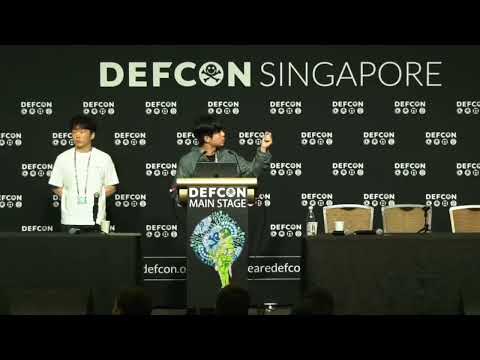
Google Researchers Hacked the Pixel Phone using Audio Messages
Transcript
Machine-transcribed by YouTube. Expect errors in names, commands and version numbers.
So, in this example, I believe you could just send an audio file to someone's phone and literally take control. >> Yes, that is pretty much how it works. Uh, maybe it's a couple hundred audio files, but [laughter] um, same concept. >> How many hours or how many weeks, how many days did it take you to like, okay, this is what we want to do to having it working. >> Yeah, for me, I think it took me about eight eight weeks of full-time work to get this to work. >> Yeah. So, it's not easy. Basically, it was a lot of work. >> Yeah. And and also, you know, there were lots of times I thought like, okay, this is it. I'm just not going to get there.
Um, >> just one thing I need to add, would someone notice this attack happening? I think they would, right? Cuz they're going to see those audio messages. Is that right? >> So, there's kind of a difference between what we do and what a real attacker does? Um, if if you look at that video, you obviously see messages. And I think, you know, an attacker at that level, they would need to do a when someone was asleep and then once they have root, they can delete all of that. But real attackers are much better resourced than we are. >> I want to thank Threat Locker for sponsoring my trip to Black Hat and Defcon as well as this video. Really want to thank them for their support.
Zero trust is something that we want to implement in 2026. It can be very difficult, however, but Threat Locker makes that process easy. When you install Threat Locker on your computer, it learns for a period of time. So, it can learn which applications you use in your day-to-day life. It can learn what applications need to do and then once that learning period has run, it can lock down your computer to only allow the computer to do the things that it's supposed to do. Those options can obviously be tweaked and changed. But the whole idea is zero trust. We don't trust applications by default. We don't allow applications to do whatever they want to. We lock them down and deny by
default. Threat Locker have been growing exponentially it seems in the last few years making a huge impact in the cyber security space. You can find out more about threater using my link below. Again I really want to thank Danny and the team for their continued support of my channel allowing me to make hopefully really interesting content that you can enjoy. Again use the link below if you want to find out more information. Everyone David Bumble back with two very very special guests. Natalie Seth, welcome to the show. >> Thank you. >> Thank you for having us. >> So you got to give us a bit of background. you work for a very exciting team and you're doing some really exciting research. I want to talk about this zeroclick hack basically on an Android device, but you work for Google I believe. So just give us a bit of background about yourselves because this is ethical hacking rather than like doing the dark side and you're making the world a safer place through what you've done. But it's a really interesting vulnerability or set of vulnerabilities if I understand correctly. So perhaps tell us a little bit about yourselves and then let's get into this cuz this is really exciting.
So, I'm Natalie Sanovich and I'm the manager of Project Zero at Google. Um, I've been on the team for I think 11 years now. Uh, Project Zero is a team at Google that's focused on the problem of zero days in the wild. So, basically um
there's attackers that do what we call targeted attacks. They'll, you know, try and steal the data off of a specific person's phone. And these attackers are often totalitarian governments and their victims are often, you know, activists, academics, uh that sort of thing. So, you know, we're trying to put the damper on these types of attacks, uh, mostly by doing, uh, security research by, um, emulating these sorts of attackers, finding the types of bugs they use, the way they do exploits, and then fixing the bugs, and recommending things like mitigations that um, all vendors, all phone makers can use to um, hopefully protect their users against these attacks.
>> Yeah, I mean, Android is used by millions and millions of people around the world, the most popular operating system in the world. So the work you're doing is really important. >> Well, I think so. >> It is. I mean I mean and just this example is fantastic to see to make it more secure. Sorry. Seth, can you give us a bit of background about yourself? >> Yeah, sure. No. Um yeah, so my name is Seth and I work as a minion on project zero. Um uh you know, most of my time I spend uh I' I've been spending a lot of time looking at Linux kernel. Um you know, that's sort of what my background is is is looking at looking for Linux kernel vulnerabilities. recently in the past, you know, um I've been I've been on the team now for let's see, it must have been since 2022, so about four years now. Um and in that time, I've I've been looking a lot at Android. Um that's been my sort of like uh uh place where I've chosen to go really deep. Um in the past couple years, I've been looking a lot at Android drivers. Um because that those seem to have a lot of opportunity for improvement. Um a lot of opportunity to to to find and fix a lot of bugs. um and an area where we can we can make the Android ecosystem much more secure.
>> So in this example, I believe it was a zeroclick vulnerability. Can you explain firstly what that is just for people who don't know and then let's get into the details cuz I believe you use an audio codec as the way in initially. So perhaps you can like explain what a zero click is and then let's start with like how does the attack start and then like how did you you got root eventually I believe. So how did how on earth did you do that? So basically, as I said, there's a lot of attackers for a lot of different reasons who want to gain access to the data on your phone. And you've probably heard about a few ways they do this. Sometimes people, you know, install malware on their phone that can access stuff or even click a link. But a zero click is an attack where, you know, the attacker doesn't need to do anything like that. They can just, you know, send a text message to your phone and exercise the software that way and compromise it without the user even knowing. Before we get into the details, this has been patched, right? So, if I'm watching this, I'm like, "Oh, the sky is falling." I'm I'm safe, right? You're safe if you're running a upto-date version of of the Pixel 9 or Pixel 10. Yes. Okay, great.
So, for the YouTube moderators, these are ethical people from Google and the phones have been protected. So, this is not an unethical hack. So, please don't take the take down the video. >> Sorry. [laughter] >> Okay. So in this example, I believe you could just send an audio file to someone's phone and literally take control. >> Yes, that is pretty much how it works. Uh maybe it's a couple hundred audio files, [laughter] but um same concept.
So basically um the way this works is that um actually to start off a little bit further back um the types of attackers we track, they use a type of vulnerability typically called a memory corruption vulnerability. So um you know if you're programming and you go over the stack or you know you go over the heap um right outside the bounds this is usually where this type of attack starts and um one of the softwares where this is the most common is a media codeex just because there's so much parsing there's so much allocation you have to write so many buffers so we've always been interested in that and usually these were except for images um oneclick attack surfaces you had to play the audio file But um recently on Android they implemented audio message transcription which I have to say like I very much enjoy in terms of not having to re um listen to my long audio messages anymore. You can just read them. But the way this is implemented is as soon as you get that audio um the Android phone will you know quote listen to it silently using the decoder and then use that information to transcribe it which means now when you get an incoming audio message that's immediately processed which makes this into a zero click. So um we found this vulnerability. Um do want to call out that our colleague project zero's tech lead is not here. He found this bug in the decoder and um
then um we figured out how to exploit it. Um it was quite a complicated process. I'll talk a bit more about um all the security features that Android has that kind of made this harder. But it starts off, you know, you can um overflow memory a bit and then basically
um this Dolby format consists of what's called a sync frame. So like frames of audio and even in each file it's like frame after frame that kind of extends the ability to overwrite memory a little bit more and a little bit more. And eventually we got to a place where um in the context of this decoder I could get the phone to you know call different functions like maybe memcopy um by the frames that were inside the audio file. And then um after that um this got a bit complicated due to a security feature called SC Linux. But Seth and I and another one of our co-workers, Yon Horn, worked together on this and kind of figured out the best way to go was to write code into memory and then um write
to a node called himself/prock/me which basically overwrote some readable memory and then we could call it and that was the end of the first stage and then Seth wrote the shell code to do what's next. >> So just just a dumb question sorry before we get there because like there's a sandboxing and stuff that should protect me from this. And I mean you bypassed that I believe but before we get to that is this a Google/ Android
audio file or is this like this is D from another company right? >> Yes. Sorry I should have mentioned this. Yeah this is um the Dolby unified decoder the UDC which processes um the EAC3 format. So this is a problem I
suppose on Android where you have these third party things that perhaps the core Android operating system is really hardened but perhaps all these other things could be used as an attack surface. Is that right? >> Yeah. I mean we're reluctant to say that anything is really hardened on project zero. It's all like you know a matter of comparison. And I would also say that compared to other codecs we've seen I we didn't find this codec to be especially buggy. But I think um because of it
didn't have any symbols. It was provided to Android as a big binary blob which made it um very difficult to reverse engineer um very difficult to do stuff like fuzzing on fuzzing on I think it got kind of overlooked looked um mostly by external researchers a lot of other ones you know attackers will pay a lot of attention to so I think that's why we found the bug in this particular codec >> so this was the first CVE or the first step right >> yes this was the first CVE in the >> in this process >> yeah in this process >> so I mean that's the first step right so I get in through this codec but then I'm in a sandbox. Yeah. What then? Yeah. And this is this is the sort of preence of people who have worked on these um media decoding sort of problems before. Um you know we um the defenders already have an idea of like you know this sort of context is very plausible for an attacker to get into. We've seen attacks um targeting media codics in the past and so we would like to do something to you know just the the Android and and all of um you know the defenders would like to do something to make it a little bit more difficult for attackers that even if they were to get in this context it's not like now they own the phone just because they they they got this they got an rce um in a media codec and so there's actually a a sandbox uh and it's it's said to be a sandbox on Android called media codec sandbox um and this is the context that we end up popping into Um, and it's meant to be sort of siloed. Um, you know, it doesn't have a lot of permissions. Um, like if you compare it to something like untrusted app, it's I would say like right now it's comparable, but its intended its intended case is that it's significantly less permitted than than like uh untrusted app. And so the idea is to make it quite difficult to break out of that sandbox and and access the rest of the system in the actual like userland or even access like especially access uh the kernel itself. Um un unfortunately one of the tricks though and this is perhaps no big surprise. Um but for the media coded context, it has access to uh drivers that actually do
media decoding acceleration, which which makes sense like from a from like a uh software architecture standpoint, it makes sense that a media codec um process designed to do media coding decoding is going to have access to um drivers that help it the hardware that help it do media decoding acceleration. Um, unfortunately it was in one of those drivers though that that those drivers then have a lot of risk um and should be
really carefully audited um you know to make sure that they they don't contain vulnerabilities that are exposed to such a dangerous context. Um unfortunately in this case um there were vulnerabilities to to to exploit. So >> So it uses a special chip on the on the on the phone, right? >> Yes, there's silicon on the phone um designed specifically for some of these media decoding tasks. Yeah. So I can't remember my notes now. It's a what was that? It's not a CPU. What is it called? Um and so at least in this case like on the Pixel 10 they called it the VPU. Um at least you can actually access the if you go and like try and like when want to access this hardware and like talk to the driver and send it data. You actually access uh a file on the on the file system called /dev/vpu. On Pixel 9 it's called big wave um or or big ocean.
Um and so I mean I think you could still probably qualify it as a video processing unit but um yeah I mean it is still doing the same sort of like video decoding and acceleration um just using a different driver. >> So first step is the codec. >> Yeah. >> And then it's the uh drivers. >> Yeah. >> And then what did you have to do after that? >> Yeah. So once you exploit the driver I mean the drive so the driver is running in the context of the Linux kernel right. So if you are finding bugs in the driver, memory corruption bugs, it's the same sort of like memory corruption sort of issues that that you could have um except this time it's now in running in the context of the kernel. Um and so once you are able to actually, you know, attack this driver, cause some sort of memory corruption in the kernel, you're you're on the way to to kernel code execution. In this case, um there was two different bugs, one for the Pixel 9 and one for the Pixel 10 that um you know, I I I exploited um for this. you know, the Pixel 9 one, you know, in both cases, these are driver. I sort of had an inkling of like, you know, we should go look at this. I should go look at these drivers because, you know, I we're going to be doing some Dolby related hacking and so I want to know like what is the state of these drivers? Is it possible that it one could write a a full exploit chain with this?
>> Um, and uh yeah, so that's what got me on onto that sort of task. And so yeah, started looking at these drivers on the big waves. It was a use after free v vulnerability um that that allowed me to get like an arbitrary right and on on the Pixel 10 there was an M map that just did not have any bounds checkings on the size of the M map and I was able to actually map all of physical memory into the userland um process into the
media codic userland process um with with with a single end mapap system call so that yeah that was pretty cool >> so we've given the the broad overview right so it's three CVES or was it is that I do. >> So, so we did two separate phones. We did the Pixel 9 and the Pixel 10. And it's two CVs on each phone to do the full chain. >> And for the RC, it's the same CV and the Pixel, but on the LP, it's two different CVs. So, >> so you mentioned off camera, it's like two and a half CVs. Is that right? >> Yeah. >> Yeah.
>> I like that. So, I got to ask you this. I mean, it's got to be difficult to to get around this. I mean, Android's hardened, but were there any specific things that made it especially hard for you to get to get to to basically get root? >> So, you're bringing back bad memories here, but there were two uh very specific things that made it quite difficult. Um, one was ASLR on Android, which is a feature that basically makes memory loc loaded at random locations. Um, and I was surprised. is I hadn't looked too deeply into it on Android before I started this but um it has quite a bit of randomization. It goes quite low down on the pointer. So um by
one the second bite um even that is randomized which meant that so um you know way back in the days you could just write an exploit because you knew where everything was. You would put in what they call absolute pointers um and overwrite stuff and that was very easy. Now that we don't know where anything is, um, you can override, you can do what's called partial overwrites. So hopefully, you know, part of the randomized pointer is still there. Even that didn't work very well on this decoder because the randomization went so low in the pointer. So if you open up our blog post or see our presentation at Black Hat, you'll see there's like, you know, like 40 stages, 40 differencing frames that the media file sends to get this working. And that's like all different little ways that I had to try and get get around the fact that I didn't know where anything was and was like basically starting from nothing.
Yeah. So, so I think like you know that that was the thing that made this the most difficult. Um I talked a little bit about earlier um SE Linux. That's a security feature on Android. And um this
is actually kind of a funny story. Um when I started off writing this exploit, I had two strategies I always used. used um the one I used in my last exploit was you call m map and you uh make a page
read write execute and the reason you want to do this is Android also has security features where you know you're not going to find any readr execute pages in most processes which means you can't both write your code to it >> and run it and I would usually just call methods that would fix this um I had an alternative strategy which was sometimes I would drop a file on the file system and um you know look then load that using the yellow pin. And you know, I was talking to my colleague Yonghorn about this and every time he was like, "Natalie, how are you going to get around SE Linux? I don't think that's going to work, Natalie." And I'm like, "No, no, no. I've got this covered." And [laughter] then as soon as I get this working, I'm like, "Hey, Yan, you're not going to believe what just happened here." So, we had to come up with a strategy to get around um I see Linux and Seth and Yan helped with that. That is where we um ended up opening um the cell proc. and
then um writing to writing to it so that
that we we could then write to a read write execute page and um that allowed the code to be executed. And this makes me think of like another challenge with um this ASLR and partial overwrites is um you know when you're building it up uh we use a strategy called raw return oriented pro programming usually to write exploits and that means you know if you can move an instruction pointer you don't just call the function you can also um call in the middle of a function but because um you could only overwrite a certain number of bytes even that was very limited so I ended up doing this kind of weird thing where grabbed a pointer from the left sight set table and then like used the one raw gadget available just incremented by 157 like a lot of times and that was basically all because of these two security features that you know wouldn't let me you know an ethical attacker just execute code um without a lot of trouble.
>> How many what's the right term? How many hours or how many weeks how many days did it take you to like okay this is what we want to do to having it working? Yeah, for me I think it took me about eight eight weeks of full-time work to get this to work. >> Yes, it's not easy. Basically, it was a lot of work. >> Yeah. And and also, you know, there were lots of times I thought like, okay, this is it. I'm just not going to get there. Um, >> and Seth, how long did it take you to do the rest of it? >> Um, not as long as I would like.
[laughter] >> Okay. So, the opposite, right? >> Yeah. Yeah. I I mean I I mean, our goal ultimately is to make it an infinite amount of time. Um, you know, I think for me, I think, uh, in terms of like hard like 40hour a week time period that I was working on, it was probably about four. I I mean, ideally, ideally, we'd we'd have longer. Um, but yeah, I would say four weeks. >> Four weeks. I mean, but for me, I actually, it was interesting that you mentioned that, you know, there were a couple times where you felt like, oh, no, I'm I'm I'm I'm I'm not going to succeed here. Um I think from my side at
least because just the way that my bug worked actually this kind of goes back to some of the mitigation stuff and I can mention that here in a moment but I would say that I was never there was I was like oh yeah this is going to work eventually like this is I I have one I just need to figure out how to win exactly but like I I know that this is winning um um you know I I've definitely had vulnerabilities before where I go to exploit them and I'm like oh I don't know like this one this one might not work out. I'm not sure and you know I I might lose here but but but this one it was like yeah this one's going to work.
Um and part of that is actually down to you know you mentioned how some of the how how many of the mitigations um prevented exploitation or made it much more difficult for for you to to to to write a successful exploit. And in my case it was more like the opposite of like there are mitigations that I wanted that I that that that should have helped but didn't. um in particular um Linux kernel ASLR um you know that's that has historically been a major thorn in the side of exploit writers for for for decades. Um nowadays um uh the the the
Linux kernel team doesn't really consider kernel ASLR a very good mitigation. Um and there's some good reasons for that. Um, you know, some of the hardware side channels that we've seen in the past, I guess, 10 years now, um, are are are pretty meaningful in terms of making Colonel ASLR less reliable. Um, but I was still surprised at just like, uh, how by bypassable Linux kernel ASLR was. Um, in the end, you could um, really just treat it as if normally it's like the kernel is supposed to be moving around and in the virtual address space. Um, but I found a second alias of the kernel basically that was at a hard static virtual address and I could just use that instead. Um, so I I basically I I did end up needing to bypass kernel ASLR for for later later stages of the exploit, but as I was able to do a lot of the exploit without technically having broken colonel ASLR because I could just uh attack the kernel in a different place in virtual memory. So >> yeah, I think this kind of goes a bit to like why we do our work and the different sort of things that we experience like um a lot of the Linux and Android kernel work that Seth does and mostly because of Seth we have like a really good body of knowledge of how it works and you know what mitigations work and what don't and we spend a fair bit of time you know advocating for better mitigations in you know various projects. Meanwhile with the zero click aspect we just knew nothing. It had been years since we'd seen um anything that worked on Android. So, you know, there is a lot of stuff that you know I was very surprised by like um I you know if someone had asked me before, oh is that low bite ASLR really super effective? I would have been like I don't know. But now we have a much better sense of you know what mitigations will help and you know how to avoid these types of bugs.
>> That's really important because I mean you've just made it more secure for everyone. Just one thing I need to add. Would someone notice this attack happening? I think they would, right? Cuz they're going to see those audio messages. Is that right? >> So, there's kind of a difference between what we do and what a real attacker does. Um, if if you look at that video, you obviously see messages. And I think, you know, an attacker at that level, they would need to do a when someone was asleep and then once they have root, they can delete all of that. But real attackers are much better resourced than we are. They would likely um just invest the effort in it being invisible. Um at some conferences we've seen for example there's attackers who will find like little bugs that suppress the notification. So one possibility is there's no notification. Um, the other thing is this required a lot of messages mostly because of the entropy that ASLR caused and I had some ideas about how to get around them and both of them I thought would take another 8 to 10 weeks and I didn't want to spend another 8 to 10 weeks >> getting them work but you know in the real world um there will be surveillance vendors that sell these capabilities for like a million dollars or more. So they would just invest in writing an exploit that you can't see if that's what they wanted to do.
>> Yeah. So we without mentioning names it's it's a problem out there right where like journalists and other people's uh there was this famous case in the EU right where the someone was able to take control of their phone because of something like this. Yeah, I think Seth recently did some research where um that was what was something
that happened uh maybe Seth can talk a little bit more about it, but basically
um the police in Serbia were stopping people and using various exploits to compromise their phones. And that's just like one example of the sort of thing that we think attackers do with this type of capabilities. um if you follow the news um you know there's lots of different targets but as I said you know it's politicians activist um academics that sort of thing so um they're the sort of thing where it's not just like that person loses their data but you know and it has effects on like the organization and society at large. >> Yeah. No, that was uh that was like a year ago. Um, you know, the story is kind of interesting because yeah, I it was a collaboration Amnesty International um ended up receiving a
device um that had been attacked um you know uh from a a political activist in Serbia. They they sent the the logs of that device over to Google threat analysis group and eventually those those logs ended up on my desk. Um, and it started sort of a um like a
six-monthlong effort on my side because it was actually targeting Android driver. Hooray, Android drivers. That's all I seem to be able to talk about. And so I um ended up looking at that for for 6 months. Um, you know, cuz I love Android driver so much and found a a solid set of bugs um at least one which eventually got reported as an in the wild bug as I determined it was like close enough to the original exploit. It was like plausible. Um it it was possible that that that was the actual bug that the attackers had used. Um so yeah, we we definitely see the this these sorts of cases happening. Um and and that's work that our team is working right on on on not quite on the front lines, but I'd like to think fairly close to to to help defend.
>> I mean, that's great. So someone's phone was attacked and it ended up well the the the the logs ended up on your desk and then you were able to make Android more secure. >> Yeah. Yeah. Exactly. Yeah. Yeah, I keep emphasizing that just because of YouTube, right? [laughter] Devil's advocate, right? Google, big company. Android 10 is like a flagship phone. How on earth did something like this get into that device? Because if I'm buying this device, I think I'm I'm totally secure. >> Yeah. Well, I think unfortunately that is never true. Um security is a best effort sort of thing. Yeah. Um, of course, um, all mobile device makers do their best to try and prevent vulnerabilities in all of their phones and, um, there's lots of things that Android in particular did that, you know, might have prevented these types of vulnerabilities. I know in particular, they do a lot of fuzzing.
They do a lot of code reviewing. Um they've also spent a lot of time um putting in various memory mitigations but the reality is that um this sort of thing can slip through and this is also you know not uni unique to Pixel and not unique to um Android in particular we've found these types of vulnerabilities basically on um all sorts of phones and
I think like um the way we think about this on project zero is um making these types of exploits more expensive you know there's never going to be a phone where you know no one with no amount of effort can ever hack it. It's just you know the work we do. We're trying to make it so that I don't know they have to pay $10 million instead of paying $1 million and hopefully you know that has the effect of reducing the number of people that are victimized by this sort of thing. >> Got to ask this as well. AI is all the rage. Um I've heard that some people say AI is going to help the attackers and some people say AI is going to help the defenders. Did you find that AI helped you in this sort of process or did you was it all just human effort?
>> It it was helpful um for us. Uh I would say we didn't really use AI to write the exploit but more to do I describe as boring tasks. To give an example, um all these audio formats are bitwise formats, so they do not bite align the data. And that is super annoying. And I have spent hours of my life trying to write encoders that emit these correctly. And I was able to ask Gemini like, "Hey, can you write an en coder that like emits this?" And it was pretty fast. So um mo most of what I used um AI for was, you know, time-saving stuff like that.
>> And I also used AI for some time-saving stuff. And in my case, I was able to use it to write an entire SIS call header file um to include with my exploit so that I could compile it into shell code um on its own. Um so yeah, it's a it's a classic what I'll describe as a boring task um that that AI can really help
accelerate. Um, now the the one like
caveat I'll make is that I wouldn't say that that's necessarily I'd be interested nowadays with the models that we have now or even the models that we'll have in a year to try the same sort of thing again, but ask it to write the whole exploit. Um, and I suspect we we could get some really interesting results from that. But at the moment, you're using it to empower yourself or make you quicker, take the boring work away. >> All the sort of the intellectual stuff is still you doing it as a human. >> Yeah, I I I would say so. In my experience, often times AI struggles to have that sort of like novel breakthroughs um that that humans are comparatively quite good at.
>> Yeah. And I will say this is something that's like, you know, very interesting to us and we're investigating. So I think we're hoping to, you know, publish more research on this soon. >> That's great. Looking forward to that. There's a lot of unknown. There's a lot of unknown right now. So I got to ask you this question. This is like a another nasty question. you know, what can Google or other phone manufacturers do to try and make these kind of zero click attacks harder because I like you mentioned like rather than a million dollars, make it $10 million. So, you know, give us sort of a your thoughts on how you can make this much much harder for attackers.
>> Yeah. Know that's not a nasty question. That's my favorite question. I want to tell everyone about how they can make their software more secure. Um, I think the most important thing here is attack surface reduction. So every bug exists because there is code that this bug exists in and you know the less code you can make available to attackers um you know the less vulnerabilities there going to be and um in this situation there was specifically an attack surface problem in that um you know I really like this transcription feature and it's cool but u most audio messages are in a very small number of formats and this will be UDC format that this bug was in the device doesn't even an an encoder.
Um, no one is going to send an audio message in EAC3 format. So, it was kind of a mistake that this one format was included in um this um transcription. And um this is like a really common problem that we see on all sorts of mobile devices. For example, you might remember a few years ago um there was iOS in the wild issue that we looked at and there was the same problem where you could put in a JPEG but then it was processed as a PDF. And I feel like vendors are getting better at this, but um it's still I think the biggest cause of especially zero clicks. So you know every little thing you can do to understand what your attack surface is and you know anything you can do to get rid of code. I think that's the number one thing that every vendor and I don't even mean like phones. It doesn't matter if this is a phone, if this is a browser, if this is an operating system.
um figuring out what code is available to attackers and I'm reducing it is you know a big thing you can do the key to security software is the delete key just get rid of it um the other things that I think are important um you know code review and fuzzing even though they didn't find these particular bugs um the more you do of it the higher probability there is that you'll find them and you know maybe without it we would have found like even better even you know easier to exploit issues so I recommend um everyone one does that. Um, finally, um, there's a lot of mitigations that I'm excited about, things that change how memory works that make it, uh, more difficult for attackers to use these types of bugs. Um, there is, um, MTE,
but there's also um, compiler flags. And something really interesting about this bug is this UDC UDC decoder is sold by
Dolby to all sorts of parties, including um, Apple. and Apple has the code and they were able to compile it themselves with a compiler flag that added bounce checking. So on iOS this bug is not there because the compiler added uh bounce checking and um there are some sim similar flags that are available on on Android for example Ubisan and even um asan and they do have performance impacts. They're not always appropriate, but um you know, the more that we can try and use these types of mitigations to um reduce bugs, the better. Um that's
something I found uh very promising that there actually like did seem to be a technology that could, you know, greatly reduce these types of bugs even without, you know, an without the defender knowing they were there in code. >> Uh I don't have a lot to add. I guess the one thing I would say is that it's really important that like uh and this is this is just something that um you know it's just going to be true for all time. Um it it's important that software vendors recognize, you know, what are the risks of specific pieces of code in specific locations in the in their in their architecture. Um and and their software stack um right and and and recognizing, you know, what sort of risks and and what sort of auditing that is necessary in order to secure these sorts of locations. You know, kind of to this idea like those drivers um were were accessible in a context that is known to be risky, right? And and maybe that's necessary. um you know cuz those drivers are meant for um audio decoding acceleration and and video decoding acceleration. So that sort of makes sense but you know it's just it's it's important that you know we we we take that sort of thing into account when we go and and and look at you know any pieces of software any sort of code is is recognizing you know the risk that that can potentially pose and just having a good idea about that and and and and focusing on on that is is important.
>> Yeah. And I think what's the thing is like when we talk about you know fuzzing and code review and uh when we talk about attack surface reduction um prioritization is important and yeah understanding your system is important because you know you can go into those things with the best of intentions but you know if you haven't done the work to like know what you have um you know you're going to have a problem and I think this is something you know if you go out and watch some talks at black hat you'll find that this is um a common cause of vulnerabilities that um the vendor just kind of didn't know what they had and um you know didn't know enough about what they were shipping to users and then that led to problems.
>> This is really inspirational and I think a lot of people watching will say okay I want to be you. I want to become like you. How do I do that? So what's your advice? Do what do I study? What do you what do I need to do mentally? Like any advice if you're talking to your younger self or you're talking to someone who's like I want to do this. What's your advice? So um if I can give a bit of a plug, we have um our project zero blog at uh projectzero.goole and we if you um look at the right corner there is an article called working at project zero that answers this question. Um so um we do do you know get asked this a lot and try to provide advice to people on how to get started um in the industry. Um, I'll I'll talk a little bit about what I did, which was kind of a very long time ago, which is that I basically thought it was cool and got an entry-level position. So, um, you know, that was my co-op job. Um, in the US they call this internships, but I think that is still, um, one possibility that, you know, sometimes, um, companies that do this, they'll have, you know, internships for computer science students or engineering students where you can learn about it.
Um I also read a lot of books and we have some recommendations in that article. Um there's um lots of um you know good uh online resources. And um
finally this is you know a bit after my time but a lot of people like doing CTFs which is basically like a sport where you learn how to hack. And >> you know every time I see one they seem like so cool. And a lot of the people I know who do them are just like so friendly and love teaching. you know, people who are new to the sport how to hack. >> Uh, it's funny that you mentioned like, you know, reading Project Zero blog posts is a great way um to get started. I remember that like I sort of started getting into the field of like, you know, getting interested in hacking at just around the same time that Project Zero was formed as a team. It was 2014, right? 2014. Yeah. That was just as I um just as I was starting to get into the sort of like hacking space and, you know, getting excited about this, right?
And I remember, you know, at that early
time in my career, you know, spending like hours reading Project Zero blog posts, reading it again, trying to understand every portion of like, you know, what's going on and how did they do this and how did it work and I guess something went right cuz you're working. >> I guess it worked out, you know. Um, so yeah, I guess reading Project blog post really does work. Um and uh yeah, I would also second you know I think the CTF space is you know one of the most accessible look ways of of getting into the field. >> Um you know nowadays um now now that right now the