The Mecca pact explained, tankers for Qatar, and CENTCOM’s new drone force
Transcript
Machine-transcribed by YouTube. Expect errors in names, commands and version numbers.
Boeing tankers might be headed to the Gulf. Turkey's Hurjet might find itself in more countries, and US Central Command goes all in on One Way. All that next on the Middle East Defense Digest with Agnes Hello.
>> Welcome to the Middle East Defense Digest. I'm Agnes Hello. We have a lot of news from the region today, but as always the situation in Iran is quickly moving. You can catch updates at breakingdefense.com. Let's get into the latest from the defense community. Four Boeing KC-46As might be headed to Qatar soon. That's after the US State Department approved a $4.5 billion deal with the Gulf country.
The department said in a statement that the proposed sale will help with current and future threats, and it will reinforce Qatar's strategic role in the region. The deal includes eight Pratt & Whitney turbofan engines. As is common with foreign military sales, at this stage it's not a done deal. Units and prices can change, and lawmakers can step in. Since the outbreak of the conflict, the US has approved a number of foreign military sales to other Gulf states, including precision guided weapons to Saudi Arabia worth $2 billion, and counter-UAS aerial systems to Kuwait worth another $2 billion. Also involved
in the package would be RTX and Northrop Grumman. Turkish Aerospace is developing a maritime version of its light attack aircraft Hurjet, as the company eyes increased exports to other NATO countries. TACO Mehmet Demiroglu said
the company is working on a navalized version of the Hurjet. While the details are not yet clear, it will need a more powerful engine to excel in rough maritime operating conditions. Where's the jet going? Well, he added that the company has been in discussion with the UK for its trainer procurement program for nearly a year. And in April, Turkey and Spain inked a contract to equip the Spanish military with Hurjet trainers. Last year, TA and Airbus signed an agreement to co-produce the aircraft in Spain. He noted that the company plans to start deliveries to the Turkish Air Force by the end of 2027, followed by delivery to Spain by 2028.
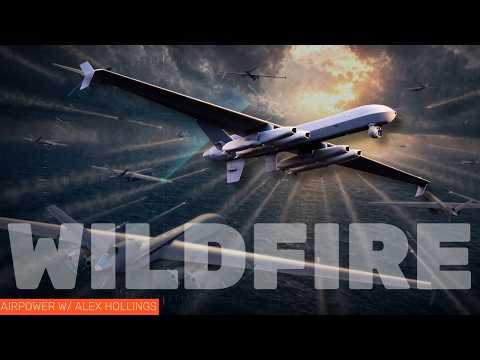
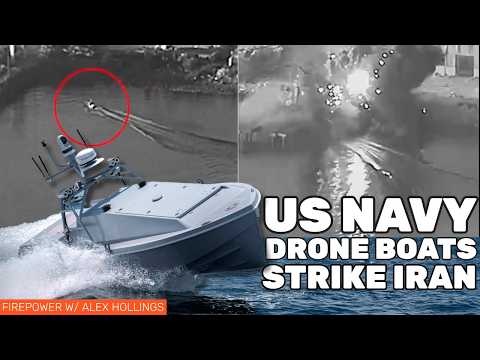
Falcon Strike, that's the name of the first-ever multinational and multi-domain attack drone task force launched by CENTCOM. According to the command, the systems will attack from above, on, and below the sea. The United States and regional partners will support the operation. During the months-long conflict with Iran, one way unmanned systems have taken part in the fight in the air and sea. This includes Iran's Shahed family of UAVs and the American Locus drone, which took inspiration from the Shahed. While Falcon Strike is international, it has a predecessor, Scorpion Strike, which started in December of last year and later invited regional partners. CENTCOM has not yet released a list of participants of Falcon Strike. We'll be back after this quick break.
>> [music]
[music]
>> Saudi Arabia, Turkey, and Pakistan recently signed a new joint defense agreement creating a NATO-like defense pact that could soon be tested amid the Iran conflict. Leaders of each country signed the agreement at the Mecca al-Mukarramah summit for joint defense in Mecca. The agreement comes nearly a year after Saudi Arabia and Pakistan signed their own defense accord last September. >> As an evolving security architecture, the MJDA remains open to countries to share its who share their commitments to collective obligations and common security interest. Any formal request will be considered in consultation with our partners in Riyadh and Ankara. The operationalization of MJDA, however, remains at an early stage.
>> For more on this, we spoke with Breaking Defense Contributing Editor Riad Kahwaji. Regarding the Mecca pact between Saudi Arabia, Pakistan, and Turkey, what are the defense implications in practical terms? >> Defense implications right now is too early to tell. I mean, first of all, to clarify, this is a defense pact. It is not an alliance. So, this is a mutual defense pact whereby if one member state is under attack, it can ask the other member state to help it in defending itself.
Within the pact, there are components that talk about defense cooperation, industrial cooperation, and so forth. So, for the defense over here, it could mean that we might see more
defense industrial cooperation between Turkish industries Pakistani and Saudi
industries here to come more aligned. Also, they might need to have their communication systems to have better
inter-operability between the air powers air defense
to enhance their joint operations.
So, these are I believe are the early
points or early moves we could see from
these sides, but definitely we will see a lot more joint defense exercises and definitely we will see
more priority given to the defense
industries in the member signatory states. We already have a defense pact between Kuwait and Pakistan
and we have another one between Qatar and Turkey. So, I believe these two countries would be the most likely first
candidates to join this this pact. >> Okay, moving to the second topic. Let us talk about the United Nations interim forces in Lebanon. The mandate of the UNIFIL will end by the end of 2026, but
there are efforts in the country to renew this mandate. First, do you think it will be successful? >> It's going to be quite tough. UNIFIL has not really proven its viability after decades of operations in South Lebanon. They have failed to prevent Hezbollah from rebuilding its capabilities. The discovery of many tunnels, uh
many arms caches for Hezbollah in UNIFIL
area of operations have all but been like scandalous. And even worse, the member countries, the the the countries that have sent troops to join UNIFIL have sent have been sending false reportings about what's happening. UNIFIL has not been uh sending clear
um um some people say dishonest uh reports about how uh the the efficiency of the operations and that the areas of their control uh were supposed to be clean and clear of any presence of uh any armed militias, but this recent war proved otherwise. So, uh it's unlikely we could see UNIFIL. However, we could see a multinational force coming together, but we will have to wait to see who will contribute and what kind of mandate they will operate under. >> Thank you, Riad. And thank you for watching this edition of the Middle East Defense Digest. Don't forget to subscribe to our newsletter for more regional news. We'll see you at the next one. Shukran wa ila liqa.
>> [music]