What Happens Inside a Black Hole?
Transcript
Machine-transcribed by YouTube. Expect errors in names, commands and version numbers.
In a [music] dangerous enough universe, survival might mean finding a place no one can follow. But what if the safest place in the universe is somewhere you can never come back from? What a black hole actually is.
A black hole is often imagined as a kind [music] of cosmic vacuum cleaner, a dark sphere in a space that sucks everything in. But that picture is misleading in almost every way that matters. They are only stealthy compared to the stars that form them. And you're no more likely to stumble across one unknowingly than you are to drift past a planet. In fact, they are much smaller than [music] planets. That said, while you're unlikely to accidentally encounter one, advanced spacecraft [music] would deliberately approach them as closely as possible all the time. There are very good reasons to bring a ship, or even a whole civilization, near one. Or perhaps even inside one, and we'll get to those later. But if you enjoy these visits to possible futures and the edge of reality, make sure to hit those like, subscribe, and notification buttons, and leave a comment on what topics you'd like to see next.
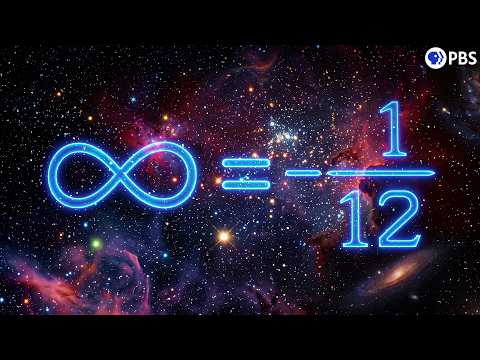
When trying to explain what a black hole is, it's often easier to start by saying what it is not. A black hole isn't really a place or an object so much as a boundary, a limit, a region where gravity becomes so strong >> [music] >> that the rules governing space and time begin to behave in ways that feel deeply counterintuitive. None of this becomes relevant until you get close to what we call the event horizon, >> [music] >> which can be only a few miles across, even if it contains several suns worth of mass, the collapsed remnant of a star once millions of miles wide. This horizon is not a surface you can touch or a shell you can see floating in space. It's a boundary in space-time itself, marking the point beyond which nothing, not light, not signals, not information, can ever return to the outside universe.
In that sense, the name is very literal. Any event beyond that horizon is something you could never observe. And that boundary behaves in a very strange way. If you were falling toward a black hole, you wouldn't see a glowing sphere or a hard edge waiting for you. There's no signpost [music] marking the event horizon. In fact, locally, nothing special happens at the moment you cross it, especially if the black hole is large enough. From your own perspective, you simply keep falling inward. From the outside, however, [music] things look very different. To a distant observer, the last light you see before crossing is stretched, delayed, reddened, and weakened.
They never receive a clean, "There he goes, crossing the horizon now" moment. Instead, your image fades into longer and longer wavelengths, with less and less energy arriving. So, it's not that you become a sharp, eternal [music] statue on the edge of the black hole. You become a vanishing signal. Now, don't think of this as leaving behind some kind of frozen image on the surface of the black hole. You cannot [music] turn one into a billboard by dropping posters on it. When we say your light is redshifted, we mean something very literal. >> [music] >> Imagine you're wearing a blue patch on your spacesuit. Under normal lighting, that patch might be reflecting on the order of 10 quadrillion blue photons per second, with a wavelength of about 450 nanometers.
As you fall toward the event horizon, those photons get stretched. To a distant observer, the blue light shifts step by step. [music] First to green, about 550 nanometers, then yellow, then orange, then red at roughly 700 nanometers, and onward to infrared, microwaves, and radio waves. >> [music] >> As the wavelength increases, each photon carries less energy. But your clock also appears to slow down. So, fewer photons arrive per second, >> [music] >> which, combined with the energy loss of each photon, cause the total signal power to drop off even faster. You drop into IR and get photons of half the energy and half as many of them >> [music] >> for a quarter of the energy or brightness you had originally. So, when your blue light shifts to green, the observer doesn't suddenly see a huge drop. Maybe instead of 10 quadrillion photons per second, [music] they see something like eight quadrillion. By the time it shifts to red, that might be close to six or seven quadrillion per second. [music] But the trend continues. As light stretches in infrared and beyond, both the energy per photon and the number arriving each second keep [music] dropping.
Eventually, what was once a bright stream of visible light becomes a faint trickle of long wavelength radiation, stretched out over longer and longer intervals. As this continues, the wavelengths themselves become [music] enormous, larger than your body, even larger than the region you occupy. You cannot resolve detail as small as the wavelength of the light you're using. >> [music] >> So, what remains is not a frozen image of you at the horizon, but a faint, smeared-out signal, effectively unusable. So, when the light has red-shifted to something like a 1-m microwave, [music] you can no longer resolve that blue patch at all. Instead of 10 quadrillion visible photons per second, you only get a few hundred million radio photons, millions of times fewer, and each millions of times weaker.
This just keeps smearing out over time until eventually you got a radio wave wider than that black hole is, getting emitted at a rate of a few million second [music] and indistinguishable from the other leftover images from other objects that fell in. This is why you don't see an astronaut frozen at the edge of a black hole forever. The light carrying that image becomes so stretched, so weak, >> [music] >> and so delayed that it fades into irrelevance. And for smaller black holes, there's another reason you wouldn't see them lingering there anyway. >> [music] >> They would have been torn apart by tidal forces long before reaching that point.
Now, the size of a black hole matters enormously here, but not in the way most would expect. >> [music] >> A small black hole, say one with a mass a few times that of our sun, has incredibly intense tidal forces. [music] These are the differences in gravity between your head and your feet. Gravity on the surface of our sun is 28 times what it is on Earth. The smallest black hole would be around 100 times Earth's gravity at that distance, the radius of our sun. That is not what is killing you, though. You could free fall through that just fine. All that mass is compact [music] into a volume a few miles wide, not a million.
And gravity is an inverse square [music] force. So, you got 10 times closer to an object, the gravity is 100 times stronger. A thousand times closer and it is a million times [music] stronger. And it would be around 517.2 billion Earth gravities at its surface. And just [music] 1 m higher, you would be near 517.08 billion Gs. And 516.96 [music] at 2 m.
That means there are a couple hundred million G-force differences between your head and feet, depending on your height. And this [music] is what kills you. You're getting shredded down to the atomic level here, and the scientific term for that is spaghettification. [music] Now, it doesn't take your head experiencing 100 million gravities less than your feet [music] to kill you. That would happen at a few hundred Gs of difference, and for a black hole of this size, a few solar masses, several [music] hundred miles or kilometers out. And as a reminder on how they're still not that dangerous, the star that birthed this thing would have been millions of miles wide and incinerate you a billion miles out or more. Its remnant is pretty safe to approach compared to it. Remember that for later.
But as black holes get bigger, something surprising happens. Overall gravity rises with mass as normal, but the tidal force of the event horizon actually get weaker. A black hole with 10,000 times the mass of the sun would still be deadly, but you could cross its event horizon before those tidal forces became fatal. [music] For the larger ones, the supermassive black holes we find at the center of galaxies, containing millions or even billions of solar masses, the crossing can be almost uneventful. [music] You might not even notice the moment you pass the point of no return. And those supermassive black holes are not rare. Nearly every large galaxy we observe appears to host one at its center. Our own Milky Way contains one known as Sagittarius [music] A* with about 4 million times the mass of the sun.
Larger galaxies can host black holes hundreds or even thousands of times more massive still. And we have contemplated building bigger [music] ones intentionally. As you approach one of these giants, the experience becomes less about being torn apart immediately and more about falling to a region where escape itself becomes impossible. And that brings us back to the event horizon. Not as a surface, but as a one-way boundary in space-time. A useful way to think about it is in terms of escape [music] velocity. Around any object, there's a speed you need to reach in order to get away from its gravity. For Earth, that's about 11 km per second. For the sun, it's much higher. But for a black hole, at the event horizon, >> [music] >> the escape velocity exceeds the speed of light. And since nothing can move faster than light, nothing can escape. But even that phrasing can be a bit misleading cuz it suggests you're trying to climb out of a gravitational well and you just can't go fast enough. What's really happening is more fundamental than that.
Inside the event horizon, all possible paths through space-time, every direction you could move, lead inward. There's no maneuver, no thrust, no trajectory that lets you leave cuz no path leads outward anymore. Much you can move northeast, south, and west on a globe [music] but never reach an edge, there simply isn't a path you can aim your ship to leave anymore. Another way to picture this is to imagine the cone of possible futures that any object has, the direction you can move through space and time. As you approach a black hole, that cone starts to tilt inward. At the event horizon, it tips so far that every possible future path >> [music] >> points deeper into the black hole. And once that happens, falling inward isn't something you're choosing to do, simply what forward in time means. That distinction between space and time, between falling and simply continuing [music] forward, is at the heart of what makes black holes so strange. Because once you pass that boundary, you're not just in a place you can't leave.
You're in a region where the structure of reality itself is pointing you [music] in only one possible direction.
Falling [music] in, what you actually experience. Once you've crossed the event horizon, whether you noticed it or not, the nature of your journey changes in a very fundamental way. Outside the black [music] hole, you always had options. You could fire your engines, turn around, try to escape. And indeed, so long as you had not intentionally slowed [music] yourself by firing your rockets toward the black hole, or gotten speed removed by a drag from the accretion disk, you should be able to easily escape. Inside, those options are gone. Not because anything is physically blocking you, but because the structure [music] of spacetime itself no longer allows it.
From your own perspective, though, nothing dramatic has happened at the crossing, at least not for a large black hole. There's no flash, no sudden jolt, no sense of heat or wall. If you were falling into a super massive black hole like Sagittarius [music] A*, you might pass the point of no return without even realizing it. There is no marker, no line, no moment where everything suddenly [music] changes. You can still see your hand in front of your face. Light from it still reaches your eyes. Locally, physics behaves just as it always has. And yet, everything has changed. Inside the horizon, every path you take [music] leads deeper inward.
Even light, which normally defines the ultimate speed limit of the universe, is dragged along. If you shine a flashlight upward, away from the center, the beam still curves inward. It doesn't slow down or fail, it simply [music] follows the geometry of spacetime, which now points in only one direction. This is where the idea [music] that space and time switch roles starts to make some sense. Not literally, but in a way of describing what's happening. Outside a black hole, you can choose your direction in space, but you always move forward in time. Inside the horizon, moving inward toward the center becomes just as unavoidable as moving forward in time. In fact, from your perspective, the singularity is not a place you might reach. It is a moment in your future. And like any moment in your future, you cannot avoid it. You might think that entry at near light speed or aiming for a wide spiraling path would buy you time, like a planet orbiting a star. But inside the horizon, the rules of motion are inverted. With the quasi exception of a Kerr ring, >> [music] >> sideways velocity doesn't provide lift.
It only adds energy to your fall. In the strange geometry of a black hole, the harder you fight to stay out and the faster you try to travel, the sooner you reach your end. To live the longest, your best bet is to do absolutely nothing. Stay still. Don't fire engines,
and drift in the future as slowly as the laws of physics allow. How long you have before you get there depends heavily on the size of the black hole. For a small, stellar-mass black hole, your remaining lifespan may be measured in tiny fractions of a second. The tidal forces would stretch and compress you violently, pulling your body into a long, thin stream of matter before you ever got close to the center or even the event horizon itself. When you're falling toward something with an escape velocity of light speed, you'll be traveling around that speed when you hit, and that means your post-event horizon experience is going to be very short.
Microseconds. And remember, you never personally experience slow time for yourself. Your watch might be ticking more slowly to an outside observer as you approach a black hole, but your brain and eyes are also slowed down, so it looks normal to you. Now, for larger black holes, is process becomes slower and far more deceptive. For a non-rotating black hole, which is near the lower but makes things easier to calculate, you need a black hole with 10,000 times the mass of the sun to have a lifespan past the event horizon of about a sixth of a second. Inside a supermassive black hole, like the galactic core types, you might have minutes, 62 seconds for hours incidentally, but in the largest ones, [music] those with billions of solar masses, you might have days. During that [music] time, you will continue to fall inward, unable to stop, unable to turn around, but still able to observe.
And what you would see would be deeply strange. The outside universe does not vanish when you cross the horizon. For a while, you can still see it, but it no longer surrounds you. Instead, it appears compressed into a shrinking bright region of sky above you. All of the light that can still reach you is funneled into that nearing patch, growing more and more distorted, more intense, and more blueshifted as time goes on. At a certain point, the cosmic >> [music] >> is going to be visible light, which amusingly it originally was, was emitted not long after the universe began. Galaxies warp, stars smear into arcs, the sky itself seems [music] to collapse into a single direction, but that above is deceptive. It is not a direction you can travel, simply where the last remaining light from the outside universe is surviving from. Even if you aim your engines or shine a beam of light that way, it will still carry you inward. Escape is not a possibility, at least not without FTL, and even then, most types will not help you here. It is often said that you will see the future of the universe play out before your eyes, and there's a grain of truth in that. Because time outside is running faster relative to your own frame, distant events would appear to speed up.
Stars would evolve, galaxies would shift, and the cosmic background would continue to cool and fade, and if you saw it blueshifted yourself. But this effect is not infinite. You do not see all of eternity, only a finite amount of external [music] time can reach you before you reach the end of your own path. Meanwhile, from the perspective of someone far away, your story looks very different. As we said earlier, to them, >> [music] >> you never quite make it past the event horizon. Your signal is becoming increasingly red shifted, stretched out, and delayed. Each pulse of light takes longer to arrive, carrying less energy, [music] until you fade from view entirely. You appear frozen at the edge, slowly dimming into darkness, and your silhouette slowly smearing from red shift resolution loss.
So, there are two equally valid descriptions of your fall. In your own frame, you cross the horizon, continue inward, and reach the singularity in a finite amount of time. From the outside, you appear to approach the horizon, but never quite cross it, becoming an ever fainter echo of yourself. Neither perspective is more correct than the other. They are simply different ways of describing the same underlying reality. And that duality between what you experience and what the rest of the universe can observe is one of the defining features of black holes. Sci-fi likes to imply this is eternal, too, but it isn't really. The bigger the black hole, the longer your ghost image lingers, but you can think of it like a half-life based on the Schwarzschild radius, the radius of that event horizon, how long it would normally take light to cover that distance.
So, for the normal black hole people usually talk about here, the ghost image lasts a few milliseconds. For our 4 million solar mass black hole, that's got a Schwarzschild radius of about 40 light seconds. Here, the ghost is going to dim out over several minutes. Black hole radius is linear to mass, and so this is the ghost image dwell time. A black hole a thousand times more massive has a thousand times the ghostly dwell period, and now it's in the weeks. And that's for the handful of those biggest black hole monsters we've ever found. But it's certainly not eternity, except in the sense that it never technically ends. A ghost falling into a low-mass black hole around the minimum threshold is having its strength of a hundred thousandth of a second. 10 halvings and you're down to a thousandth. 20 is a millionth. 30 a billionth. [music] 40 a trillionth. And so on.
So, this is another one of those things people say about black holes that is kind of sort of true, but [music] basically totally wrong. And I want to highlight it. This is as if I ate all of that Wikipedia. And while it's a good idea to grab a drink and a snack before watching, you need the brain fuel. Don't forget to like and subscribe for future chances to justify some snacking.
What might be [music] inside and why we can't know. All right. Once you cross the event horizon and begin that final inward journey, physics gives us a fairly clear picture of what happens next, at least up to a point. Every path leads inward. Time carries you toward the center. >> [music] >> And within a finite span, seconds, minutes, hours, or perhaps days, you reach what we call the singularity. But that's where our understanding begins to break down. In our current theories, the singularity is a point of infinite density and curvature. A place where the equations of general relativity simply stop working. >> [music] >> That's usually a sign the theory itself is incomplete. And for what it is worth, >> [music] >> I personally tend to assume there are no truly point-like objects in this universe. Even the Planck length might as well be. I have no crystal ball, but I expect that a full theory of quantum gravity would replace that singularity with something more physically meaningful. But we don't know what that is, and it might stay the same. Either way, when talking about what happens at the center of [music] a black hole, we are no longer on firm ground. We are extrapolating beyond tested physics. And that opens the door to some very strange possibilities. One idea that has been explored is that black holes might not simply end in destruction, but in transition. Instead of matter collapsing into a final singular point, it could, under the right conditions, rebound or reconnect into another region of space-time. In some models, that region might resemble a new expanding universe, a kind of baby universe branching off from our own. This is a fascinating possibility, and one we'll explore more deeply in a future episode. But, for now, it is not to say that as such processes occur, they are completely hidden from us. When something passes the event horizon, no information about its fate can return to the outside universe.
And no, [music] you cannot use a relay chain of sacrificial victims falling into a black hole one at a time to try to stay in touch [music] with each other. They could, but no information relayed from someone who crossed that event horizon has ever gotten out through the back. Another concept closely related to this is that of a white hole. And a white hole is, in a sense, the time-reversed version of a black hole. We have a dedicated episode on this coming up soon that I wrote after writing this one. But, in short form, instead of a region you could fall into but never leave, you have a region you can emerge from but never actually enter. Matter and energy would be expelled from it, but nothing could [music] go in.
Mathematically, white holes appear as a valid solution to some equations that describe black [music] holes. But, unlike black holes, we've never observed anything that convincingly behaves like one, >> [music] >> and it would be way easier to spot if they exist. Of course, when you're discussing portals through space-time, there's no reason to assume they open [music] the same when and where or randomly appear. They could all concentrate on the early universe pre-CMB [music] or after the black hole era ends in 10 to the 100 years from now. So, they [music] remain, for now, purely theoretical constructs, interesting but unconfirmed. Still, they raise an intriguing question. If black holes swallow matter and white holes expel [music] it, could the two be connected?
Could falling into a black hole in one region of space-time correspond to emerging from a white hole somewhere else. One obvious problem with that idea is that ordinary black holes do not appear to behave like leaky portals. Observed black holes grow, merge, bend light, power accretion [music] disks, and act gravitationally like objects that have kept the mass energy that fell into them. So, does any connection to white holes, baby universes, or other regions of space-time is not operating like a simple drain pipe through our own universe. You wouldn't have giant black holes at galactic centers swallowing suns for billions of years, growing in mass and energy, if they were emptying [music] out somewhere else. But, that basic idea shows up in various forms, often tied to wormholes or other exotic geometries.
But again, there's no observational evidence that such structures exist in a stable, traversable form. And even if they do, they would likely require conditions or materials [music] like negative energy densities that we do not yet know how to produce or sustain. See our episode on wormholes for more discussion. So, while it is tempting to imagine black holes as gateways, or shortcuts, or cosmic recycling [music] systems, the honest answer is we don't know.
Why you would fly toward a black [music] hole. For all their reputation as cosmic hazards, black holes are almost the most useful objects in the universe, if you know what you're doing. As I hinted at earlier in the episode, a spacecraft would never have difficulty avoiding a black hole, except for one thing. They have every reason to intentionally aim for one. The reason is simple. Gravity is a resource. The deeper you fall into a gravity well, the more energy you gain, and the more [music] you can use. You can only get so close to a planet or a star before you run into it, and their mass is spread out more, >> [music] >> and this limits the effect for slingshot maneuvers. You can get very close to a black hole compared to a star of similar mass. But, by having close and firing your engines at the right moment, you can take advantage of the Oberth effect, [music] converting fuel into far more kinetic energy than you could in empty space. The closer you risk going, the bigger your free gain of kinetic energy compared to your [music] fuel input. You have to burn that fuel much faster, too, because black holes are small. If you're already traveling at several percent of light speed, your burn window for maximum effect is narrow. What this means that you aim for just the side of the black hole and max your engines out as you approach closest, pushing toward the black hole and not away [music] from it. And you get as close as you can without hitting the accretion disk or having your ship ripped apart under tidal stresses, or your crew, for that matter. It is kind of a pity this is less well known in sci-fi circles.
[music] It's a much better justification for a ship having a dangerous and risky moment near a black [music] hole, but you never just fall into one. When gravity pulls on things in a vacuum, it gives them the very [music] energy they need to escape. You just need to speed up during your fall using your engines to ensure [music] the breakaway. It's pointing your engine toward the black hole to try to slow your fall, as we often see in sci-fi, that would kill you. Done properly, that maneuver can turn a modest burn into a tremendous boost, flinging your ship back out at enormous speed. The same principle works in reverse, as well. By falling in and shedding energy through thrust, radiation, or interaction with surrounding matter, >> [music] >> you can slow down just as dramatically.
As we discussed elsewhere, that makes them natural beachheads >> [music] >> in a new neighborhood of the galaxy for future galactic colonization. That's just one of the reasons you never stumble unknowingly into a black hole. They'd be too popular destination hub for anyone not having at least a station or beacon nearby to help provide ultra-accurate and updated information on it. And [music] you have every reason to try to get as close to that thing as your ship and crew can handle. So, accuracy matters. Why civilizations would build around them. If you were choosing a place to build a long-term civilization, a black hole might not be your first thought, but it should be on the list. Because black holes are not just sinks of matter, they are engines. Feed a black hole with matter, gas, dust, asteroid, even stars, >> [music] >> and as that material spirals inward, it forms an accretion disk. They can radiate enormous amounts of energy.
In fact, this process can convert mass to energy far more efficiently than even nuclear fusion. A well-fed black hole can outshine entire galaxies. For an advanced civilization, that's not [music] a danger, it's an opportunity. You can regulate the flow of matter, turning the black hole into a controllable power source. You can harvest energy from the accretion disk, from relativistic jets, or even directly from the black hole's rotation. With enough engineering, you could build vast infrastructure around it. Habitats, power [music] collectors, and industrial systems all orbiting a central engine. And unlike stars, especially the titans that birth them, black holes don't burn out on short time scales. A black hole can persist for trillions upon trillions upon trillions of years, making it one of the most stable long-term energy sources available. That opens the door to even more ambitious ideas. You might build massive habitats, shell worlds, ring structures, or swarms, using the black hole as both anchor and power source.
You could place them far enough out to avoid tidal hazards, while still tapping into the immense energy available closer in. You can also take advantage of slower time [music] near them, though not as much as folks tend to assume. Loosely speaking, for non-rotating black holes, and while above the event horizon, whatever your escape velocity from it is at that height, will match up pretty closely with your time dilation from fast objects in special relativity. That no black hole is ever going to be non-rotating, at least no natural black hole, makes this unusable at very close distances [music] and very high time differentials though. But for mega black holes, there are actual places where you get time slowed down to a crawl where gravity at that height was actually fairly low, such as levels [music] of a birch planet. But think of time changes of tens or hundreds, hours [music] into days or maybe weeks, not seconds stretched out to years. Which is just one more cool reason to think of black holes as awesome places to live. Not some terrifying death star you stumble into and are doomed to encounter.
Yes, it is dangerous down in the basement, but so is our planet where we float around on seas of magma above a super hot core of radioactive metal. Fundamentally, black holes are a foundation you could build an epic civilization around. See our episode Colonizing Black Holes for more. Black holes already push known physics into some of its strangest territory and some speculative models even ask whether their interiors could connect to other regions of reality. In Outsider Aliens, we take that possibility much further and ask what contact with another reality might actually look like. Instead of a starship arriving overhead, the first sign could be a region where our constants drift, probabilities behave strangely, or matter simply stops following the rules we expect.
The alien invasion might not be an army at all, but incompatible physics leaking across a boundary. That episode is out now exclusively on Nebula, along with years of SFA exclusives, extended editions, and bonus content. It's also where every SFA episode appears early and ad-free. Use my link or the QR code for 50% off an annual plan, just $30 for the whole year. Civilizations beneath the horizon and beyond it. That raises a natural question, especially in the context of advanced civilizations and the strategies we often consider when thinking about survival in a dangerous universe. If you wanted to hide, truly hide, could you do so inside a black hole?
At first glance, it has a certain appeal. Once you cross the event horizon, no signal you can send will ever escape. To the outside universe, you are gone, invisible, undetectable.
>> [music] >> And as we've seen, if the black hole is large enough, you could cross that boundary without immediately being destroyed. The tidal forces at the horizon of a supermassive black hole are relatively mild. In principle, a sufficiently advanced civilization might even engineer a controlled descent, bringing ships, habitats, or even entire populations across that threshold. But the advantages end quickly. The same property that makes a black hole an effective hiding place also makes it a trap. Once you're inside, you cannot leave. Not eventually, not with better technology, not by waiting it out. There is no future in which you emerge again into an outside universe, and you're not truly safe from attack there, either. An adversary with comparable capabilities could follow you in. They would face the same fate, of course, but if their goal is simply to ensure your destruction, that may not matter. A black hole does not prevent conflict, just ensures that all the participants are committed to the same fate, a one-way path.
Even without enemies, the clock is still ticking. No matter how large the black hole, the journey inwards ends at the singularity, >> [music] >> or whatever replaces it in a more complete theory. You might stretch that timeline to hours, days, or longer with sufficiently massive black holes, but it is always finite. >> [music] >> So, a civilization entering a black hole is not finding a refuge, it's choosing a final trajectory, and a short one. Now, there is one caveat often raised here. Real black holes are not simple, non-rotating spheres. Most of them spin, and a rotating black hole, what we call a Kerr black hole, has a more complicated interior structure.
Instead of a point-like singularity, the mathematics predicts a ring-shaped one, sometimes referred to as a Kerr ring. In some idealized solutions, that structure allows for paths that avoid immediate destruction, even suggesting the possibility of passing through to other regions of space-time, perhaps even other universes. But these scenarios come with heavy caveats. They rely on perfectly stable, perfectly smooth conditions, that almost certainly do not exist in real astrophysical black holes. Any small disturbance, falling matter, radiation, quantum effects, >> [music] >> tends to destabilize those paths. The inner regions become violently chaotic, with tidal forces and radiation fields that would likely destroy anything attempted to navigate them.
So, while Kerr black holes open the door, in practice that door does not stay open long enough to matter. And that brings us to a deeper question. What if a civilization has access to physics beyond what we currently understand? If you could manipulate space-time itself, generate negative energy, create warp bubbles, or produce effects similar to dark energy, could you escape a black hole from the inside? It is tempting to say yes. After all, if you can reshape space-time, perhaps you could carve out a path that no longer leads inward. Perhaps you could create a pocket of expanding space, or open a shortcut that reconnects you to the outside universe.
But even here, the answer is far from clear. The event horizon is not a sturdy barrier force. It's a boundary of causality. It defines which regions of space-time can influence which others. So, even traditional space warping or time travel options are dubious propositions. To escape from inside, you would not just need more energy. You need to alter the fundamental structure of space-time, changing the causal map so that one of your possible futures points back outside again. Now, that may be possible. we shouldn't casually wave away space-time altering technologies while discussing natural objects that possess space-time warping properties. But if it is, it is no longer just engineering. It's rewriting the rules the black hole is built on.
At that point, you're not so much escaping the black hole as you are creating a new piece of the universe to escape into, a pocket space. And even as a hiding strategy, it has a fatal flaw. If you can conceive a way out, so can they. If you have an enemy strong enough to be afraid of, then they likely parallel you on technology or do even better. They may not have the technology yet themselves, >> [music] >> but now they have a reason to think it works. And unlike you, time is still running normally for them, not slow. So a black hole does not stop your enemies, just gives them more time than you have.
From your perspective inside, you might have hours, days, perhaps longer the largest black holes. But outside, the universe continues on its normal course. Civilizations rise, expand, experiment, and refine their technologies. What feels like a final refuge to you will only be a temporary problem for them when they have centuries, millennia, or longer to solve. Ultimately, a black hole is not a refuge, is not a fortress. It is a boundary. And once you cross it, your future is no longer something you choose. It's something you fall into.
>> [music]