How Lockheed Martin Is Building More Missiles
Transcript
Machine-transcribed by YouTube. Expect errors in names, commands and version numbers.
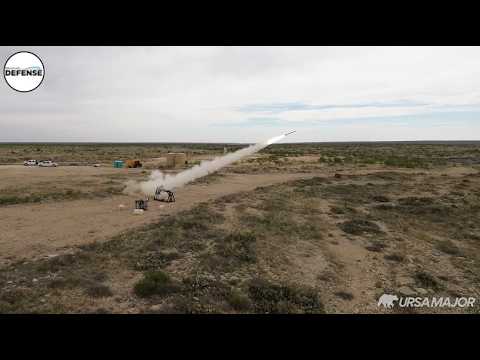
A missile leaves the launcher in seconds, but replacing it can take months or sometimes years. That is one of the many realities of modern warfare. Ukraine especially has shown how fast large-scale war can burn through munitions. Missile and drone attacks in the Middle East have put air defense interceptors back at the center of modern warfare, especially as ballistic missiles and one-way attack drones become more plentiful. And any future conflict in the Indo-Pacific would put enormous pressure on long-range fires, missile defense, and the ability to sustain a fight over long distances. So today, we're looking at how Loheed Martin is expanding America's missile arsenal. What missiles they're doing it with, and just as importantly, [music] where all of this is happening. Pack 3 and THAD are defensive systems all about stopping incoming threats. The precision strike missile or prism is the other side of the missile problem and it gives US forces a way to threaten the enemy at much longer ranges. Prism is the army's next generation surfacetos surface missile for high Mars and multiple launch rocket system launchers. Though it is an army program, even the Marines have used them. These are meant for longer range precision fires with ranges out to 500 km or about 310 mi. and it is
the replacement for the army tactical missile system or attackums. This video is sponsored by Loheed Martin. The company builds some of the most in- demand missile systems in the US inventory including PAC 3 THAAD and the precision strike missile. That puts Lockheed right in the middle of America's missile production problem and raises a harder question. Can America's defense industrial base build enough of the weapons that it may actually need in a future conflict where missile inventory could help decide who emerges victorious? [music]
For a long time, the United States bought precision weapons in relatively limited numbers because it could get away with it. That made sense for the kinds of wars that America was fighting. counterterrorism operations, limited air campaigns, short burst of targeted strikes. The US military could use expensive precision weapons, and just replenish them over time. Now, modern warfare is putting pressure on munition stockpiles from multiple directions at once. Ukraine has turned artillery shells, rockets, drones, air defense interceptors, and long range strike systems into the lifeblood of daily operations. In the Middle East, missile and drone attacks have made layered air defenses a constant operational need. And in the Pacific, US planners are looking at a theater where distance is brutal, bases are vulnerable, ships are high-V value targets, and long range precision fires are not optional. The United States hasn't forgotten how to build missiles, but the calculus of warfare has changed. And now our production needs to catch up. Loheed Martin is trying to address that industrialbased problem through what it calls munitions acceleration. This includes expanding production, modernizing facilities, coordinating suppliers, growing the workforce, and working with the Pentagon on agreements meant to move critical weapons faster from factory floor to fielded capability. Lheed specifically points to PAC 3, THAAD, and Prism as landmark agreements meant to accelerate production and delivery. And those three systems give us a pretty good map of what America's missile arsenal is being asked to do. Let's start with PAC 3.
Pack 3 missile segment enhancement or PAC 3 MSE is part of the Patriot air and missile defense system. It is designed to intercept aircraft, cruise missiles, and ballistic missile threats. As we've seen, that capability is an extremely high demand these days, and we really don't see that changing anytime soon. In January 2026, Loheed Martin and the Pentagon announced a 7-year agreement to increase PAC 3 MSE capacity to approximately 2,000 interceptors per year. Lheed said that it had already increase Pac 3 MSE production by more than 60% over the previous 2 years and delivered 620 Pac 3 MSE in 2025, more
than 20% above the previous year. Pack 3
also shows how quickly missile production turns into a strategic issue. Air defense is no longer just about enemy aircraft coming in at altitude. Modern defenders are dealing with ballistic missiles, cruise missiles, drones, decoys, and mix attacks designed to force hard decisions fast. The question is not just whether an interceptor can hit the target. It is whether enough interceptors are already built, delivered, and ready to face these salvos. Which brings us to THAAD. THAAD stands for terminal highaltitude area defense. THAAD is designed to intercept ballistic missiles at, you guessed it, high altitude. And it is part of a layered missile defense architecture. As we've covered in other videos, layered defenses make it so that you do not rely on one system, one launcher, or one shot to stop every threat. You build complimentary layers so that different systems can engage different threats at different points in flight. It's important to note that PAC 3 and THAAD are not the same [music] thing. They are different layers of the defensive stack meant for different threats. In January 2026, Loheed Martin announced a framework agreement with the Pentagon to increase that interceptor production capacity from 96 interceptors per year to 400 per year over 7 years.
Scaling THAAD production gives the United States and its allies more depth in the defensive magazine against high-end ballistic missile threats, while PAC 3 handles a different part of the air and missile defense stack. If the military is operating in a theater where targets may be spread across islands, coastlines, ports, airfields, logistics hubs, missile sites, and ships at sea, range matters a lot. and equipping highly mobile launchers with 300 plus mile missiles create significant problems for any adversary. In March 2026, Loheed Martin announced a new framework agreement with the Pentagon, building on a previous $4.94 billion army contract to quadruple prison production capacity. Now, missiles are exciting. They look cool.
They fly really fast, and they can even explode. But factories and the logistics behind them decide whether the arsenal actually grows and that requires a huge investment. Lockheed says it is backing its munition acceleration effort with more than $9 billion through 2030 to modernize more than 20 facilities here in the US to rapidly scale munitions output. Those facilities are located in Arkansas, Alabama, Florida, Massachusetts, and Texas with work including upgraded facilities, advanced manufacturing techniques, production lines, tooling, and plant layouts. Missile production is spread across a network of facilities, suppliers, test sites, and skilled workers. Some sites handle final assembly. Others take care of components, energetics, testing, engineering, or modernization of older production lines that now have to support much higher output. Expansion is hard to surge overnight, though.
Everything in multiple locations has to fall in place on time to avoid bottlenecks and delays at other points of the production cycle. This will also require brand new facilities. In Troy, Alabama, work began on an 87,000 square foot facility. And that won't be the last new factory built. What missiles do is really complicated, especially interceptors that have to hit fastmoving targets in midair. But building those weapons at scale can be just as difficult. You need production lines, tooling, energetics, things like explosives and propellants, and the safe handling to go with them, test stands, quality control, certified processes, safe facilities, engineers, skilled trades, suppliers, transportation, storage, government contracts, and enough long-term demand to justify hiring workers and expanding capacity.
And you need all of those things to work together every single day. There is another reason why missile production is hard to scale, and that is supplier logistics. If you've been with the channel for a while now, you know that we always say logistics wins wars. And that rings true here as well. rocket motors, guidance components, seekers, control surfaces, batteries, circuit cards, casings, fasteners, test equipment, specialized materials. All of that has to show up on time, meet requirements, survive testing, and fit into a production process where tolerances are practically invisible. According to Lockheed's munitions acceleration materials, the company's global industrial base includes more than 13,000 suppliers. In May, more than
150 suppliers joined Lockheed in Dallas for its inaugural munitions acceleration supplier conference where the focus was delivering munitions at greater speed and greater scale. A chain is only as strong as its weakest link and missile production only moves as fast as the slowest part of the supplier network. If one supplier cannot scale, the entire line can feel it. If one component has a long lead time, the missile has a long lead time. If one highly specialized part depends on a fragile supply chain, that fragility becomes part of the weapon system, whether anyone likes it or not, because logistics wins wars. But
none of this will work without the people on the production floor. You need machinists, engineers, electricians, technicians, inspectors, logisticians, welders, managers, safety specialists, and people who understand how to build complex weapons around energetic materials. Lheed says it is creating tens of thousands of highquality American jobs across manufacturing, engineering, and skilled trades to meet rising production demands. The company also says its production headcount has grown more than 60% since 2016 with
baseline growth of approximately 50% projected by 2030 to sustain these higher production rates. A new building does not produce missiles by itself like some Terminator assembly line. The production line needs trained people who can run the machines, inspect the work, handle dangerous materials, and keep the process moving safely. And a workforce only exists if there are training pipelines, stable demand, skilled trades, engineering talent, and enough long-term confidence that people can build careers around this work. The arsenal is not just missiles sitting on warehouse racks. It is also the human system that turns all of this into actual munitions for our war fighters. It really is quite an undertaking to build thousands more of advanced and complicated munitions, and it will take some time to get everything moving at full speed. New facilities need equipment. Lines need tooling. New workers need that training, and suppliers need capacity. Test equipment also has to keep up in order to keep quality high. And in what may be the biggest challenge over several years, government funding has to keep being approved year after year. All of that is what makes munitions production hard in general. The US military and its allies want and need more. Ukraine related replenishment puts pressure on stockpiles. Middle East missile defense creates urgent demand. Indoacific planning creates another layer of demand. And all of these needs can stack on top of each other. That is why Lockheed's munitions acceleration matters. But it is also why no single company can fix the entire missile production problem alone. So, why does all this really matter? Missile inventories shape the choices commanders have before a war starts and after the first shots are fired. A shallow arsenal forces hard decisions early. Do you use a high-end interceptor against a lower-end threat because that is what is available? Do you hold back long range strike weapons because you do not know how quickly they can be replaced? Do you send more missiles to an ally that's under attack or do you preserve the inventory for a larger contingency somewhere else? These are not just classroom hypotheticals. In the past few years, US leaders have had to weigh support for allies, stockpile depth, replenishment timelines, and the possibility of another crisis arriving before inventories are fully rebuilt.
So, a deeper arsenal gives commanders more room to maneuver. Air defense units can stay in the fight longer. Long-range fires units can make the enemy think twice before making a move. Allies can have more confidence that the United States can support them without immediately draining its own magazines. And adversaries have to plan against a force that can absorb the first wave of demand and keep generating combat power afterward. That is the logic behind Loheed Martin's munitions acceleration effort. Pack 3 adds depth against air and missile threats. That adds another layer of defenses against high altitude ballistic missiles. Prism gives the Army and Marine Corps a longer range strike option from mobile launchers, but the missile itself is only one part of that story. The larger advantage comes from the system behind it. factories that can expand output, suppliers that can keep pace, workers who know how to build complex weapons safely, and contracts that give industry enough confidence to invest before the emergency begins. A future conflict may not let the United States choose between quality and quantity. It may need both at the same time. Loheed Martin is expanding the industrial base behind America's missile arsenal so the country has more options when those options are needed most. And a very sincere thank you to Loheed Martin for sponsoring this entire video.
It really does help support the channel and lets us do all the other things that we enjoy doing here on the channel and things that we plan to do in the future. So, thank you so much to Loheed Martin for supporting us in this way. I also wanted to offer a little bit of a disclosure about what this video really is. So, like I said, Loheed Martin bought the entire video. This does give them some control over what we say and how we say it. And I will say that the script Loheed Martin had really no notes for it. And so, this lets us do these videos and it lets us do other things like travel to the conventions. We're going to start doing things out in the field where we travel and hopefully, you know, show a different side of the military. So, I do want to explain that to you all. And I also do genuinely want to thank Loheed Martin because without support from clients like this, these videos, they just don't get made. So, thank you for your understanding and please subscribe, like, stick around for the channel as we start to grow again and do those things that we talked about. I am Kyle, your friendly ginger.
You are all dismissed. And thank you so much for being here. And of course, thank you to Locky Martin for supporting