Prime Editing: Adding Precision and Flexibility to CRISPR Editing
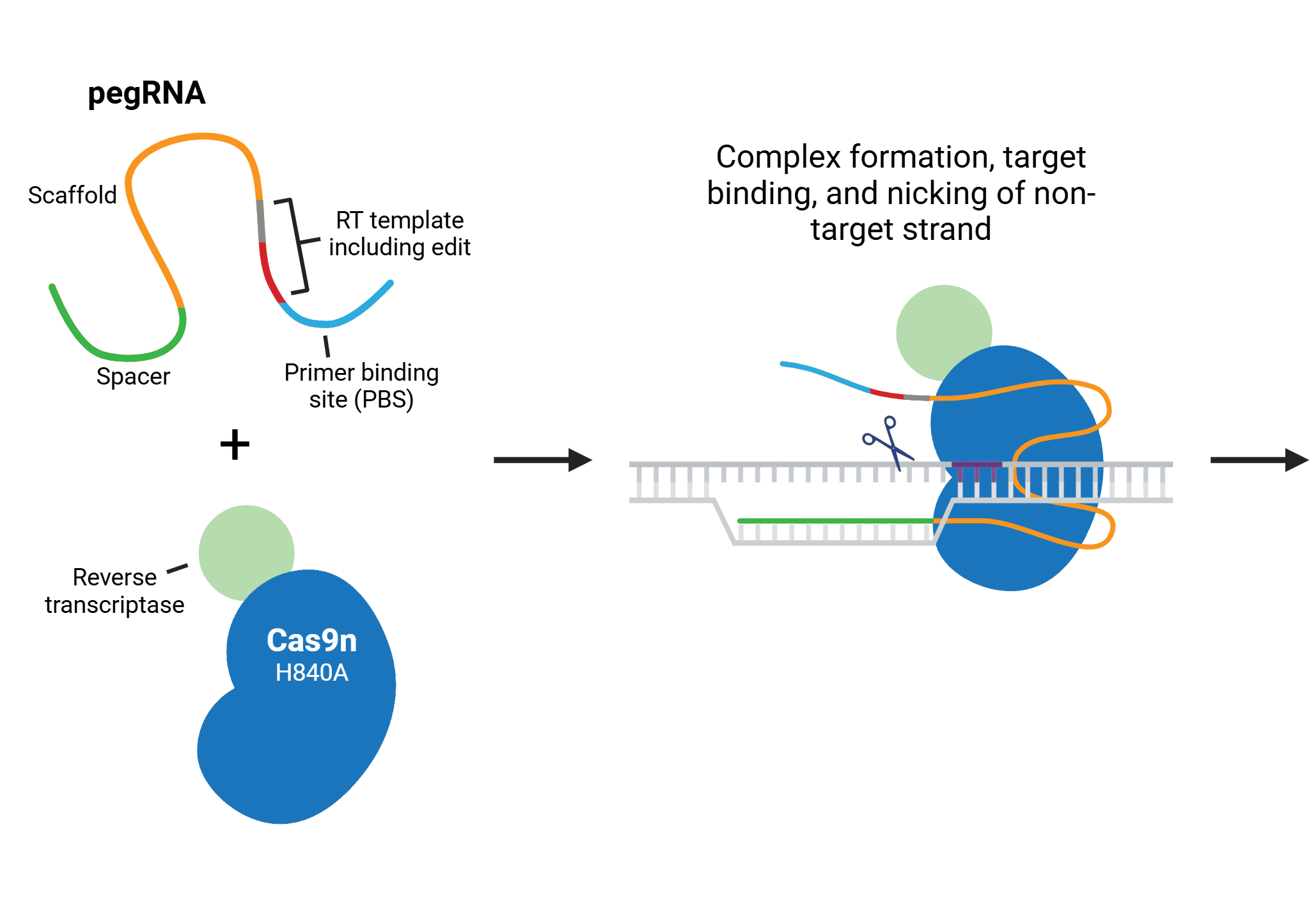
Over 75,000 pathogenic genetic variants have been identified in humans and cataloged in the ClinVar database. Previously developed genome editing methods using nucleases and base editors have the potential to correct only a minority of those variants in most cell types. But prime editing, a CRISPR technique developed in David Liu’s lab in 2019, has added considerably more precision and flexibility to the CRISPR editing world. The approach, originally published in Nature, is a “search-and-replace” genome editing technique that mediates targeted insertions, deletions, and all possible base-to-base conversions (Anzalone et al., 2019). Plus, it can combine different types of edits with one
…