How Ukraine is Overcoming its Manpower Crisis
Transcript
Machine-transcribed by YouTube. Expect errors in names, commands and version numbers.
Back in April this year, Ukraine's president Vladimir Zalinski said that a Russian ground position had been captured entirely by robots, forcing the Russian soldiers to surrender. The operation was especially significant for Ukraine, Zilinski said, because for the first time since the war began, not a single Ukrainian soldier was directly endangered during that specific operation. An ideal feat for an army going through a manpower crisis. So, in this video, we'll take a look at the Ukrainian army's manpower shortage, the steps the government has taken to address it, and how some of these steps are already changing modern warfare.
This spring, we visited Greenland to discover the country and find out why it's been such a major geopolitical [music] flash point. While we were there, we camped on a glacia, trek through the wild to find abandoned military installations, and explored the melting oceans. All to answer the question, what's the big deal with [music] Greenland? The documentary is now streaming exclusively to TLDDR Party members. You can sign up or watch the full trailer by clicking the link in the description. Let's start with some muchneeded context on the state of Ukraine's military. Since 2024, Ukraine's army has been dealing with a chronic manpower crisis. When a war drags on this long, increasing casualties are unfortunately a given.
Ukrainian forces have suffered somewhere between 525,000 and 625,000 casualties, which includes soldiers killed, wounded, and missing, and between 125,000 and 150,000
fatalities between February 2022 and June 2026, according to estimates from the Center for Strategic and International Studies. At the same time, troops on the ground grow exhausted, while civilians at home don't feel hopeful about the prospect of returning home anytime soon should they enlist. This inevitably leads to draft dodging as well as desertion and absence without leave. The Ukrainian government has unsurprisingly done a lot to try and combat this through various means. The most straightforward approach was to simply incentivize enlistment by making it more attractive or as attractive as it possibly could be. to do so. The Ukrainian Ministry of Defense recently announced a new contractbased system with three different categories of contracts. The first is an infantry assault contract lasting 10 months for current service members or 14 months for civilians. The second, a 24-month combat contract is meant for support personnel such as drone operators, artillerymen, and electronic warfare specialists. The third is a 24-month basic contract for rear area roles, which are stationed in the zone furthest from the enemy.
Naturally, some of these contracts involve roles that are more dangerous than others. So, a compensation structure was also introduced to offer higher salaries for higher risk positions. Under the new framework, assault infantry personnel should earn an average of 300,000 to revenues, around $6,700 per month, roughly 10 times the average monthly salary in Ukraine. Zilinski also said that his government would raise the basic military wage by a third to 30,000
revenues or $700. And finally, Keefe wants to recruit more foreign soldiers. About 10,000 foreign volunteers have already joined the Ukrainian army, coming from more than 70 countries since the start of the war, according to estimates from the Ukrainian military publications. The Ukrainian government has also resorted to more violent and controversial ways to increase the army's capacity, which Ukrainians have come to call busification. The word bus here refers to the vans that officials roam the streets in, searching for military-aged men or draft dodgers. But finding solutions to boost the country's army capacity wasn't Ukraine's only bet. The strategy it's mostly focused on since the start of the war has been to aggressively innovate its technology, which has become all the more urgent in recent years given the army's manpower shortage. Essentially, Ukraine needed to find an edge in its war against a country with a much larger army and a way bigger GDP. Since the war began, most of the stories have been about how Kev has dramatically ramped up domestic drone production and earned a reputation as a global leader in drone warfare.
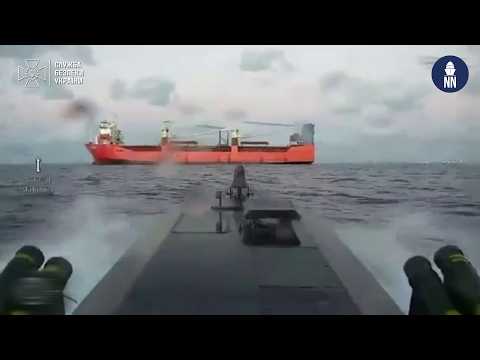
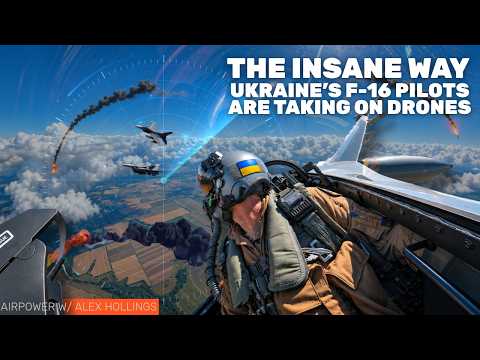
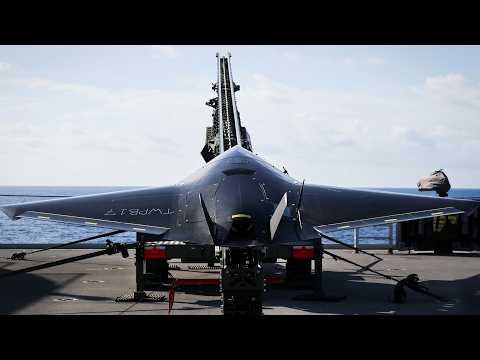
It's since been hailed as a model for the US and Gulf countries, who have leaned heavily on Ukraine's expertise in their own conflicts with Iran. Drones have been Ukraine's most effective weapon for some time now, accounting for more than 3/4 of all Russian losses. Even at sea, Ukrainian maritime drones have forced Russia's Black Sea fleet to retreat from occupied Crimea. On top of that, the Ukrainian military is ramping up its use of AI drone technology, which has allowed Ukraine to attack Russian targets heading to the front lines at greater distances and with more precision and accuracy. Essentially, by trying to solve its manpower crisis, Ukraine has become a sort of testing ground for robotic warfare. And as we've mentioned, the air and sea have kind of been Ukraine's biggest advantages so far, thanks to their advancements in drone technology. Where the lack of manpower has really been felt, though, is on the ground. As we said previously, the Ukrainian army really can't afford to lose more soldiers, especially as it continues to struggle to recruit enough of them to counter Russia's meatwave assaults, in which large numbers of Russian men are thrown at Ukrainian defenders. This is where Ukraine's army of robots could go a long way in helping the country solve its biggest weakness.
The Ukrainian army has been increasingly using on the ground robots for a couple of years now, and they've come to serve several purposes. delivering cargo, evacuating the wounded, surveilling open areas, or laying minefields. The robots have been particularly helpful in the so-called kill zone, a deadly corridor along the 1,200 km long front line in Ukraine, where the risks of casualties are extremely high given the omnipresence of drones. The ground robots also have several advantages over aerial drones. They can carry heavier loads, last longer, and fight on the ground with heavier weapons. According to the commander of Ukraine's third army cores, the goal is to replace up to 30% of soldiers in the most difficult areas with these robots. Initially, it seemed like the ground robot's role was to support frontline soldiers logistically.
Back in July, the commander of Ukraine's unmanned systems forces said that drones are currently creating a kill zone extending 20 km from the front lines. The next challenge is to replace Ukrainian infantry with groundbased robotic systems that can take over all the logistical tasks in the front line. Today, however, their role seems to have expanded to include more direct combat. Robots armed with guns or bombs, for example, are now taking Russian prisoners and delivering them to Ukrainian soldiers stationed at a safe distance from the front. An instance of a robot taking part in active combat happened back in July. Ukraine's army used a remote control to land a robot from an unmanned naval drone on the shore of the occupied Kinburn Spit in southern Ukraine. The ground robot armed with a machine gun fired on Russian troop positions, forcing them to pull back from part of the coastline before the robot self-destructed, according to Bloomberg. So, it seems that Ukraine is continuing to do what it does best, leaning on technological innovation to gain an edge against the much larger Russian army. If all goes to plan, this could genuinely go some way to solving Ukraine's manpower deficit, which previously looked like Russia's most structural advantage. The autumn issue of our magazine, Too Long, is now available for pre-order. The main story inside is all about the plan to fix Europe. From the economy and trade to politics and war, we discuss the various ways in which Europe could be reborn.
Then there's the global section, which includes our interview with the economist Washington bureau chief about the state of America. There's also articles on the current status of USChina relations as well as discussing the politics of disasters, the Pope's involvement in 21st century politics, and the death of the dollar. The EU section includes the latest from the war in Ukraine, how Germany's rearmament could defend Europe, as well as more stories from across the continent. The UK section unpacks Britain's new prime minister, as well as the various rumbling issues from Brexit some 10 years on that still plague Burnham. That's just some of the stories in this issue, though, with us also launching a brand new business section to go alongside the relaunch of the TLDDR business YouTube channel this month. If you're interested in hearing our takes on all of those topics, then you can get the very best deal by subscribing to Tulong. Subscribers automatically get 20% off every issue as long as they're subscribed. But if you use code August 26, you'll get an additional £3 off your first copy. Plus, if you want more from TLDDR, then you can also subscribe to Tulong and TLDDR Party in one bundle.
The cheapest way to get both subscriptions. Regardless, thank you so much for watching this video and for supporting TLDDR.