 Hackaday
Rubidium Frequency Standard Explained
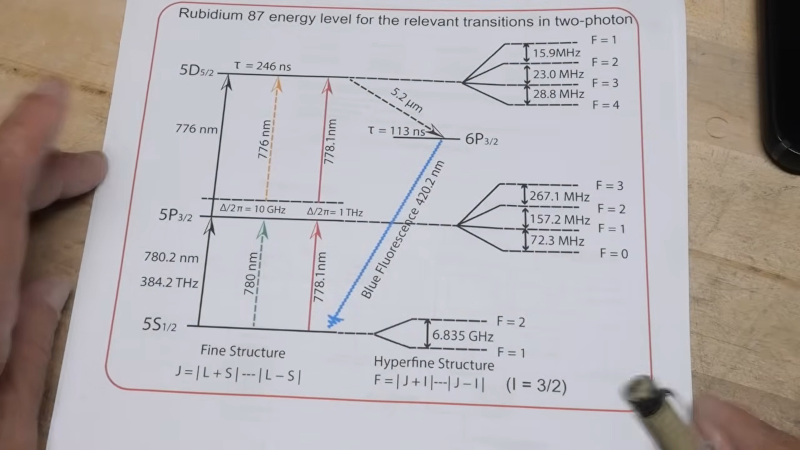
You’ve probably heard of rubidium frequency standards, which are used where you need an extremely accurate time or frequency reference. [IMSAI] guy has a good explainer video about what’s actually going on inside one of these standards. Much of the basic idea also applies to cesium standards. The explainer starts with the periodic table. Rubidium and cesium are both alkali metals, with a single electron in their outermost electron shell. Rubidium has 37 electrons, with the outermost one relatively loosely bound. Naturally occurring rubidium consists mainly of two isotopes, rubidium-85 and rubidium-87, which have the same number of protons and electrons but different numbers of neutrons. A
…