Epic Fury's Forever War TRAP
Transcript
Machine-transcribed by YouTube. Expect errors in names, commands and version numbers.
Welcome back to the channel and it's been a few weeks. You guys will remember at the height of the war. First we predicted what ultimately turned out to happen a few weeks out. Uh and then we were on top mostly through live streams through the month of of March and into April. Uh kind of things like S was on
what was happening in the strait and the North Arabian Sea, Gulf of Oman. Rain and I talking about Wizzos evading and
F-35s getting shot by optical SAMs and all that sort of thing. In hindsight, you guys, that seems like a long time ago. Uh, but here we are again. So,
please welcome back to the channel our good friend Sal Maglaniano, who as you know is the host of What's Going On with Shipping. Good to see you, Sal. Fresh from your Euro vacation. >> Uh, thank you for having me back Ward. I appreciate it. It's good to be back. Rain has been on the channel recently where we were talking about retention in the military. Our good friend, Lieutenant Colonel John Rain Waters, host of Afterburn Defense YouTube
channel and podcast. You guys have seen his F-16 demo videos with his GoPro. That's when he was at the height of his YouTube powers. Rain, it's great to see you again. >> Good seeing you as well. When I reached out to you guys at the end of last week, I thought we were going to be talking about the two weeks of strikes that
Sentcom had done on places like Busher.
But over the last 24 hours, the circumstance has changed dramatically.
So, President Trump posted this. The USA
is locked and loaded and ready to go against the Islamic Republic of Iran at levels military terror strength and power not seen since World War II. We'll talk about what that means. Despite this, we have just been asked by Iran and other Middle Eastern countries to hold off any attack in that the perimeters of a deal have been agreed to. So sort of cryptic as to what that means. This would include the immediate, complete, and total opening of the Strait of Hormuz, or what he calls the Hormuz Strait, and an end to Iran's nuclear threat. Based on this request, I've agreed for the future benefit of the world and likewise the survival of a successful and prosperous Iran to cancel the attack
subject to being able to rapidly make a deal. The country of Israel joins me in this commitment. Get to work, everybody, and get it done. and thank you for your attention to this matter. President Donald J. Trump and Sal retweets, it must be the weekend, which I thought was pitch perfect. And on Air Force One yesterday, President Trump's talking about sort of paraphrasing what he wrote in that previous post, but here's a highlight of the statement he made. We had an attack that would have been the biggest attack since World War II. It would have been disastrous for them. And the Secretary of Defense/war, depending on your political affiliation, of course, tweets, fact, the Department of
War was ready to go and remains ready at levels not since World War II, locked
and loaded. So against all of this, Iran, as reported by the Daily Tribune and other outlets, said there are no talks underway with the US. Let me start
with SA. your thoughts on this part of the news
cycle. >> We seem to be locked into an endless
kind of uh uh kind of groundhog day here in some ways. Uh we we keep going back to the issue of who controls the straight of Hormuz in terms of traffic. Uh we were seeing in June at least an uptick in the amount of vessels coming out. We had theou in place and then that completely broke down and and what we're seeing here is just a trickle of ships come in. The US has re-implemented the blockade. So we're seeing ships turned around again. Uh so Iranian ships are not being able to sail anymore on the high seas. They've scattered and sought refuge in ports and areas around the world. Uh the US is conducting uh both attacks on ships and boardings as we speak. We have the reemergence of the Houthi and with attacks on Saudi Arabian ships coming out of Yanboo, but at the same time, we're seeing Chinese ships loading in Yamoo being able to transit through the Babel Mandal.
And we're seeing uh traffic shifting up into the Suez Canal, which oh, by the way, we just had an attack on a natural gas uh site in uh Alexandria, very close
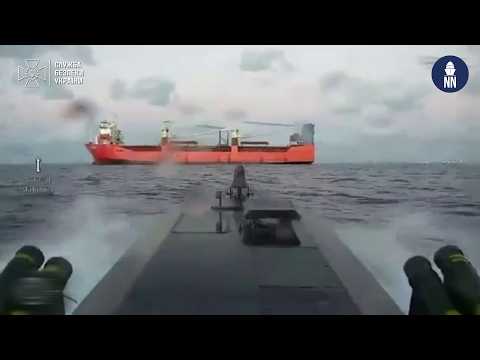
to the uh Suez Canal with no one claiming it. We don't know who who perpetrated this attack. Iran says they didn't do it. Houthis haven't taken claim for it. But those are the three choke points for getting in and out of the Middle East. And all three of them are now under, you know, some sort of threat. And this has caused obviously global shipping to go crazy because now if you can't get oil out of Yamboo, which is what everyone has been banking on, this 5 million barrels a day coming out of Yamboo, now you got to try to push it through the Suez, which can't handle all of it. And that's going to create more problems down the road. Let alone the fact that, you know, since the last time we talked, Ukraine executed a massive operation against Russian naval forces or excuse me, Russian uh uh commercial ships in the Sea of Azav.
They attacked commercial ships in the Black Sea. They even attacked vessels up in the Caspian Sea that we believe may have been suh supplying Iran through the back door of the Caspian Sea. So I I mean it is it is an an insane period of time for freedom of the seas for challenges of shipping out there and we can go anywhere you want on this board because there's a lot to talk about on this. So let's review the region where
you see the word Dubai that's the straight of Hormuz. Where you see the word Djibouti that is the Bob Elmande Strait. what the se of Ike, Captain Bill
Cross, used to call the Barbara Mandrrell Strait when we went through there back in the '9s, early 90s. It was a concern there because it is a choke point. We were talking about that as the primary concern, meaning the Bab Elmande Strait back in 2023 when Ike and Lincoln
and some other ships, I think TR were in the Red Sea post October 7th. And now we
haven't really thought about the Houthis since Epic Fury kicked off on February 28th until a few weeks ago when they
started a skirmish with Saudi Arabia that as you've already said Sal reawakened the threat on shipping through that choke point and then you add Egypt proper now is also being
targeted. So you have a regional conflict that is escalating. USNI News wrote an article this morning, Salot, you saw and you've sort of alluded to, which is shipping is down in spite of any of the rhetoric coming from the administration or even Sentcom. What's the price of oil doing uh right now? Do you know, S? >> It's actually back down. And so we saw it climbing and and this is my kind of joke when I tweeted the thing out from the president saying it must be the weekend because what we see is this kind of effort all the time to really manipulate that price of oil to keep it under I should say manipulate but control it to keep it from going up. And so we get you know notes from the president that we're going to hold off on these attacks that we're in the midst of dialogue with Iran even though Iran just came out and said we're not talking to the United States at all. So I I mean there's a lot of issues here that are meant to kind of control the price of oil. This is really trying to control the price at the gas pumps for everyone.
It's the reason we have a Jones Act waiver still in effect that's allowing foreign ships into US waters to move oil around. Uh so there's obviously a lot of effort to do this. Uh but one of the things that we're watching very closely right now is the amount of oil both a float and a shore is dropping at a very precipitous level. And you know, we've tapped into the strategic petroleum reserve. So has China. So has Japan. Japan in particularly has really really sucked theirs dry. Uh the US has probably put it at one of the lowest levels in in recent history. Uh and it it is a concerning development because you know while we see these kind of restarts and everyone was hoping that the restart in June was going to kind of refuel this back up, we we got the image of ships coming out through the southern part of the straight of Hormuz. that has been curtailed. Uh we're not seeing that Marine Traffic Kepler have those kind of almost daily recaps of ships going through. Same thing with the Joint Maritime Information Center. And we're just not seeing the volumes coming out right now. And Iranian oil isn't flowing either. It's pretty much locked up. And now the diversion around Africa for ships. Six Saudi Arabian tankers just diverted from the Gulf of Aiden. They're heading around Africa to go through the Mediterranean and come down through the Suez Canal. That's an extra 22 days of sailing. I mean, that just puts a massive hurt in the ability to flow oil.
And what you're going to do is really start changing supply chain patterns, where oil is going and where you're sourcing it from. And make no mistake, this is going to hurt consumers. You know, we're going to feel it. We can go, "Oh, that's not where our energy comes from." We're going to feel it at the pump and at your local big box store as
well. Rain, let's go back two weeks ago, which seems like a long time. What are you hearing from the folks at the major installations there about their uptempo and sort of morale? Uh because they've they've been under threat in a way that was uh different than the early phase of the war. >> Yeah, absolutely. I mean, like anything, this has been going on and on and just like I feel like it's a yo-yo effect with the the news cycle, you know, that translates to operations more or less with what guys and gals are having to deal with because it's a ramp up, a ramp down, you know, think maxab back to idle and like that is a fatiguing experience to go through. And then as you already said much different than the deployments I experienced probably you experienced a certain degree global war on terrorism while there was threats there nothing to this level. So the we're obviously
seeing social media posts with ballistic missiles hitting bases drones hitting bases. So you think now hey we are approaching 6 months into this endeavor.
That is a fatiguing experience. So, it's no longer again what I kind of joked of. I'm going to go fly, hit the gym, sleep,
go to the gym, fly, repeat, right? Um,
you know, it's a terrible vacation cycle of, you know, what I experience and my counterparts experience right time. But different, right? Very different when we're seeing these attacks. Service members have been killed, they've been maimed, seriously injured. So, the threat is very real. Um, again, I I' I'd say it's fatiguing. We did the episode on retention. That is something that the Air Force has battled on the pilot side of the house, on the maintainer side of the house, and I'm sure other career fields that I'm just not that dialed into, but that has been a talking point for many years now. Many efforts and lines of efforts have gone into trying to fix the retention problem. And there's again, we did the whole episode and I think we probably just scratched the surface when it comes to it. As you alluded to, the Navy has started piping up. Just yesterday I saw articles for the army offering retention big retention bonus for their their aviators when it comes to that. So uh this is going to be something that is going to be I think incredibly taxing on the force. The retention aspect of it it's going to play out over the next decade where we'll see the ramifications from it as well.
So, as as you just said, the the reality
of things like this here where you see the munition, the ballistic missile hitting uh the base in Jordan,
this is not sanctuary. And traditionally when we do these sorts of uh you know whether we're in Al Jabber or the other places we were in the Giwat once you got back to the FOB not to mention the base like Bram or Kandahar you sort of didn't think except maybe an occasional insurgent would break the wire but that would be taken care of in short order or a a stray RPG might make
it over the fence but it wasn't to this level. Now, as we see from the Sentcom B-roll, we are still taking it to him.
The issue is not can we service dimpies
for an extended period as we preaged
back before the war war started and as we've covered for the duration of the war. So you can see this kind of fleer
B-roll all day long taking out things that do matter and have greatly diminished the Iranian military ability to to respond. You know, conventionally they're on their ass, no doubt. But to what degree does this affect the geopolitics of the situation? So s
how does this go in terms of the ultimate net effect of having stepped off the line of departure on February 28th? >> Go back to operations in the Red Sea Poseidon Archer Ruff Rider. I mean the US executed, you know, a tactical operational, you know, against the Houthis where they, you know, bombed them. They, you know, basically were able to nullify the threat of drones and missiles. But what we find out is, listen, they still have them because they can be stored anywhere in any cave in any place. And the problem you have, and this is really demonstrated by the Ukrainian attack on Russian ships in the Black Sea, it doesn't take much to interdict commercial shipping. I mean, it just takes a very cheap drone to do that, to get a mission kill. And you know what? What amazing thing about that Russian campaign, I know we're talking about Iran, but when you look at that Ukrainian campaign, was they were trying to mission kill the ships. They were hitting the bridges. They're in the engine rooms, not trying to sink them, but they were just trying to create that havoc. And that's all you have to do in the Straight of Warmuz and in the Red Sea that we're seeing happen right now because, you know, risk is different for civilian shipping than it is for military shipping. And that's what we see kind of playing out right here. Now, the US is, I would argue, the Navy is is also adapting to this. You know, let's not forget they use three seronic drones to do an attack on Bandar Abbis. They used those drones that were used to pick up the two H64 pilots that were in the area. They modified them, put weapons on them, and used them for strike capability. You know, still effective to do the strike, but much cheaper, much more effective in some ways that you're not using tomahawks or or some sort of expensive, you know, JDAM type uh weaponry. So, I mean, the US is is is adapting. The problem is all the Iranians have to do or the Houthi have to do or anyone needs to do is just enough to cause this tension with commercial shipping and what we saw as it happened. Insurance rates for ships going through the straight of war moves jump from 1% up to 7 and a half to 9%. That's not going to stop ships from going through. But what it's going to do is it's going to cost more money. But what stops ships from coming through is the US saying, "Hey, you're protected. You can go through the Straight of Hormuz." But if the US says that and your ship goes through and it gets hit, it's going to tell other ships not to go through. And that's what we see happening right now.
>> Some reporting sums it up like like this. Both the CIA and the DIA
recently assessed that the kind of bombing campaign that we've been doing is unlikely to shift the Iranian negotiating position. We also heard that chairman Kaine and this is something that we heard that he had said going into the war is concerned about a how
much bombing can do by itself to accomplish the geopolitical objectives. His quote was air power has its limits. He and he said this in testimony a few days ago. B, he sung out about missile
inventories going into Epic Fury and he repeated that concern in recent days. The other thing that the that the chairman and and Sentcom have warned the president about because the rhetoric is ratcheting up in terms of, you know, what what we're what our next step is militarily, but the the chairman and the staff have said, "Okay, if you do that next thing, you're going to have high civilian casualties. if you strike infrastructure, bridges and water desalinization plants and this
would do further damage to our semifragile relationships, our Arab partners in the region. The other thing
Trump has sort of said, we're leaving the boots on the ground option uh open. He he did this meme about Car Island and
we did an episode about what that would look like. As soon as you put boots on the ground, now you've made a a target out of however number of thousands of troops you put there. Uh without a a mission objective that's clear and and yields a geopolitical outcome. Again, this is the forever wars thing. The way this nets out with him, and this was
what one of the cabinet members said anonymously to a reporter at a recent
cabinet meeting as as early as last Friday. He said, "I think we just want to win." And so they asked like, "How how do we how does this end, Mr. President? How how do we going to do that?" He said, "We'll be hitting them very hard. You know, at some point they're going to say we just can't take it anymore." rain. What if they don't
say we just can't take it anymore? >> People much smarter than myself have studied and said air power has its limitations, but that's where what we're leaning on. Solely that aspect here. So, how does this play out? If they don't capitulate, we're in a forever war, right? Something some variable has to change at some point. Um, I I'll highlight Flash McVey just hosted an episode on our channel with Dr. Bosac from the parlay institute talking about he he is a negotiator handling these deals and very well-versed obviously when it comes to handling armistice negotiations etc and pointed out the fact that when it comes to an unconditional surrender and capitulation we jump back to Japan really the last time that occurred it took two atomic bombs to bring Japan to the table and
through that process while the cease of hostilities happened in September of 1940 35. The Treaty of San Francisco wasn't signed until 1951, officially terminating the war. So, uh, again, to see this thing being wrapped up with a nice pretty bow by Christmas, the way this is playing out, call me a cynic, I just don't see it happening. >> When we're talking about levels not seen since World War II, you just mentioned we dropped two atomic bombs. Is that what we're talking about? Is this a veiled nuclear threat, S? >> I don't know if it's a veiled nuclear threat, but I I agree with Rain completely. I mean, on my shelf, I got tons of books that talk about how you start a war, how you fight a war. I can tell you there's two up there that talk about how to end a war. That's it.
Because that's not the topic we like to talk about. It's really difficult to do it. And the World War II analogy is a terrible one because it is the only one that winds up with an unconditional surrender. Every other conflict winds up with some sort of negotiated peace of some kind. But the problem with a negotiated peace is you don't get everything you want and your enemy gets some things they want. And that's, you know, an analogy that I don't think President Trump can deal with. The idea that Iran gets something out of this. And they do. They have something out of it already. They have de facto control of the straight of Hormuz. And through their clients, they the Houthies, they have a similar control at the Bob Mandab and potentially at the Suez Canal. Now, what we're talking about and so what you have to do is realize that once you, you know, once you let slip the dogs of war, it's really hard to put them back on the leashes. And that's the issue that we're facing with right now. And that's the problem that the Trump administration is going to have. We keep talking about the military application. Military is constrained by military application. You can only do what the military can do and that is use military force. There are other elements that have to be brought in here. Diplomacy, economics, uh politics, social issues. That requires an all hands approach. And unfortunately, we we just don't see that right now. And I'm not exactly sure how you get out. I think the argu argument of targeting, you know, bridges and desalinization, the threat is to the Gulf States. I mean, the Gulf States are seeing this. This is why you hear a resumption of trade between the UA and Iran. It's why Oman and the U and Iran is talking about maybe a joint control over the Strait of Hormuz, which Iran pushed back on. They said, "No, it's ours or nothing." Uh, so, you know, we're we're hearing that and and you know, Iran finds themselves in the good position. I think we always forget that in every war, each side thinks they're the good guys in the war and that they should win. And that's the way Iran sees themselves. They see themselves victims of an attack and they think that they should win this war. I'm not saying it's right or wrong. I'm just saying the perception they have is that. So it is really we're finding the very difficult thing. I don't think, you know, when LBJ sent in the first, you know, US Marines into Vietnam, he didn't think they were going to be in there for for eight years. It was like, you know, this is going to be a very quick short little war. And unfortunately, every war is going to be over by Christmas. They just don't tell you which Christmas.
>> Good point. And as we've mentioned before, based on absolute resolve, there was some conception that the joint force when unleashed could affect an outcome in 18 hours, right? Maduro's in, you know, the southern district of New York overnight. We thought, okay, let's just take that playbook and apply it to Tyrron. completely different circumstance, completely different geography, completely different culture. And we're seeing the the folly of
thinking you could just take that and put it, you know, place that same execution strategy elsewhere on the globe, especially a thing like like Iran, which has been a persistent problem for 47 years. And you know,
Trump uh defenders have said, well, only he has the courage to do this. Previous presidents have not tackled it. And I think to some degree we're finding out why previous presidents haven't tackled it. It's a complex problem. To affect the geopolitical outcomes is the trick.
To service dimpies for 6 weeks for two
months is not the trick. That was never going to be the issue. but to affect regime change, total renouncing of their
nuclear program, stopping making ballistic missiles that could threaten Israel, not to mention Egypt. Now, as they're demonstrating, and the new thing, which is control of the Straits, which wasn't a thing before February 28th. Now, we've, as you say, S, we've unloosed a whole new dynamic that that didn't exist before the war started. So,
here's another bit of breaking news from this morning. Let me get your guys' thoughts on this part. It says, "US military asked troops for creative and unconventional ideas to punish Iran." So, the reporting is the request from a senior officer at the US military command carrying out President Donald Trump's war with Iran came in an email.
We need ideas. Quote, "We're looking for new, creative, and unconventional ways to pressure and punish Iran." An officer in Sententcom's intelligence branch wrote in a message sent last Wednesday to a broad group of military analysts according to a source familiar with the message. Second source also said that a senior US military officer sent the message last week soliciting new ideas for how to deal with Iran. The crowdsourcing style query, which military officials said was unusual over email, you think, is one sign of the limited and potentially unpalatable options available to Trump to force Iran into a deal on his terms. Rain, your thoughts on this outreach.
>> Okay, twofold. One is rather unconventional and the way it plays out in the news isn't a great look. My hope without having seen this email is you do
you never know. Someone might have a good idea at the end of the table that's afraid to say something because of rank in the room or they're just geolocca geoloccated in another spot and their information can't make it all the way there. That's my hope here. It is weird that you would send this out in an email asking for ideas and then when it plays out in the news it it doesn't look really that great. Very unconventional. But my again trying to be a positive spin on this is you know what maybe some airman some sailor that is in another base where there's no way that their information is going to make it all the way up to the decision makers. This is a means to get a good idea out there. But
you know the big picture right is the way this plays out and you were kind of talking about just to jump back a little bit is I found I a Taliban proverb resonated with me is you have the clocks we have the time right Iran and the
regime has survived this long undoubtedly they have to be looking at the US midterms have to be waiting at the US presidential election cycle and if they can sustain and survive they know they might be able to outlast or at least continue to inflict maximum damage on the economy. S you could lean into this again bar napkin math not being that smart 20 million barrels of oil were moving through the straight of Hormuz every day prior to the war. So at a minimum we're 20 million barrels plus or minus a deficit every day since the war has carried on. All the strategic reserves are being depleted. gas prices are somehow, you know, relatively normal
and I use that term loosely, right? But they're not seven, eight dollars a gallon, which, you know, we anticipated. I'm assuming that is based on the strategic reserves being depleted. But we're at a global deficit of 20 million barrels a day. How long does that play out in economically? So, the long game, right, for Iran is to sit and wait. they're taking the unconventional route or just another route to to figure out how to inflict maximum pain on partners across the globe. So, um that's kind of a diversion from that email being sent out to ask, but unconventional war, unconventional thinking. Um I think everyone is looking at that.
>> Okay. So if a if a private or an airman
comes up with the idea that is the silver bullet, he needs to get field promoted to at least bring it here. >> At least at minimum give 05 at least.
>> Yeah. >> You know, there's an E4 with the answer to this. There's an E4 who has the answer for this. There's no doubt in my >> and he's already articulating it and the uh the text is like would you please shut up and finish the thing I told you to do. >> Right. That's why we're at these ideas are floating around. So s your thoughts first on the crowd sourcing then we'll circle back to the big picture that that Rain was talking about. >> I'll say this, you know, I was teaching up at West Point in '05 06 and I can remember >> because you couldn't get hired at Navy.
Why were you teaching at West Point? >> I I got an offer to go teach there. So I went there. So, uh, it was, but what I remember was the cadetses were talking to the recent grads in Afghanistan and Iraq and getting them prepped through this informal network for what to expect when you go in country. And that was really an interesting thing because they weren't getting what they needed. And it was it was really amazing to watch. I mean, this is early internet. We were getting this kind of conversation almost instantaneous on what to expect, how to get yourself kind of wrapped up. And, you know, I I I think this looks bad if you're not familiar with it. I would argue I've I've I've been a firefighter for a long time and I've been on calls where we're battling a fire and you get to the point where we can't get a handle on it's like, "Okay, what do you guys think? What should we do? What's a tactic that we haven't tried?" You know, sometimes you got to you got to kind of do that and kind of, you know, callull out there for ideas that aren't doing it. You know, Admiral Cooper is very unconventional. I would argue that he will reach out to people and do that.
And and I'll go back to what Rain was saying because I think it's an important aspect. You know, I've talked about the idea that we should be seizing, capturing Iranian tankers, sticking them in Diego Garcia. Iran is a finite number of these things and it just as you said, if if if we're going to run out of oil, well, Iran's going to run out oil faster than us, and they need that oil going. And so I you got to start thinking strategically. How do you wage economic warfare, which I think is something that we're getting back into. A good friend of me of mine, Nick Lambert, wrote this great book on the British animal going into World War I. And they had an entire section that dealt with economic warfare. How do you wage war, not just militarily, but use your military to wage economic warfare? How do you kind of, you know, convince your enemy to give in? Because again, we were reaching the point, as Admiral Cooper said, that we're getting kind of, you know, negative return on our bombing campaign.
We're going to get to a point when we're just moving rocks around and we're going to expose our airmen to more danger. And that's the worst dangers. is we're going to get somebody shot down and not be able to recover them. And that changes the whole whole scenario here. So, I I think that opening is is an interesting one. I don't think it's as bad as it kind of looks. It looks bad if if you see that, but I I think that, you know, it it kind of acknowledges the idea that we got to think unconventionally and and and outside the box and maybe that triggers something within the administration.
>> Yeah. Yeah. So, let's be generous like Rain said and and say that this is innovative and unconventional and not desperation because that's the look >> sort of look like that. I'll admit that it does look a little desperate. >> So, as we are recording this, there are supposedly talks going on. The the president has said the talks are starting today in spite of the Iranians saying there are no talks. We're not sending anybody. So forth and so on. Uh so let me ask you guys to say what's the over and under for the re starting of
hostilities. So well first off I really do I think there are talks going on. I think the Iranians never admit to talks because that that's for their public consumption. They don't want to admit that but I do think that there's some level of talks going on. I I think one of the problems we had is is when we launched the decapitation strikes and we changed the leadership in Iran. We really did a problem that that we don't know who's in control of some aspects of the Iranian military, especially the IRGC in around the Persian Gulf and it
it's too easy for them to trigger attacks against commercial shipping. And so I I think that there's always the danger of the resurrection of attacks. The attacks this past week on Egypt are the ones that disturb me the most cuz no one's claiming those. Somebody launched drones and targeted liqufied natural gas carriers which are basically floating bombs and and targeted them. If they can hit those in the port outside of Alexandria, they can hit a ship transiting through the Suez Canal. They could take out the bridge on a ship going through the Suez Canal and you have an Evergiven and you block the Suez Canal and that would cause massive disruption. And so I I think the the options are out there. We haven't talked about the resurrection of Somali piracy, which has got 67 mariners grabbed and ships being grabbed. I I I mean it's just the potential here for it to spiral is is really increasing. That's why I think we really need to ratchet this down as fast as possible because the the potential for it to get out of control is getting greater as we keep doing this.
>> So I heard four days and the the strikes. >> Okay. I I think I I think it's by the end of next week we're back at it again. I I really do. It's we'll have we'll have, you know, a discussion again and we go into the weekend and then by the beginning of the, you know, threat threat of attack on on Friday afternoon after the market closes at 5 and then we're back at peace talks on Monday morning before the market opens back up again. That's that's what >> that'll be my next question. How do we get out of that cycle? But Rain, the over and under because right now it's a let's just call it a a ceasefire. uh a no notice ceasefire based on the president's truth social post. So how long does this last?
>> I'm with S on this. This is going to be a continuous cycle. Even if the Iranians
were on board in a full negotiation, again the dynamics inside their government one, you know, the majority leadership has been taken out. So you got a whole new group in there. Plus you have the IRGC and how those two interact. Uh you know, one is not over the other or vice versa. you know, unlike our civilian leadership in the military. So, you have to have everyone on board. How do you get everyone on board to agree to the negotiations? And then all it takes is one splinter cell who's not on board with the game plan, a hardliner group that is stationed on the coast, sitting on the coast, and hits a tanker and it completely destroys the the negotiation cycle yet again. So, this I mean it is to say it's even a delicate house of cards um is not even fair. This this thing is a powder kick.
So I think we will continue to see this repeat again and again and when it ends and how it ends I am not sure. >> I concur and I think if you look at the the tweet here when you when you say
this would include the immediate complete and total opening of the straight of Hormuz and the end to Iran's nuclear threat. So when we ask how does this end? Well, it's not going to end before you have compliance with those two sort of bullets in the negotiation. This was theou and this is how theou was DOA. Never mind that it was never really a real thing. Now they're blaming Vice President Vance for theou on the backside of its failure. You know, if you say, "Okay, Iran, the only way this ends is you renounce nuclear weapons and you open the straight of Hormuz." Sal has already articulated, there's now a revenue stream and a value proposition that they're not going to back away from. You know, it's like you have a a toll booth that yields this much revenue. You don't tear those things down when you're having trouble balancing the budget. So, we've put to
be generous about it, Iran's economy on its back foot. So regardless of how radical they are or who's in charge, whether it's the, you know, the Mullers or the IRGC, if you have this revenue
stream that's emerging that's worth billions of dollars a year, you're not going to walk away from it right now. And we don't have any means beyond this persistent blockade to patrol the straight. And so that's the other question is how long are we willing to do that? Sal, is the blockade technically on or off? Right now >> it's on. I mean, we're getting reports. I mean, they've attacked two ships. They boarded ships. They've turned ships around. One of the most interesting ones is we turned around a Qatari LG carrier
that was coming out because it went through the Iranian lane. And Iran said they didn't turn around. The US said they didn't turn around. Well, somebody turned it around. And so there's seeing this blockade in force. And what we're seeing is is but but again remember when the even before theou was signed Iranian oil flew out. I mean it was it was setting sail and I mean it it moved very quickly. But now Iran oil is exposed out on the high seas. And the question is you know who breaks first? And the problem with Iran is it's a totalitarian government. I mean they don't care what their people think. They don't care if their people starve. I mean they can they can hold out. Meanwhile, you know, public perception and public opinion of the United States as the economics starts running out is going to have a problem. We're seeing gas and oil shortages in in countries around the world. We're seeing increased costs and prices. You're seeing in the United States. It's the reason why your gas and diesel is a dollar or more a gallon.
It's because it competes on the global marketplace. And it's going to compete even more if this disruption continues with the Houthi and the Red Sea. >> That's a super important point, S. Thanks for bringing that up. the difference between the effect of public opinion in the United States or the Western world and dictatorships and
radical governments like Iran. They don't care. That fact s is everything
right now. So whatever levers we think we're pulling to yield a geopolitical outcome or even the ones stated in President Trump's truth social post are
problematic. We don't know how this is going to end. We do know that we're in a cycle. I don't know if you can call it a forever war. It certainly lasted longer than we were told at the outset it would last. We don't know how it's going to end, but I promise you that we'll be watching. So, if you're not subscribed to any of our channels, you should be. I will put in the episode description how you can subscribe to what's going on with shipping or the Afterburn Defense podcast and my channel as well. check out each and every episode and I will assemble the wonder triplets the three amigos when the situation demands and as we heard from S that'll probably be in four days from now so you know stick around. So thank you guys for spending some of your valuable time with me today and I look forward to seeing you in real life before very long and uh and I look forward to seeing you on the channel again very soon.
>> Thank you. Appreciate it. Thanks. >> All right, that'll do it for this episode. If you're not already a subscriber, become one so you don't miss anything going forward. And in the meantime, I look forward to talking to you again very soon.