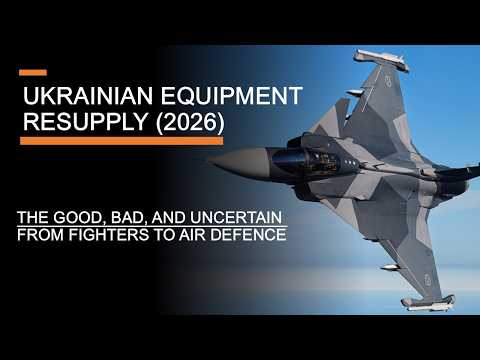
Deep Intel on the Air War Over Ukraine
Transcript
Machine-transcribed by YouTube. Expect errors in names, commands and version numbers.
All right, please welcome back to the channel threetime Mucci award-winning professor Justin Bronc of the Royal United Services Institute, senior fellow there, and he's joining us from London. Justin, where are you? A library somewhere. >> So, I'm actually I've uh I've pulled a fast one. I'm not in London currently. I'm out in the West Country at my parents' place. So, uh this is a repositioning tactically, but hence a nicer backdrop than usual. I know people don't like my spare room, but that's it's where my [laughter] where my computer is. So >> Okay. Okay. Well, I'm wearing my Beatles shirt in your honor. I don't know if you know this, but the Beatles were from England.
>> I uh I I spent some time as a kid around where where the studio is, so yeah, I' I'd heard of them. >> Okay, great. Yeah, this is the sort of deep intel we get here on this channel. Your latest item at Rusei is titled four
years on, an update on the air war over Ukraine. And the subtitle is an established Ukrainian F-16 fighter wing and the overstretch of fighters and air defenses on both sides by sustained longrange strike campaigns have changed the nature of the air war. Remind us how the war started four plus years ago and how it's
changed with how it's being fought now. So, in terms of where the the air campaign started, um you it really was much more what you'd expect in in some ways, although Russia deeply underperformed versus a lot of the I think mirror imaging assumptions that we had based in in the West on if we had the kit and the weapons they had in the scale they had, what how would we be able to use it, what would it do? Um but essentially the the air war for the first couple of years was really defined by the inability of either side to operate effectively near near the front lines because of the density and the capability of groundbased air defenses on both sides. Reporting on current events like the war in Ukraine is challenging because the information flow is very fluid. So let me tell you about a resource that I depend on as I try to provide an accurate point of view.
Ground news. I start my day by going to the ground news homepage. And in this case, let's type Ukraine into the search box. Once we do that, a list of relevant articles drops down. So, let's click on this one about Poland claiming that a Russian missile may have struck its territory. Clicking on that gets us to this landing page that features a bulletized summary of the topic curated using Ground News's proprietary ground AI insights. Over on the right, we see that there are 362 articles on this topic. And down here we see an infographic with the bias distribution. Let's compare two headlines. First one is from Euromadan Press which is independently owned with very high factuality and left bias. We click on the headline to read the article and once we're done we click out of it to get back to the ground news list of relevant articles. And then we have this one here from UK Defense Journal owned by George Allison with high factuality and center bias. Again, it's easy to click on the headline and read the story and then click back to ground news to find other coverage from various points of view. You can't get this kind of information organized like this anywhere else. Go to ground.news/wward or scan the QR code on the screen. If you use my link, you can get 40% off unlimited access, which is the Vantage plan that I use. Again, that's ground.news/wward or scan the QR code. The link is in the episode description below, so check it out. So on the Ukrainian side, what you had was a pretty dense layered air defense network that had to redeploy and and operate in a pretty unconventional way because of the the breadth of the Russian attack across four different fronts from a posture that was very much had previously been kind of aimed at the Donbass and defending the the against the Russian attacks that had been periodically going on there since 2014.
On the Russian side, obviously lots of initial chaos, but within about, you know, three to four days and particularly after the first week, really pretty capable coverage from the air defenses, um S400, S300 V4 and um
bits of older S300 PMU1 and 2, so SA20
um on their side providing a lot of that long range coverage, lots of fighter caps, uh so SU35, SU30, bit of MIG 31
occasionally, particularly down in Crimea, and then lots and lots of medium-range air defenses, both moving with the ground forces units that were then penetrating pretty deep inside Ukraine down towards Kev and also in the east and also up from the south towards Heran. And so that that layered threat environment meant that the Ukrainians really were on on the air force side kind of just fighting to survive. Apart from the first few days when the the chaos enabled them to uh conduct quite a lot of ground attack uh missions with dumb bombs uh using suit 22425
um even Mig 29 with rockets at times on those columns going down towards Kev. For the most part, it was pretty one-sided. And uh the the big surprise was that the Russians weren't able to establish air superiority. They weren't able to degrade that Ukrainian groundbased air defense network. Um which was all theirs. You know that we we we've kind of got used to Ukraine operating a lot of Western systems as their key kind of uh capabilities in a
lot of areas these days or or things that were developed since the war started. But it's worth remembering that Ukraine started the war with one of the largest integrated air defense networks in Europe. About six months of ammunition stocks for high-intensity combat, which compared to most nations is uh very unusual. And so that lasted
really quite a lot of and most through the first year of the war. And Patriots started to come in towards the back end of 2022 to provide them some additional ballistic missile defense because the only thing they had in the beginning of the war was S300V. So the SA12s which there wasn't much of and there was a kind of effort to keep Ukraine resupplied with Soviet era surfaceto missile ammunition purchased from various countries around the world by countries that supported Ukraine and taken from stocks of former eastern block NATO members who had some of those stocks. But over time that that kind of
SAM inventory has been wound down uh just through use as well as some Russian successes here and there in in um Diad essentially with tactical use of of ballistic missiles in particular to strike air defenses when they're found by by drones if they're out of ammunition or not firing to try and conserve ammunition. On the Russian side, um there's not been much [clears throat] attrition of their air defenses until the last few years really isolated Ukrainian successors with with UAVs, particularly around Crimea. Uh so when they've been able to layer in long-range attack UAVs with harm when that came in um the high-speed anti-radiation missile when that was fitted to uh Mig 29 Sue 27 and that had
some success initially as as destruction you destroying a few air defenses but pretty soon the Russians learned how to turn off their radars when they saw sand la harm launch and then it just reverted to being able to suppress. What's really changed now is that there have been several years in a row of Ukrainian escalating Ukrainian long-range strike campaigns with hundreds of UAVs um per week certainly and usually hundreds per wave several times a week. And of course, Russia has also been conducting a very very intensive long range strike campaign with ballistic missiles, cruise missiles and oneway attack drones in increasing numbers uh throughout the war. So that has led to a progressive depletion of Ukraine's pre-war um Soviet
legacy uh modernized in some cases but Soviet legacy air defenses and has forced the replacement of those systems over time with a smaller number but more capable versions of you know western equivalents so Patriot most obviously NASAMS Iris T in the medium range bracket and then a lot of short-range air defenses for counter UAV work um some of which have been supplied some of which they've made themselves but over the last couple of is uh the Russians have had to start really dispersing quite a bit of their air defense asset uh inventory away from the belts around the frontline areas in order to try and defend um oil refineries in particular, but also cities because it's embarrassing to see targets within cities get hit uh by Ukrainian drones.
So Moscow, for example, has lots and lots of air defense around it now. But as Ukraine has got more and more long range strike drones, even though they're individually very pretty easy to shoot down, uh, and most of them are shot down, the increasing availability of, uh, not just drones, but a few kind of cruise missiles, uh, the FP5 Flamingo, for example, that can reach to like 1,500, even a few to 2,000 km, that actually forces the the Russians to try and defend an enormous area because Russia is huge, as we all know. And so even with all the air defenses that they still have and they're still making them unlike Ukraine Soviet inventory which was kind of finite um that there are
noticeably less dense air defenses basically all along the front now um on both sides and also uh aviation. We can
talk about how, but aviation in terms of both helicopters and particularly fighter employment has really shifted over those four years um to try and find ways of making fourth generation fighter aircraft and attack aircraft that can't penetrate into even relatively depleted air defense coverage useful on the front lines. that's changed the way they're employed. Um, as the air defenses have had to kind of refocus on that long-range drone and the Ukraine ballistic missile and cruise missile strike threat, >> we documented the arrival of the F-16s
and the early look at how they were being utilized. So, some years later,
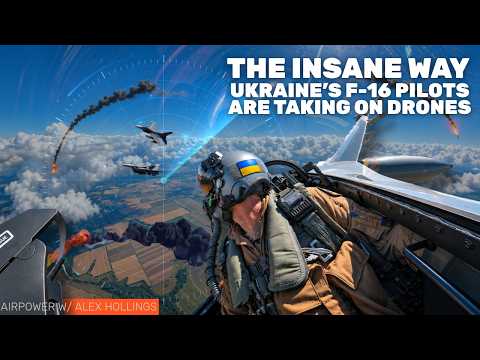
how has the F-16 netted out in terms of effectiveness? It's been more effective than many, including me, thought it would be in some respects. Most notably,
the Ukrainians have been much more impressively able to keep the aircraft alive on the ground than was feared by many, including me. And they have also been successful in training a sufficient cadra of uh pilots, although it did take two and a bit years. um to get to the point where they have lots of pilots relative to the availability of aircraft. Um but they're at that point now and the pilots they have a lot of them are now very combat experienced. So that initial criticism that it would take years to get to a point where they had people who were reasonably experienced and capable, well, it's been years and they're getting, you know, they're they're increasingly capable of doing quite complex things. Um, albeit within serious limitations based on how many aircraft they have available and what weapons they have and C2 arrangements and other things.
Um, and they've basically been able been very successful at flying a lot. Uh so they have flown a lot more than and and for a lot longer than a lot of people who are skeptical about you know they'll be destroyed on the ground quite quickly. Um but also they'll be very very difficult to maintain in country. Uh and the Ukrainians will therefore get not a lot of uh sorty generation out of them relative to the cost and and political capital expended to get them there. Uh all of that has gone better than expected certainly by me and feared
where they've not done particularly well and where unfortunately some of the more negative uh projections have proven correct I would say um certainly mine um and I'm aware that I was a negative voice for a long time when I was 16 saying this isn't the right fiser for them this is not the most optimal use of resources um but where they have suffered is essentially the employment of a lot of those hours of flying and pretty significant
expenditure of ammunition particularly AM9 Sidewinder uh has not amounted to very much in the
broad sense of the the operational and strategic picture in the war. They have been very effective in terms of downing a lot of particular UAVs. So, a lot of one-way attack UAVs, uh, Garand 2 and three and Gabbera decoy drones, and the most effective they've been is against cruise missile salvos. So, there've been several large salvos of Russian air launched and and ground launch cruise missiles where the F-16s have accounted for the vast majority shot down. Um, and that that that is a very good use of them. But because of the way that air power is tasked in Ukraine, they have basically used up a huge amount of the fatigue life of the fleet
because as you all know very well um you know fighter aircraft come with a given amount of fatigue life or flying hours um in the airframe and once it's used up you have to do a much you know deep deep maintenance phased inspection kind of thing depend The terminology is a bit different to different air forces, but you have to send them back to the factory and do a decent phase maintenance uh cycle where you open everything up and look in them in great detail and replace certain life components, but also um you [clears throat] know, check for long-term fatigue and that kind of stuff. And then once you've done that, it kind of comes back with right, you can do another, let's say, 250, 300, 500 hours, whatever that aircraft's maintenance interval is, the maintenance interval. And there's also a total fatigue life. You can start to go beyond that. But beyond that, large parts of the aircraft aren't certified by the manufacturer to continue to last under the very strong forces, acceleration, G, vibration, all the rest that you get in flying class jets. Of course, these are secondhand aircraft. Um, they are they have been overhauled before they went to Ukraine. Um, so they were in good condition. But that very that success in
getting lots and lots of use out of them has meant that uh they have used up a lot of the kind of usable flying hours
if you like in the fleet
and haven't necessarily had a huge impact on the direction of the war beyond shooting down a lot of drones. The problem with that is uh unlike the
cruise missiles where each one that hits is almost guaranteed to do really pretty serious damage because they can there's a lot of targets some of which quite hardened um or buried or deep or or large which you know you really can't let those cruise missiles through if you can possibly avoid it. there will always be more drones because Russia produces around 6,000 slightly over per month. And so you could swallow any fighter fleet on Earth um if if you just consistently launch against those and intercept those. So on the one hand, very successful. On the other, they could have been employed significantly more effectively as a relatively finite resource that is now difficult to sustain and increasingly so. um just because you know sustaining a western fighter fleet is hard. On the air-to-air side they had a wonderful success a couple of weeks back uh confirmed by the chairman of the joint chiefs. Uh they shot down a a Sukoy 35 Russian um flanker M so flanker Mike so a pretty high-end Russian fighter aircraft and their their kind of main air superiority fighter. great achievement. Um, you know, a block 10 or 15 MLU F-16 with most variants of AMRAM
that they might have access to against the SU35 assuming it's carrying a 13 or 12 Charlie. Um, that's a heck of a matchup even one-on-one and normally there's pairs at least. So, um, plus Russian GBA. So, hugely impressive achievement. I've seen a lot of speculation online. Most of it's completely wrong. the details of what did actually happen pretty sensitive, but that is the first air-to-air kill of a Russian fighter by an F-16 in more than two years of operational service. So the kind of euphoric selling and frankly overselling of F-16 in order to try and get the political backing to to spend all these money, people, time, capacity uh on F-16 saying it will help them achieve air superiority and you know Western fighters are much better than the rubbish Russia flies and all of this stuff. that's just not played out.
Um, and they have therefore quite
understandably and predictably not been able to solve the biggest air power problem which Ukraine has, which is the glide bombs being launched by in hundreds per week by Sukway 34s. Getting a SU35, which given the pilot ejected close to the lines, you can make a reasonable assumption on public data about he came pretty close to the lines um for whatever reason. And so that's a shot distance which with
that slowly um decreasing density of air
defenses on both sides on the ground because of the dis dispersion around the u longrange strike campaign. So not as many medium range longrange air defense systems on the Russian side because they're having to spread them out. Same on the Ukrainian side. there's a bit perhaps a bit more fluidity, a bit more ability to take risk with combat aviation near the front lines approaching for brief periods for specific things. But of course, the SU34s don't do that. The SU34s launch from 60 70 km minimum behind the Russian lines. So that one success against the SU35 does not unfortunately hint at all
of a sudden the F-16s are going to start knocking down the glide bomb launchers. Um, so once again, we're back to the only fast jet solution that could do that, which is anything with Meteor. Only fighter that the Ukrainians have coming with Meteor is Grippen. So Griffin Charlie Delta for that particular problem. But again, this is not for a second to knock the incredible professionalism and and unbelievable bravery of the F-16 pilots themselves who flying day in day out and night in night out, knocking down thousands of drones and tens and tens of cruise missiles and braving going towards the front to do glide bomb strikes on a regular basis against what is still a less dense but a still formidable groundbased air defense network and fighters uh which outranged them and outnumbered them in many cases.
with a better radar and more EW and all sorts. But yeah, a very different picture from the first couple of years where if either side had tried some of the stuff which they are doing near the front lines, that would have been a pretty one-way trip. Ukraine is dealing with some of the, as you've described, some of the the cost disparities, what they're using to defend against one-way attack drones that the US military is dealing with, which is it, you know, it's very expensive to use uh even a nine Lima, you know, to shoot down a a relatively lowcost attack drone, not to mention a Patriot. So, as
you describe, they have the same problem or a similar problem with missile inventories as the US military, except it's worse. So, how are they having to iterate to do their groundbased air defense? No, >> the Ukrainians have uh been incredibly
ingenious with uh basically pulling in a
whole load of different technologies, approaches um to essentially short range, relatively lowcost air defense against low-flying relatively low-flying um
drone type targets. And by the way, sometimes cruise missiles, too. In order to deal with their basic problem, which is that, as you laid out, they face anywhere up to about 5 a half thousand one-way attack drones coming their way alongside salvos of cruise missiles and ballistic missiles per month. And so that uh that just volume is impossible
to deal with with fighter aircraft. um even though the F-16s shoot down a lot of them um that is a very very severe drain on flying hours on missile inventory and increasingly it's interesting to note that there are you know Ukrainians would say there's fewer Russian fighters around often and you
see quite a lot of footage in telegram and other things and Russian sources of Russian fighters even Sue 57s shooting down so Russia's quote unquote stealth fighter um which is not particularly stealthy, shooting down Ukrainian one-way attack UAVs in deep deep inside Russia. And that is also perhaps why there is a bit more freedom perhaps around the the front line areas to push a little bit closer to the front lines than would have been previously possible, a bit more often for any given level of threat. Um, obviously depends on this the the specific day place scenario, but because the Russians as well are really struggling to deal with just the consistent volume of Ukrainian oneway attack UAEs, the Ukrainian solution um has been to pull all of these different technological threads.
So they have lots and lots of mobile air defense teams who are normally based around a core of a few vehicles. If they're lucky, one of them might be something like a Gard or a Shilka. Um, so a a radar guided short-range anti-aircraft cannon system on a tracked chassis. Um, those are phenomenally effective against drones and in fact very effective against cruise missiles if they happen to pass within the short engagement range that they have. Um, but a lot of those air defense teams just have uh machine guns or um manually
aimed cannons. So, you know, 37mm cannons for example or or 20 mm cannons. um but usually machine guns, M2Bs, dushkas on the back of pickup trucks or flatbed trucks and then a smattering of man pads. So shoulder fired, Stella, igler, Stinger, those kind of things. And then in addition, you have a wide
variety of uh drone interceptors. So, propeller powered missiles um which again are short range but are cheap per engagement um particularly relative to something like a Sidewinder which is still you know about half a million dollars uh for the US and more for an FMS customer. Um so anyone who's donating old stock to Ukraine probably wants to replace that stock um with new orders. So even if the Ukrainians are getting them as donations that still somebody's paying for those those sidewinders or or whatever that you would use as traditional airto-air missiles either in the Gulf or um in Ukraine. So those those drone interceptors are relatively cheap.
You've got all sorts P1 Sun, Marops, Octopus, Sting, but they are basically
most almost all of them are 3D printed bodies with relatively cheap often Chinese uh motors, components, batteries, servos. Um, and then some of them also use some clever machine learning type algorithms to help with the final interception because if you're remotely controlling these things, the closer they get to their target, the more your input lag because of the the the radio connection um time matters. You as as things start to try and do that um lag becomes more of a factor. So you you hear descriptions of AI enabled this and machine learning that it's typically around terminal homing. Basically, they have this belt, therefore of all these mobile air defense teams, hundreds of them, plus drone interceptor teams, and they're in belts tens of kilometers thick near the frontline areas, but a bit further back, uh, in all the areas where Russian uh, drone and cruise missile salvos typically have to travel through in order to get to Ukrainian cities and other targets deep in Ukraine. And that basically provides enough chances that
any individual small drone will pass within the call it one maybe 2 km at most effective coverage range of each individual mobile air defense team and or drone interceptor team. If you only have a few, the odds that any one drone will come within range are minuscule. But if you have hundreds and hundreds of them isn't in these deep belts, it's very hard for the Russians to route um drones through in large numbers. So it becomes just about volume. And the whole point of all of this, which is a constantly kind of adjusted and tweaked and evolving system, is to shoot down as many of
those Garans and Gabberas, Ukrainians would still call Garans shahads. Um but Garan is the name for the Russian um manufactured versions, which is what Russia uses now. um to shoot down as many of those as possible to reduce the consumption rate of SAM systems. So, Patriot, NASAMs, um
but also to reduce the numbers that need to be dealt with by aircraft either F-16, MIG 29, um Mirage, although they
tend to not be used much against drones. And then, uh sometimes helicopters as well and gunships and even Yak 52s with guys with assault rifles in the back. At the at the moment, Ukraine is shooting down well over half of the those one-way attack UAVs and some cruise missiles using individually very cheap interceptor systems, anti-aircraft guns, machine guns, man pads, and drone interceptors. And that means that the volumes that get through that are then dealt with with aircraft and and helicopters before they get to targets that might be defended by other systems, either more shorad systems or sometimes something bigger. Um, and it's this layered system, but it's all geared around firstly and first and foremost minimizing Patriot use. So, ideally, Patriot should only ever fire at ballistic missiles because it it can deal with ballistic missiles that nothing else the Ukrainians have can.
Um, particularly some of the ones that, you know, maneuver and release decoys and do other things. Um, technically SAMP with Aster 30 can engage ballistic targets to some degree, but it's less effective and there's not much of it. Um and then uh cruise missiles you typically want only being the only things that things like NASA or IST engage. So these are medium range uh European and with NASA's also America also has some of it. Um it's Norwegian developed with America as a partnership but launches Amram and A9. Um
these are systems that fire traditional air-to-air missiles. So you don't want to be using them against drones if you can possibly avoid it. Um, and then the reality is a lot of the others will be either spoofed with electronic warfare uh and not hit anything too valuable, but of course they do still cause damage and casualties sometimes. But the other thing is they're just a nuisance. They kind of gum up, you know, airfields. They gum up air defense um engagement zones um and they keep people in shelters while they're still around if people are sheltering um from an air raid. The Russian picture is kind of similar.
They've they they've got a huge amount of short and medium-range air defense and so they try to use the short-range defenses wherever they can, but they don't necessarily have belts of med of mobile defense teams like the Russians like the Ukrainians do. Sorry. The Russians are more concentrated along the front line areas and then doctrinally. And then once you're through those areas, it's much much more open because Russia is huge and they're then trying to concentrate defending um key potential targets. Oil refineries, factories, bases, air bases, uh command
facilities, you know, cities. There's just so many potential targets. Um and so they are also using helicopters and fighters. Um which produces this relatively unsustainable um draw weight. It is obviously more efficient to do what the Ukrainians do whenever they can with F-16. What the U US Air Force, US Navy and increasingly the the RAF and French Air Force have just brought in um equivalents as well to use laser guided rockets or infrared um acquisition rockets. So, AGR20 in US uh parliament or APKWS2 advanced precision kill weapon system M2 that is better um and more sustainable,
but it's still using tactical fighters. So, great for chasing down harassment
attacks, having something to deal with, you know, let's say Russia violating NATO airspace in Poland or the Baltic States with UAVs periodically. You don't have to waste an air-to-air missile on it. um and you have something that can get to where it is quickly with a fighter, but for large scale defense against mass attacks, it's still not enough and you're still burning through fighter hours if you do it a lot. Um so the key is as Ukraine has done building
short-range [snorts] solutions if you can both at potential targets and ideally along the border where they might have to cross that can attit as many of those systems as possible with cheap interceptors. As always, there's a catch. which is that for Ukraine they can deploy hundreds of mobile air defense teams each of which has quite a lot of people in them and vehicles and they all have logistics trains and um you know need resupply and command and control and paying and pensions and all of that stuff. That's fine. It's not ideal, but it's fine for a military that has about 950,000 people in uniform. Um it's a mobilized country. Russia can do it too because it has, you know, conscription of 130,000 people every six months plus all the recruitment that they're doing of, you know, 30,000 plus people a month for contract soldiers. But if you are a relatively small professional military, it's all very well saying we need cheap and cheerful systems that are short-ranged everywhere to shoot down UAVs. But who's going to man them or crew them? Um, what vehicles are they going to use? Who's going to support those? How are they going to deploy?
Where are you going to store them? Where are they going to sleep? You know, who who's going to pay for their pension? And most importantly of all, where are you taking those people from? Because militaries don't have loads of excess people, or at least most militaries don't. The Chinese do, the North Koreans do. Um, most don't. And so it's generally you're going to have to take those people off other things, which they are currently doing. And so
it's not actually an ideal solution to port Ukraine's concepts for large scale use of mobile air defense teams and short-range air defenses at scale to all contexts. For example, putting a drone wall, as I've heard discussed, all the way along the NATO frontier with Russia, if you actually work out what the personnel demand would be, let alone anything else, to crew that many short-range air defense systems along that long a border, and then you look at the average wage of a NATO soldier, even a private, um, yeah, you very quickly run into number doesn't compute. Um and
so you know you see saw saw a similar thing a lot in the Gulf where if you're trying to protect for example targets on the coast gas refineries bases that tend to be pretty close to the coast um because the way that the Gulf states are laid out you obviously can't put lots of mobile air defense teams in the sea. So there's there's no way to attract these systems over 10 kilometers or tens of kilometers as they come towards you and then have a go with aircraft. So again, another reason why there was so much more usage of aircraft. Um, and not just American, lots and lots of UAVs have been shot down by French Rafals out of UAE. Um, UK typhoons operating out of Akriteri. Um, and uh, you know, RAF
regiment, for example, um, doing some stuff out there as well in bits of the Middle East with hundreds of drones shot down. So even then, you know, the narrative the Ukrainian that the Europeans aren't doing anything is not actually true. um they're not doing as much as the US administration would want and they're not doing the offensive bit that the administration would want. But again, you know, this is not just an American problem either in the Middle East. It's or a G state problem. It's draining missile inventories and fighter hours from everybody. Um but there isn't an obviously easy answer. Um beyond better weapons for fighters. If you want to use the gun, you need to train very specific tactics that are not anything like normal ACM tactics in order to have a decent chance of hitting something very small, very slow where your overtake speed is high without getting close enough that the you've got a very large chance of being fragged when the warhead goes off. Um,
it's not easy. Uh, the Ukrainians have ways of doing it, particularly during the day. Um but uh if you take
traditional NATO fighter training and try and do it, it ends up very risky. Uh but yeah, the gun is sort of usable in some context, but there are caveats. Um and night vision goggles make everything harder. Lack of depth perception and um resolution to see small things and aspect changes and such. Um so yeah,
laser guided rockets and IR versions are sort of the best we've come up with so far. helicopters. Um, if you can catch the propeller powered ones with helicopters, that's not a bad use of helicopters. The Israelis have shot down a lot with Apache. Um, with both the gunner and with Hellfire because they take a lot of Iranian oneway attack drone attacks. Um, and potentially you
could see a very useful role for small air forces in small countries where the entry cost for a useful fighter fleet of any kind is just too high. But you might be able to, for example, train up some pilots enough to fly dedicated drone hunting missions in turborop aircraft with gunpods and a targeting pod. Uh the or sensible where if they trained specifically for interception of oneway attack UAVs, that could be quite a useful um force to have where even a
relatively small number of them could take a lot of pressure off much more expensive fighter forces that have better things to do with finite hours, pilot numbers, rotations, munitions, etc. Well, I'm glad you mentioned the numbers and the scale because I don't think the average viewer appreciates how that's happening day day after day, month after month. So, what we have here is a 21st century high-tech war of attrition. And when you look at the kill zone, particularly in the eastern part of Ukraine, and how those mobile anti- drone units are operating, it's reminiscent of World War I and trench warfare. Again, a high-tech version of it. So how this plays out is a function
of who can last the longest with respect to personnel and hardware and we'll see.
So Justin, always great to catch up with you. Thank you for taking some time out of your mini vacation here in the western part of the country to uh explain deeper uh what it is you were just talking about in that essay. And I look forward to talking to you on the channel again. and I hope I see you in real life before too long. >> Likewise. Thanks very much for having me on again. >> All right, that'll do it for this episode. If you're not already a subscriber, become one so you don't miss anything. And in the meantime, I look forward to talking to you again very soon.
[music]
>> [music]