 Hackaday
Self-Sensing Artificial Muscles From Liquid Crystal Elastomer With Graphene
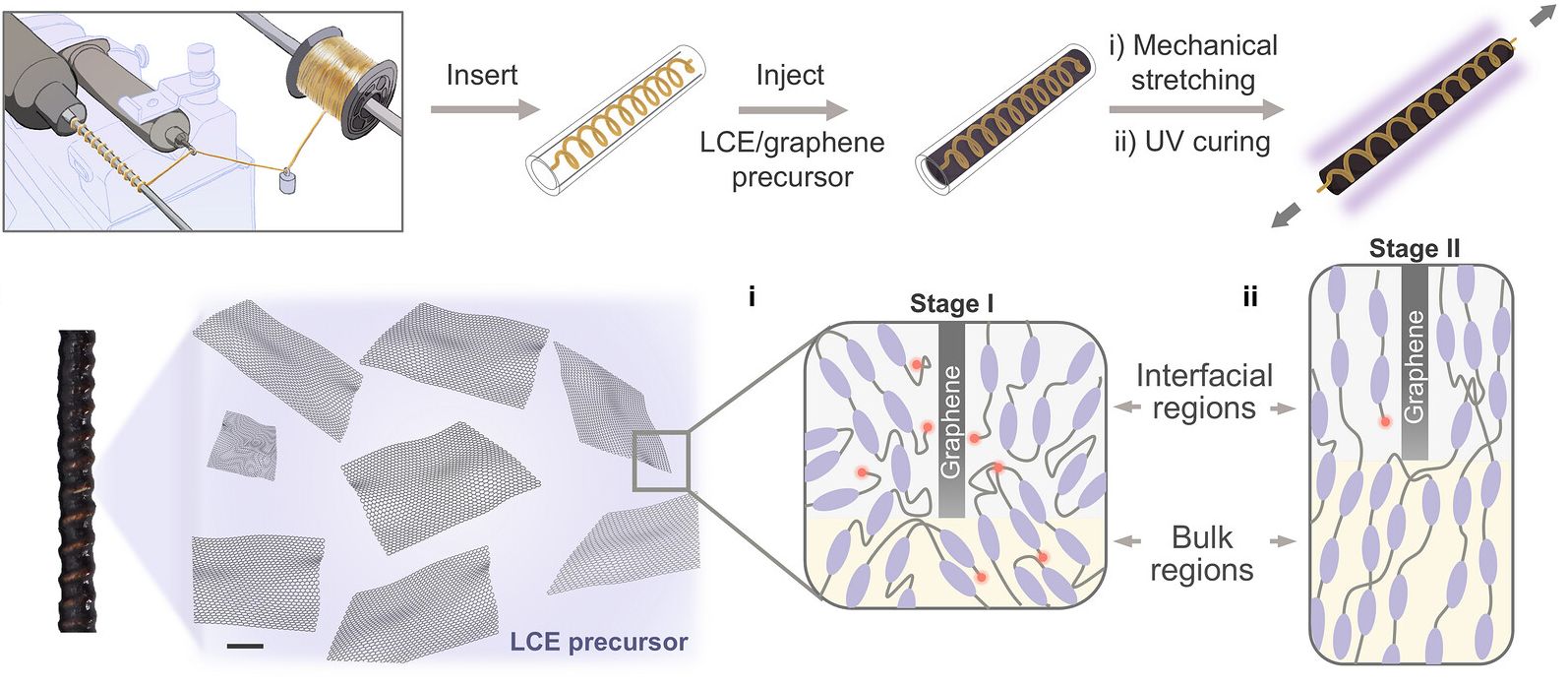
Although we tend to be more aware of the large muscles in our bodies that enable our legs and arms to move, the real stars are the many small muscles found in our face, hands and so on. Everything from focusing our eyeballs to typing on a keyboard requires the precise cooperation of many small muscles, which is not a feat easily emulated by technology. Here the liquid crystal elastomer LCE) and graphene composite fibers demonstrated by [Ziyun Zhang] et al. provide an interesting example of how artificial muscles could approach such versatility. Although LCEs are not new technology – having been invented in the 1970s – it’s not enough to simply have an actuator for delicate tasks. In the
…